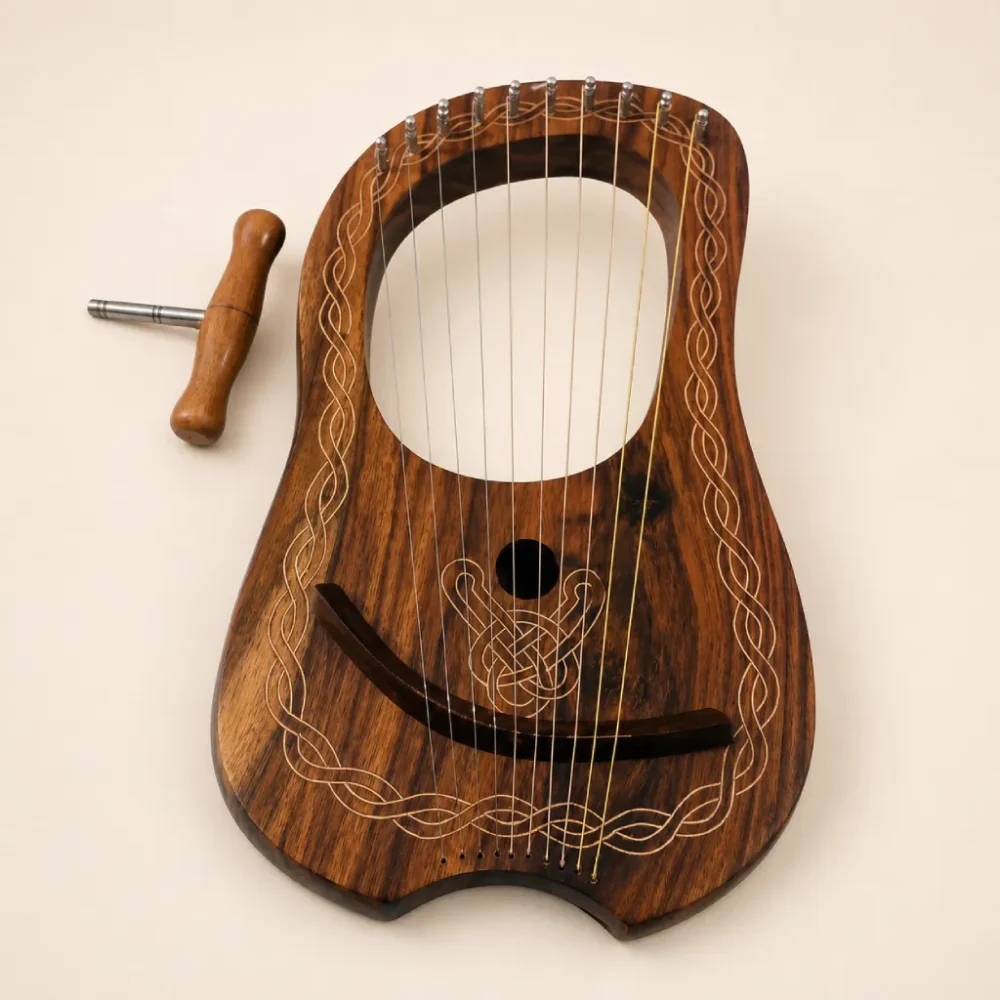
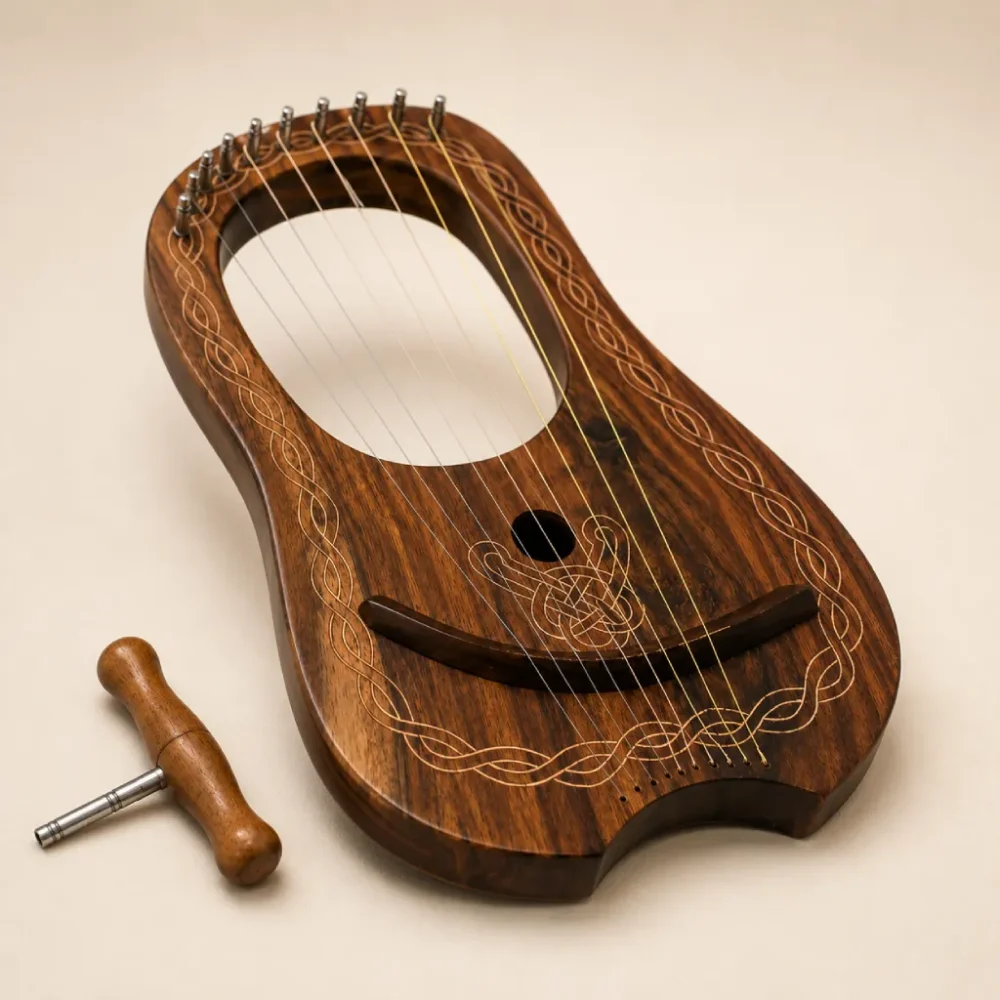
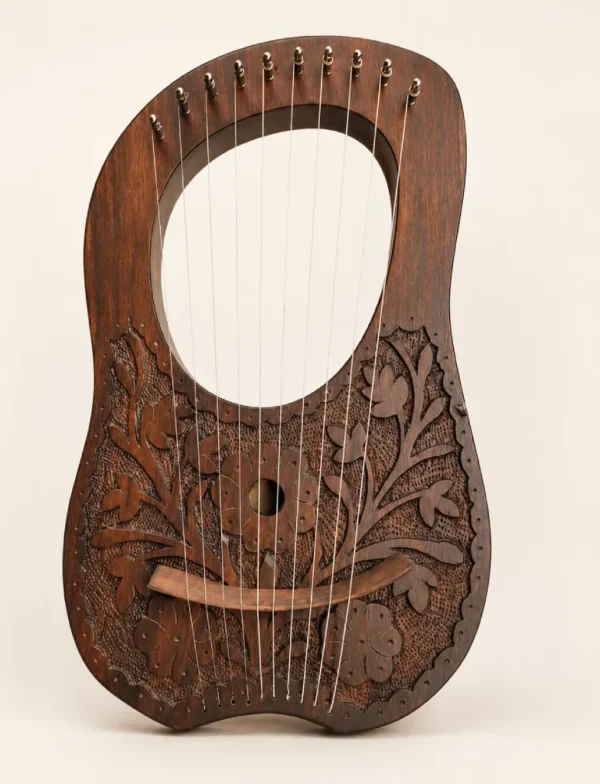
Celtic knotwork inlay — full perimeter band plus a centre panel at the soundhole
Set flush into solid rosewood, not printed or stencilled
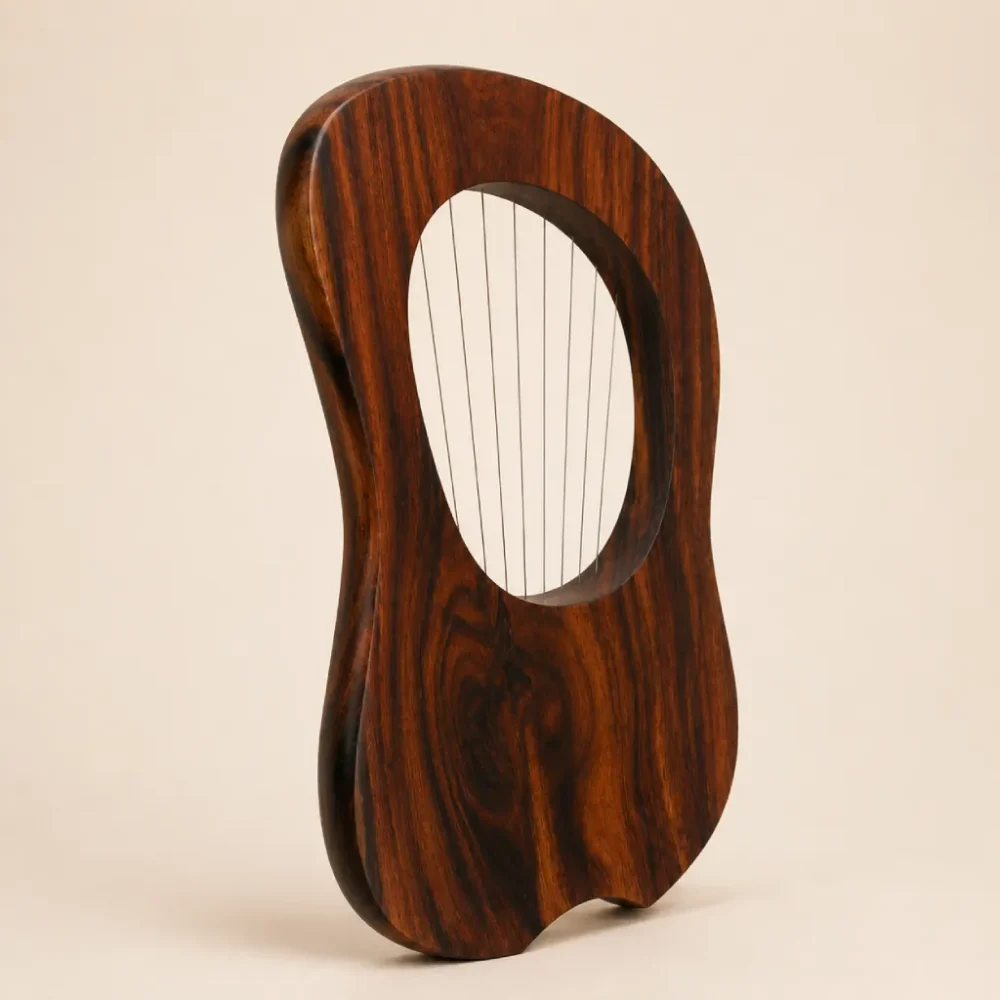
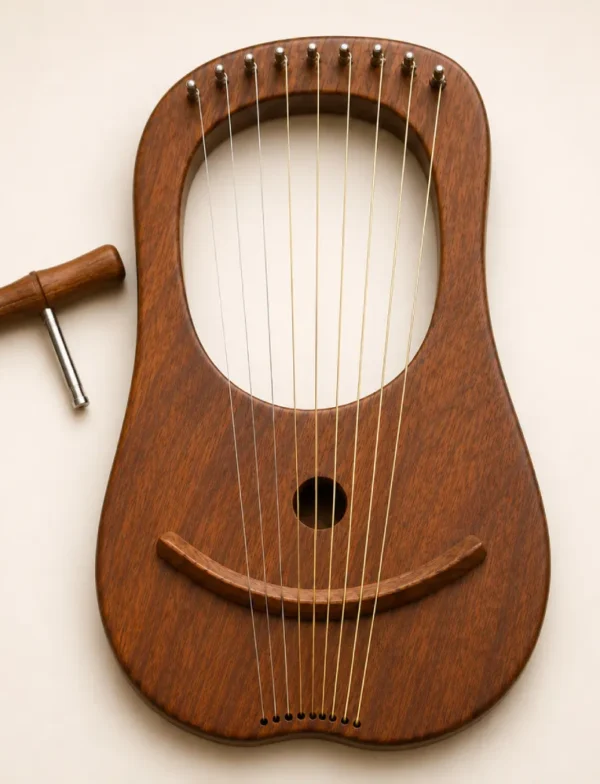
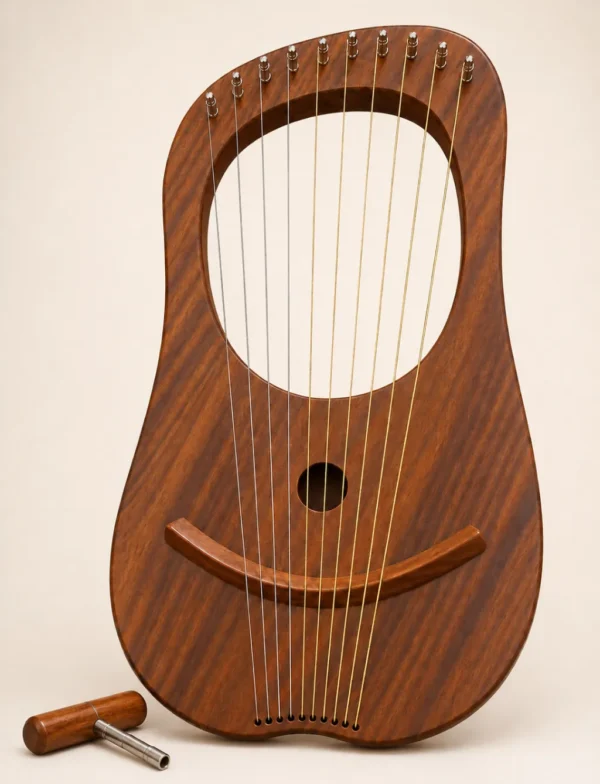
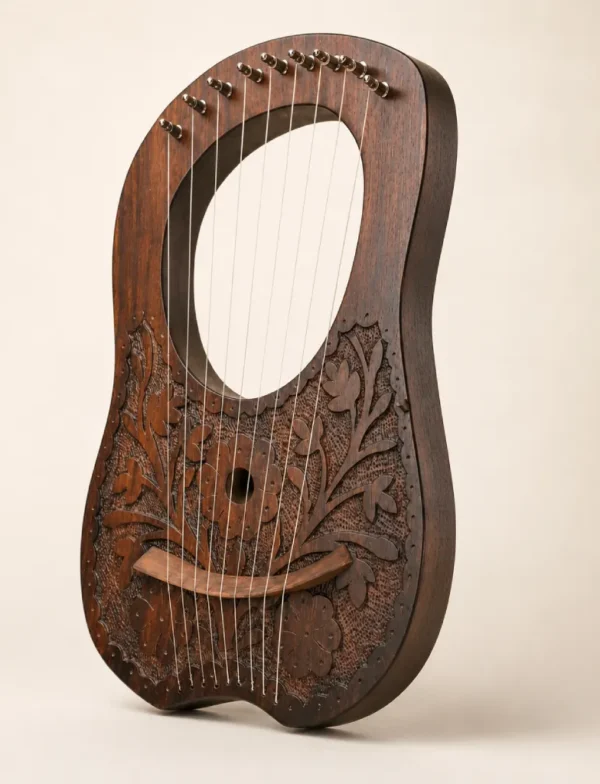
10 metal strings, tuned E4 to G5 in the notes of C major
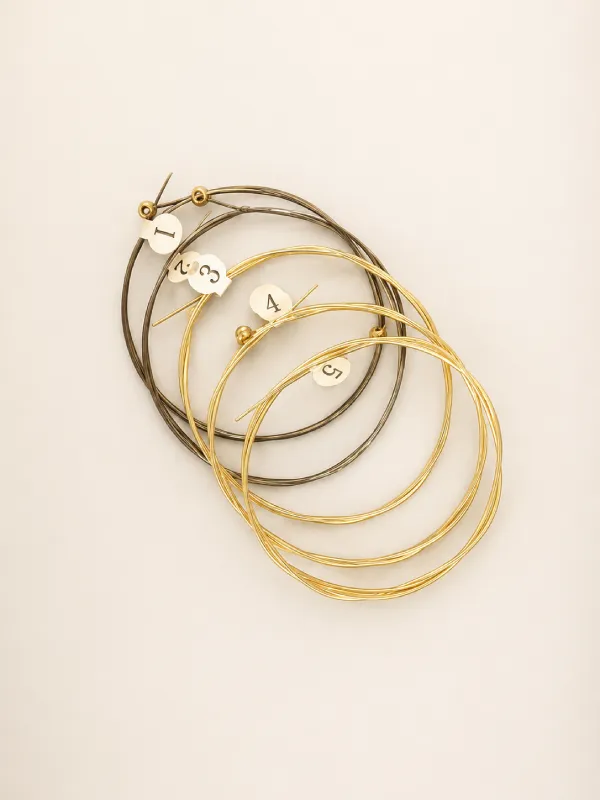
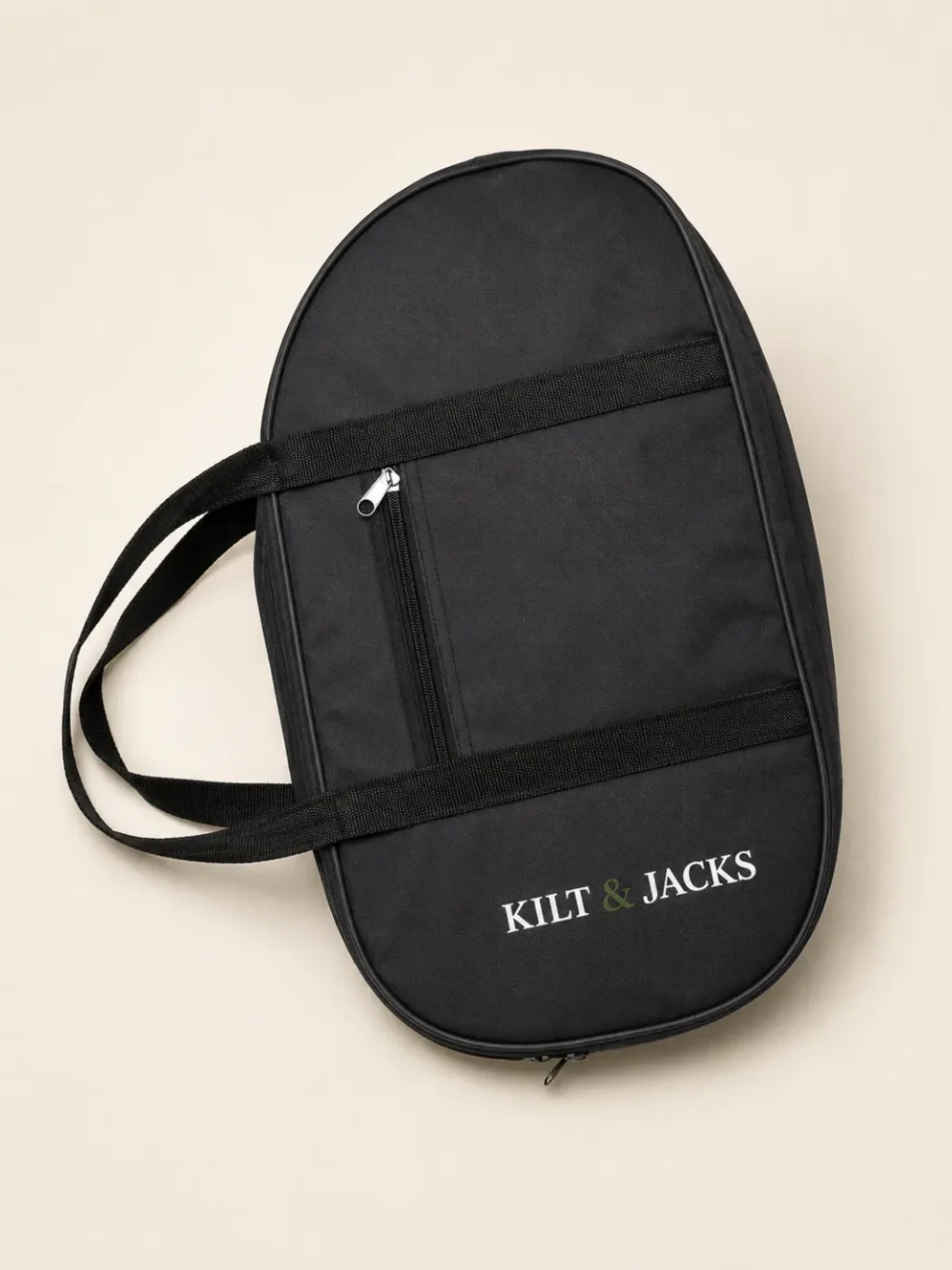
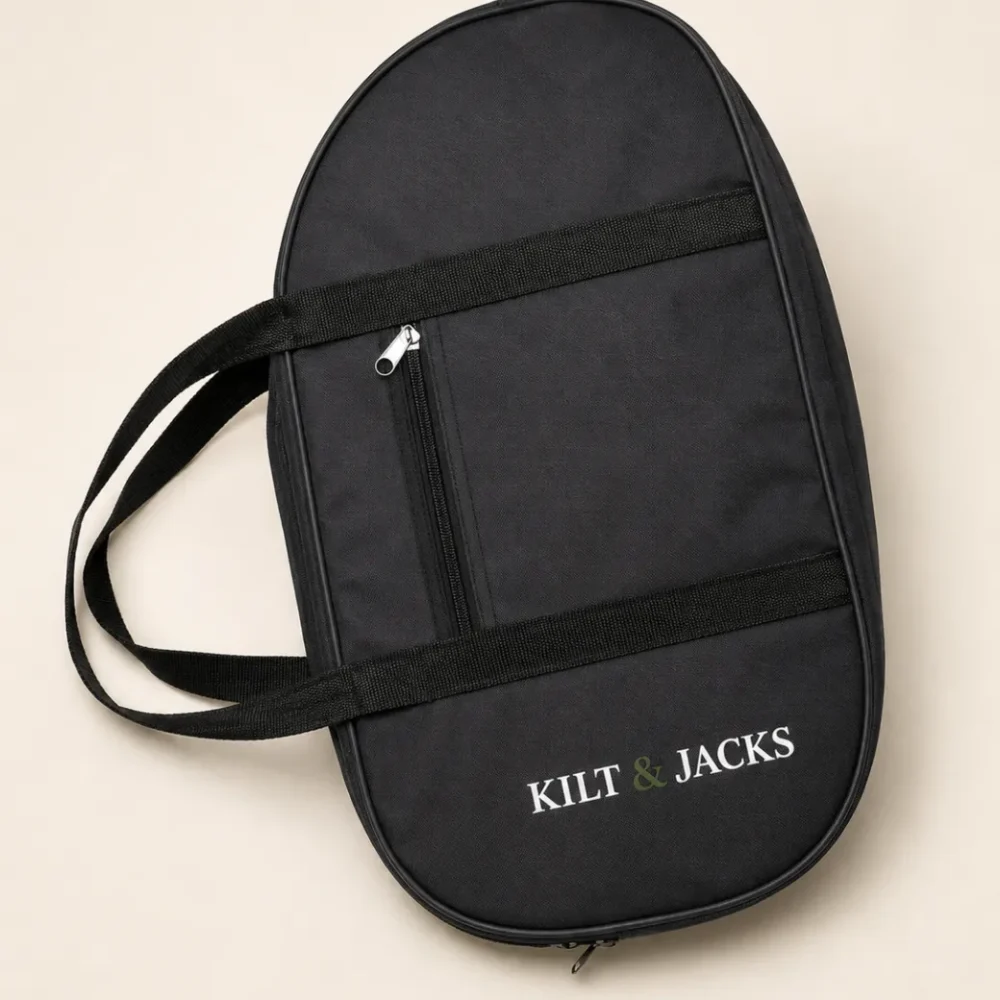
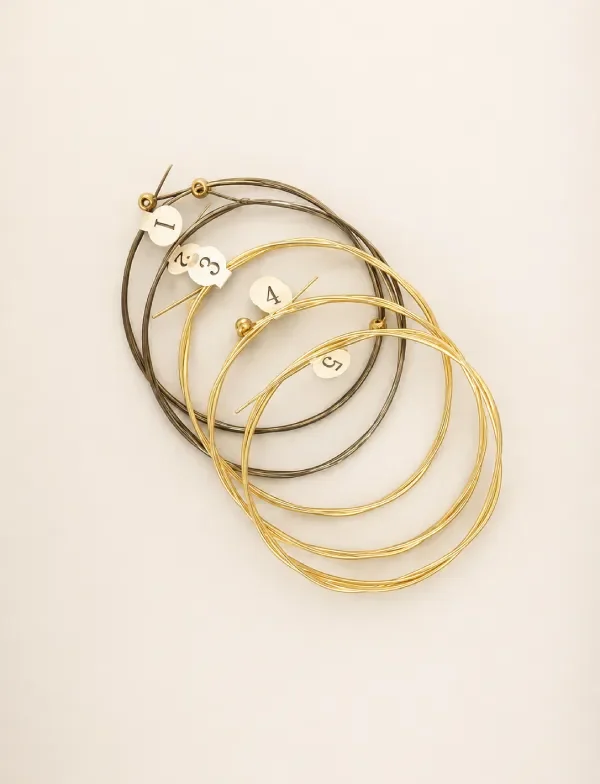
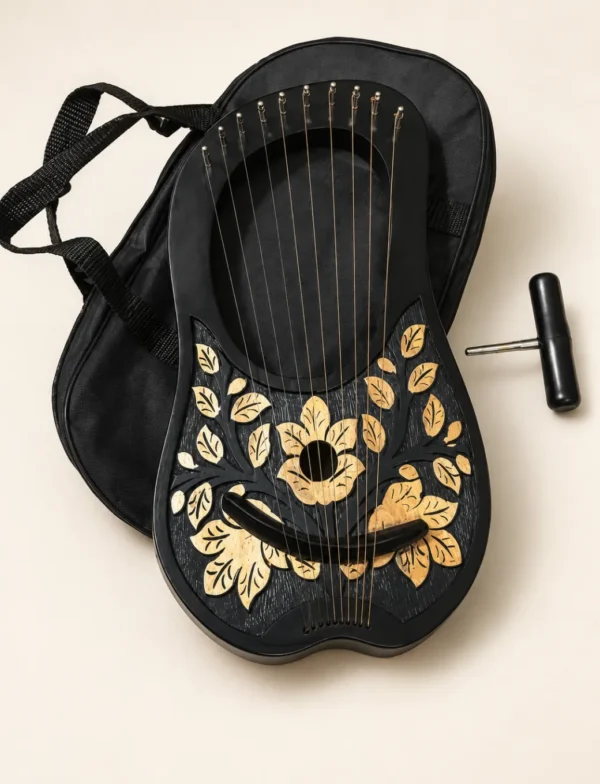
Turned wooden tuning key, spare string set and bag included
Arrives tuned, checked note by note in our workshop
Ships worldwide in 10 working days
Inlaid, not printed. The knotwork is a pale strand set into a channel cut in the rosewood, then levelled flush. Run a thumb across it and you feel nothing. That’s how you tell inlay from a transfer, and most harps at this price are transfers.
The line never breaks. Follow the border with your eye and it runs the full way round without a join. Two strands crossing over and under, returning to where they started. That’s the discipline of interlace, and it’s the reason it’s difficult to inlay — one bad join and the whole thing reads as broken.
Where the pattern comes from. Plaitwork like this runs through Insular art from around the seventh century, carved on cross-slabs and drawn in the manuscripts made at monasteries including Iona and Lindisfarne. It’s the foundation form. The knots people recognise today, the triquetra and the rest, are elaborations of it.
One honest note. Victorian revivalists assigned fixed meanings to individual knots — this one for loyalty, that one for eternity. The early work doesn’t support most of those readings. The pattern is older and stranger than the gift-shop version. We’d rather tell you that than sell you a legend.
Ten strings, four scales, no extra kit. Ships in the notes of C major. Sharpen both F strings with the key and you’re in G major, E minor, D Mixolydian or A Dorian. Sharpen the C as well and you have D major and A Mixolydian, the Highland pipe scale. Two minutes with the key.
Right for you if you want Celtic knotwork that’s genuinely cut into the instrument, or you’re buying a gift where the detail has to hold up close.
Look at the 16-string if you read music and want to move between keys without stopping to retune.
What’s in the box
The harp, tuned before it leaves us
Turned wooden tuning key — the wrench that fits the tuning pins
$319.95Original price was: $319.95.$255.96Current price is: $255.96.
Your MeasurementsEnter your measurements carefully for the best possible fit.Customize Your OrderChoose the construction details and matching add-ons you prefer.Additional RequirementsAdd any special instructions or delivery requirements for your order.Your OrderReview and Add to CartLive TotalSelected OptionsFinal TotalFinal price updates with your selections.Secure Checkoute.g. 5'10"e.g. 178Measurement unitinchesHow to measurethis optionMeasurement guideLeave these and we cut them to standard proportions.andMeasuring guideGot itClose guideWaistHow to measure your waistA kilt sits at the navel, not at the hipTrousers sit several inches lower. Measuring where your jeans sit gives a waist that is too small, and the kilt will ride down.Measuring the natural waist at the navel for a kiltStand relaxed and breathe normally. Do not hold your breath or pull the tape tight.Bring the tape around your natural waist, level with your navel.Keep the tape horizontal all the way round and snug against the body.Read the measurement in inches and round to the nearest whole number.Kilt lengthHow to measure your kilt lengthThis is not a waist to floor measurementA kilt finishes at the middle of the knee. Measuring to the floor, or to the top of the knee, is the most common ordering error we see.Measuring kilt length from the navel to the middle of the kneeStand up straight with your feet slightly apart, wearing flat shoes or none.Start at your navel, the same point you measured your waist from.Measure straight down to the middle of your kneecap.Ask someone to help if you can. Bending to read the tape shortens the result.HipsHow to measure your hipsWe need this oneThe pleats are shaped to your hip measurement, so we cannot cut without it. A hip figure smaller than your waist is worth double-checking before you order.Measuring around the fullest part of the seatStand with your feet together and your weight even on both legs.Measure around the fullest part of your seat, usually about 8 in below the waist.Keep the tape level front and back, resting on the body without compressing it.ChestHow to measure your chestDo not add room yourselfCustomers often add two inches for comfort. The pattern already includes it, so the jacket comes back too large.Wear the shirt you will wear under the jacket.Measure around the fullest part of the chest, under the arms and across the shoulder blades.Keep the tape level and snug, with your arms relaxed at your sides.Do not add anything for comfort. We add the fitting ease.WaistHow to measure your jacket waistThis is not your kilt waistA kilt is measured at the navel. A jacket waist is taken higher, at the narrowest point of the torso, and is usually an inch or two smaller. Reusing your kilt waist gives a jacket that is loose through the body.Wear the shirt you will wear under the jacket.Measure around the narrowest part of your torso, above the navel and below the ribs.Keep the tape level all the way round, snug but not tight.ShoulderHow to measure the shoulder seamAcross the back, not over the armsCurving the tape over the shoulder caps adds two or three inches and makes the jacket drop off the shoulder.Stand relaxed, facing away from whoever is measuring.Measure straight across the back from the bony point of one shoulder to the other.Follow the flat of the back, not the curve over the arms.SleeveHow to measure shoulder seam to cuffArm straight, not bentMeasuring with a bent elbow adds length and the sleeve will cover the hand.Let the arm hang straight down, relaxed.Start at the bony point of the shoulder.Measure down the outside of the arm to where you want the cuff to finish, usually at the wrist bone.Back lengthHow to measure back lengthStop at the kilt waistbandA jacket cut too long covers the top of the pleats and shortens the look of the kilt.Start at the base of the collar, where the neck meets the shoulders.Measure straight down the centre of the back.Stop where you want the jacket to finish.For an Argyll this usually sits just below the waistband of the kilt.How to measure your waistThis sits higher than your jeansA ladies kilt sits at the natural waist, not on the hip. Measuring where trousers sit gives a waist several inches too large and the kilt will sit low.Measuring the natural waist, at the narrowest part of the torsoStand relaxed and breathe normally.Find the narrowest part of your torso, usually about an inch above the navel and below the ribs.Keep the tape level all the way round, snug but not tight.Round to the nearest half inch.How to measure your lengthThis is not a waist to floor measurementMeasure to your chosen hem, not to the ground. If you are unsure, mid knee is the most ordered length.Measuring kilt length from the natural waist to the chosen hemStand straight in flat shoes or bare feet.Start at the natural waist, the same point you measured above.Measure straight down the side of the leg to where you want the hem to finish.Common choices are just above the knee, mid knee, or just below.How to measure your hipsWe need this oneThe pleats are shaped to your hip measurement, so we cannot cut without it. Taking it too high, at the hip bone rather than the seat, makes the kilt tight through the pleats.Measuring around the fullest part of the hipsStand with your feet together and your weight even on both legs.Measure around the fullest part of your seat, usually 7 to 9 in below the natural waist.Keep the tape level front and back, resting on the body without compressing it.
This site is registered on wpml.org as a development site. Switch to a production site key to remove this banner.
Reviews
There are no reviews yet.