BLACK FRIDAY IS HERE! ✦ 20% OFF EVERYTHING · Shop the Sale →
About our overbust corsets
Overbust corsets in Victorian, bridal, and gothic register, hand-made since 2017
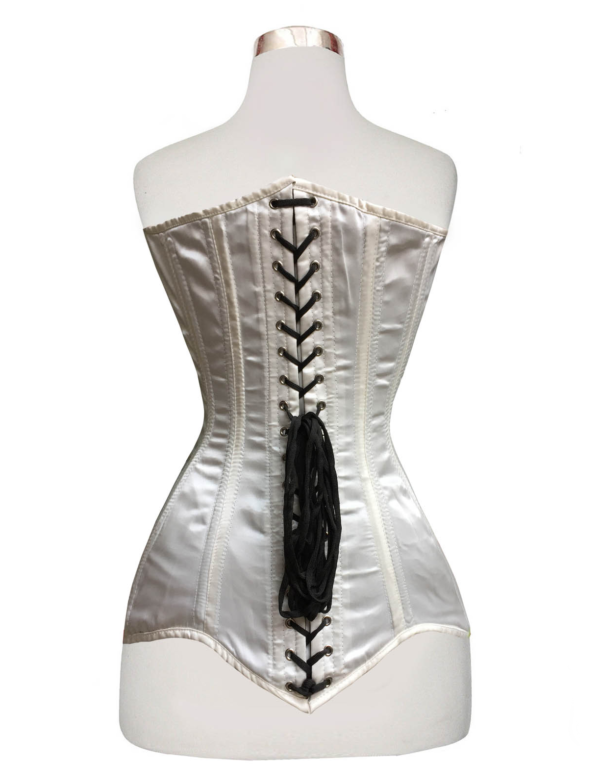
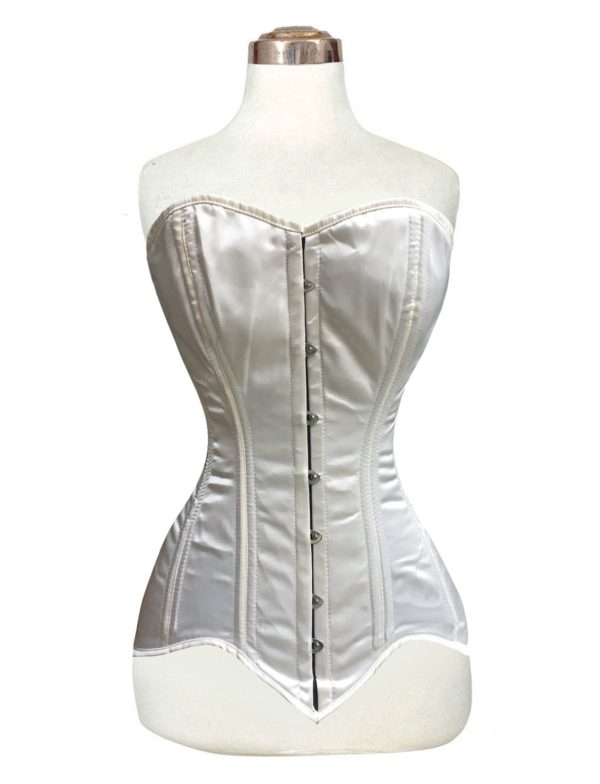
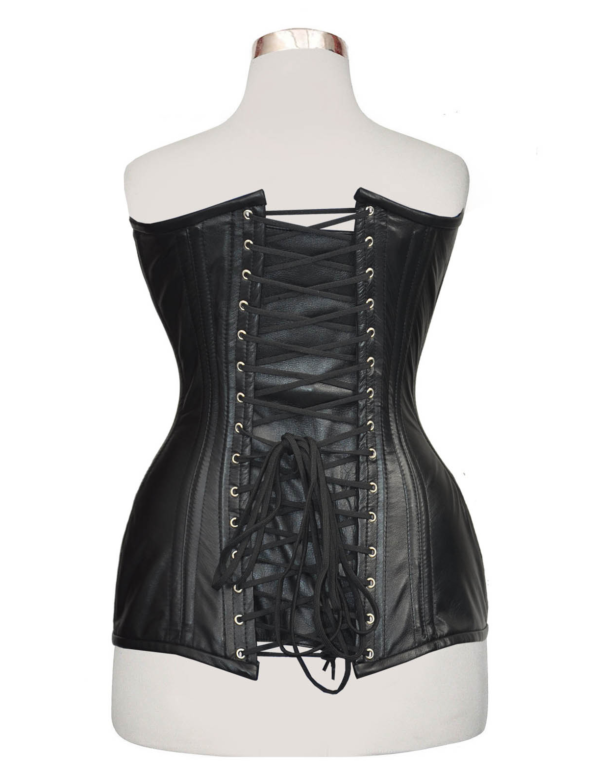
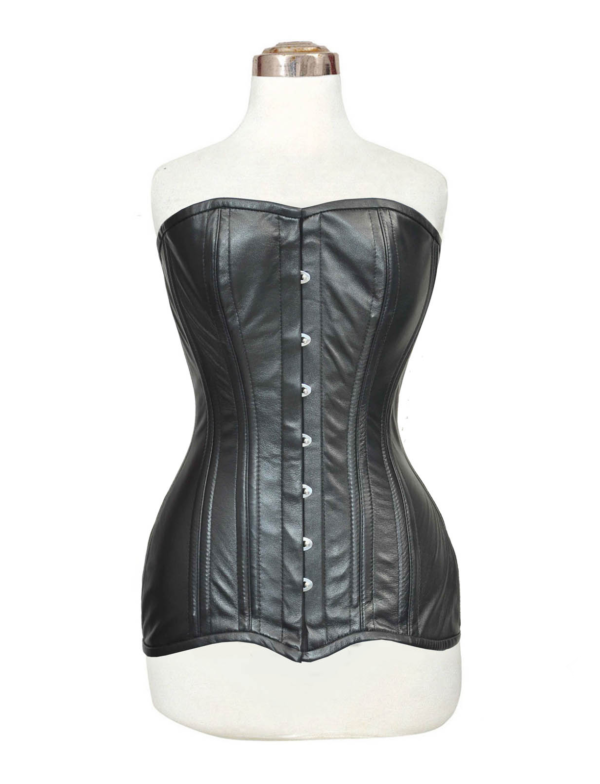
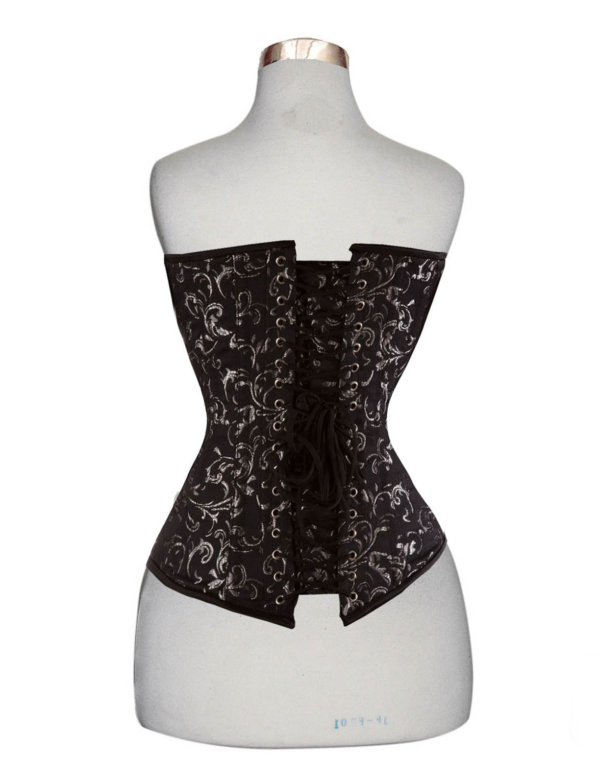
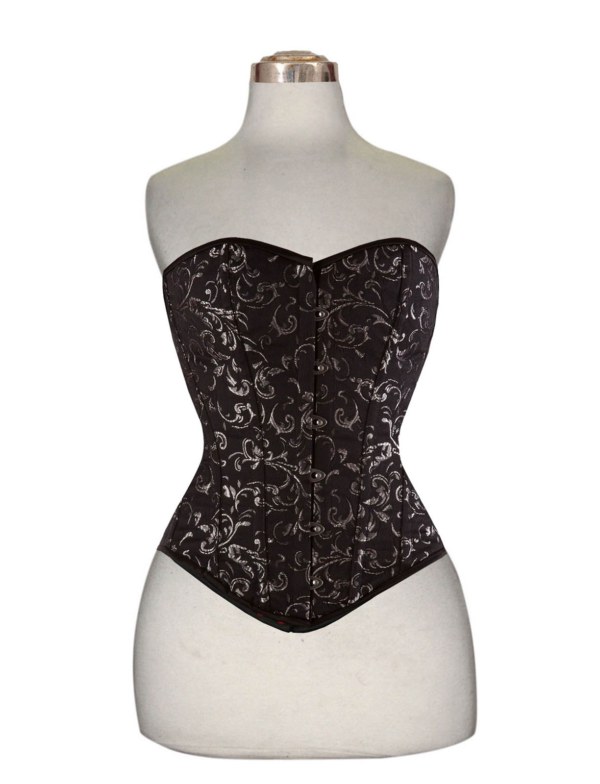
Kilt and Jacks has been making overbust corsets by hand since 2017. Every overbust corset we ship — whether for Victorian and Edwardian-inspired formal wear, bridal contexts where the corset is worn as visible outerwear or as the base of a wedding gown, gothic subculture styling as a complete outerwear top piece, or specific event and costume wear — is drafted from your specific measurements including bust circumference and apex, underbust, natural waist, hips, torso lengths, and any specific fit notes. Cut and stitched by hand at our workshop under Master Tailor Kristy McMillan, with proper corset construction throughout: appropriate boning specification (steel-boned or standard depending on the intended use), busk closure at the front, lacing at the back for adjustment, integrated bust cups shaped to your specific measurements, coutil interlining where the construction calls for it, and lining fabric that suits both comfort and durability.
What defines the overbust corset
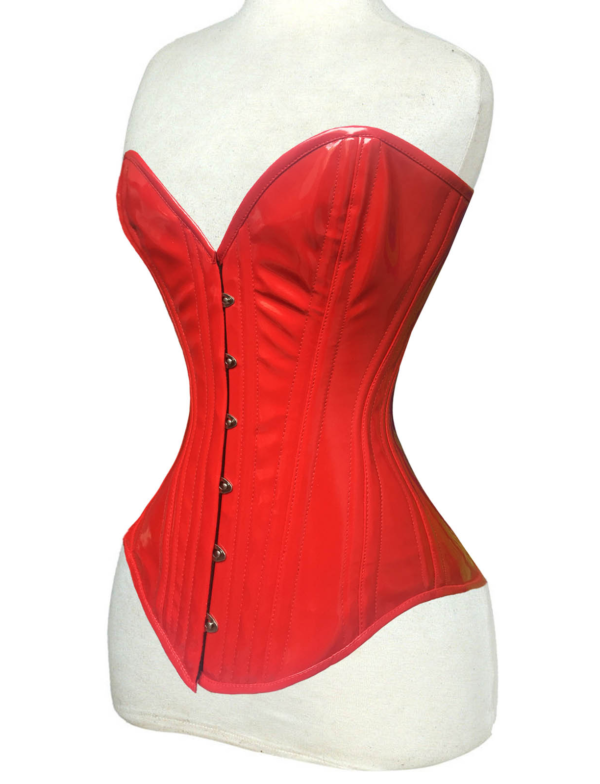
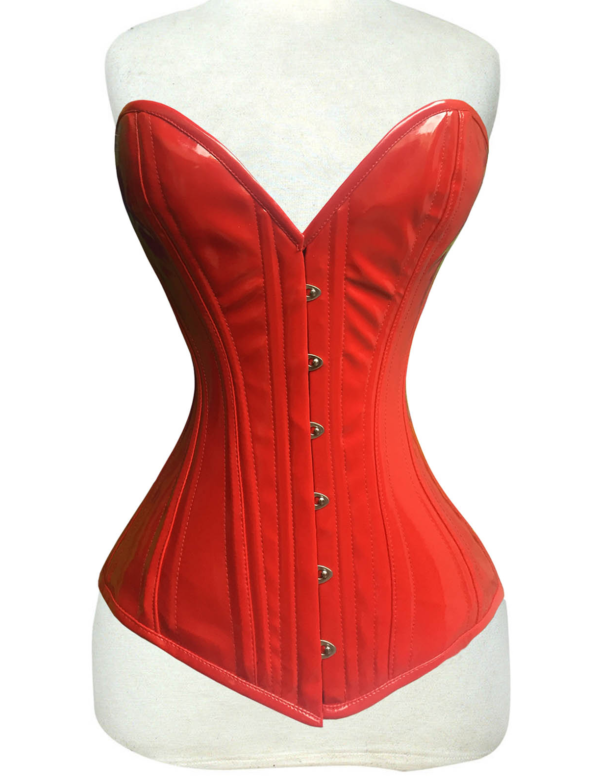
Overbust corsets are the traditional complete corset construction — covering the bust and torso in one integrated garment rather than starting below the bust the way underbust corsets do. The bust cups are shaped and constructed as part of the corset, providing bust support integrated into the corset structure rather than requiring a separate bra or fitted top underneath. This makes overbust corsets a complete top garment on their own — worn as visible outerwear without layered coverage above, functioning as the full upper-body piece of an outfit.
This construction difference determines both the buyer psychology and the styling context. Overbust corsets sit at the more formal, more historically-referenced end of the corset range — they carry Victorian and Edwardian visual associations from the historical period when overbust corsets were the standard women's foundation garment, and this historical register shapes the contemporary contexts where overbust corsets are worn. Overbust corsets read as more dressed and more considered than underbust corsets, and they're often chosen specifically for contexts where the corset itself is the visible top garment rather than a supporting layer beneath other clothing.
Overbust corsets are also structurally more complex to make correctly. The integrated bust cups require specific shaping and construction that accommodates the buyer's bust circumference, cup size, and apex placement (where the fullest point of the bust sits relative to the shoulder). Poor overbust fit is more immediately visible than poor underbust fit because the corset is visible in its entirety, and the fit across the bust must sit naturally rather than appearing forced or ill-proportioned. This is why our overbust corsets are made-to-measure to specific bust measurements — a properly-fitted overbust corset must fit the specific proportions of the buyer's body across every dimension, not just the waist.
When to choose overbust construction
The choice between overbust and underbust construction depends on how you want the corset to sit on your body and what you're wearing it for.
Choose overbust construction if: you want the corset to be a complete top garment worn as visible outerwear without separate bust coverage; you're wearing the corset in Victorian, Edwardian, or historical fashion register where the overbust silhouette is traditional; you're buying for bridal wear (either as visible corset in alternative bridal register or as the structured base of a wedding gown); you're building gothic outfits where the corset is the top piece rather than a layered piece; or you specifically prefer the more dressed, more considered register that overbust corsets carry.
Choose underbust construction if: you want to layer the corset over your existing tops and blouses; you're primarily waist training and want the standard tight-lacing construction; you want maximum styling versatility across different tops and layering choices; or you find bust coverage in corsets uncomfortable and prefer to manage bust support separately with your existing bras and tops. Our underbust corsets range covers the alternative construction.
Some buyers own both overbust and underbust corsets — they serve genuinely different styling contexts, and buyers who wear corsets regularly often have one of each for the different registers they need to cover.
The styling registers overbust corsets serve
Overbust corsets work across several coherent styling contexts, each with slightly different construction requirements and fabric preferences.
Victorian and Edwardian formal wear. Overbust corsets in satin, brocade, or specialty historical fabrics, worn with matching skirts, historical fashion accessories, and period-appropriate styling. Right for Victorian and Edwardian formal events, historical reenactment, period-appropriate weddings and formal occasions, and buyers who genuinely engage with historical fashion tradition. Cross-links with our steampunk corsets for the more industrial-Victorian register with brass hardware and mechanical detailing. Colours typically neutrals (black, ivory, cream, deep colours like burgundy or forest green) that read as period-appropriate rather than contemporary.
Bridal wear. Overbust corsets in ivory, cream, white, or blush satin for alternative bridal register where the corset is visible as the top of the wedding outfit. Also worn as the structured base of a wedding gown, with the dress skirt sewn onto the corset base — this construction gives brides the fitted top and dramatic silhouette without needing separate corset and dress that must be coordinated. For buyers building bridal outfits specifically, message us for construction options including detachable skirts and dress-attachment configurations. Bridal overbust corsets typically use satin or brocade with specific detailing (lace overlays, embroidery, beading on request) that reads as bridal rather than daily wear.
Gothic and alternative subculture styling. Overbust corsets in leather, satin, brocade, or specialty gothic fabrics, worn as complete outerwear top pieces in gothic outfits. Trad goth register uses overbust corsets with fitted skirts or gothic kilts, layered with gothic outerwear (see our women's gothic jackets and coats). Romantic goth register uses overbust corsets in velvet, brocade, and specialty fabrics with dramatic silhouettes and Victorian-influenced accessories. Corp goth register uses more understated overbust corsets in black satin with tailored bottom-wear for professional-adjacent contexts. Cross-links with our gothic corsets range for the gothic-specific construction hub.
Burlesque and performance wear. Overbust corsets in high-drama fabrics with performance-appropriate construction — sequins, feathers, elaborate hardware where the design calls for it. Right for burlesque performers, cabaret contexts, and buyers building performance wardrobes. Available on request as custom construction.
Event and costume wear. Overbust corsets in specific fabric and detail configurations for specific events — Halloween, cosplay, themed events, and specific costume contexts. Constructed with the same quality as our regular range but with detail specifications matched to the specific event register.
Fabrics and construction for overbust corsets
Overbust corsets in our range work across specific fabric categories, each suiting specific styling contexts.
Satin — the traditional overbust corset fabric, right for Victorian formal wear, bridal register, and buyers who want a smooth structured visual language. Satin overbust corsets have a specific historical fashion register that reads as intentional and considered. Available in black (most versatile), ivory (bridal and formal), and specialty colours (deep red, burgundy, purple, black-on-black, deep green).
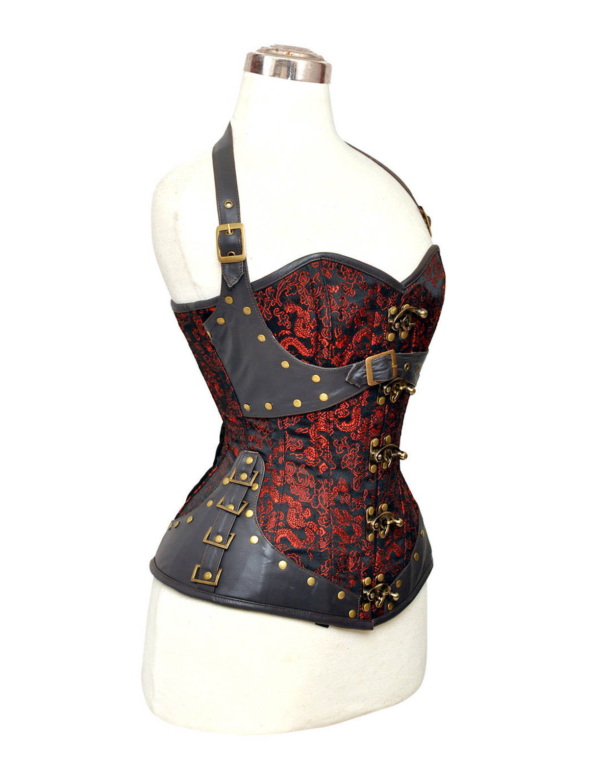
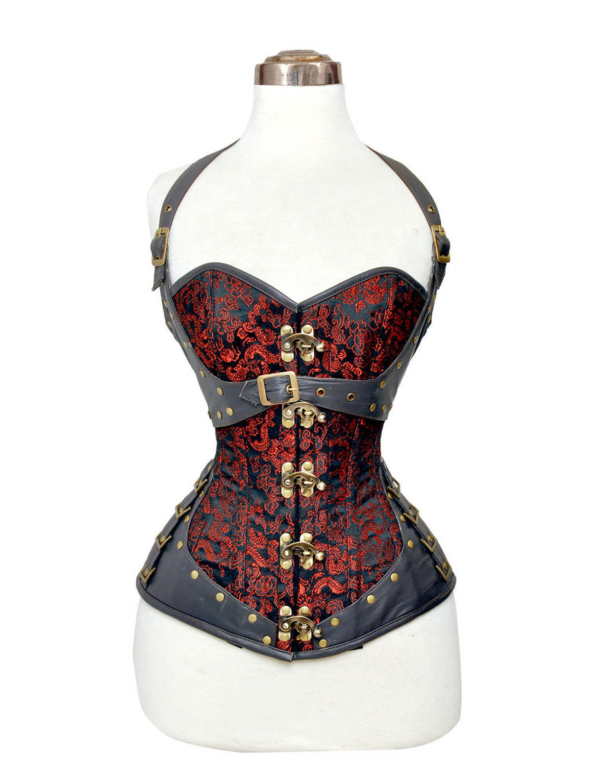
Brocade and tapestry — pattern-forward fabric with historical fashion associations, right for Victorian gothic register, steampunk styling, and buyers who want the corset to reference historical fashion tradition. Brocade overbust corsets often incorporate matching or contrasting bindings and edging that emphasise the pattern and structure.
Leather (full-grain and top-grain) — the strongest visual register for overbust corsets in gothic and alternative fashion contexts, right for buyers who want the corset to be a genuine statement piece with leather register. Leather overbust corsets require specific construction consideration for the bust cups — leather doesn't stretch the way satin or brocade does, so bust fit calculations require precise measurement and construction.
Velvet — right for romantic goth register, evening wear, and buyers who want soft-visual-language corsets with dramatic register. Velvet overbust corsets pair naturally with fitted skirts, dramatic outerwear, and Victorian-influenced accessories.
Specialty fabrics — lace overlays, beaded fabrics, embroidered specialty fabrics for bridal and formal register, and bespoke fabric requests. Available on request with lead-time discussion for complex custom fabrics.
Construction across all fabric choices includes proper busk closure at the front, lacing at the back for adjustment, integrated bust cup construction shaped to your specific bust measurements, coutil interlining in steel-boned corsets for structure, boning specified for the intended use (steel-boned for outerwear and waist training, standard for lighter fashion contexts), and lining fabric for comfort against the skin. Bust cup construction can include integrated support (light padding for shaping) or minimal construction (cup shape without additional padding) depending on your preference — specify in your order notes.
Overbust corset sizing and fit
Overbust corset sizing requires more measurements than underbust corsets because the bust construction must fit correctly. Provide us with: bust (fullest circumference around the bust), underbust (circumference immediately below the bust), natural waist, hips, bust apex placement (distance from shoulder to fullest point of bust — helps position the bust cup construction correctly), underbust-to-natural-waist torso length, and full torso length (underbust to hip). Include any specific fit notes about your body — asymmetric bust, specific fit preferences, previous corset fit issues.
For sizing reduction, follow the same logic as underbust corsets: fashion overbust corsets sized 1-2 inches below your natural waist measurement for comfortable fit that provides shape without serious compression; waist training overbust corsets sized 3-4 inches below your natural waist, though most serious waist trainers prefer underbust construction for training and use overbust corsets primarily for fashion contexts. If you're specifically waist training and considering overbust construction, message us to discuss whether overbust is genuinely appropriate for your specific training approach — most serious tight-lacers find underbust construction more practical for extended training sessions.
Bust cup fit is the specific concern with overbust corsets. If you're between bust sizes, ordering measurements based on your larger bust circumference is safer than ordering based on your smaller — bust cups that are slightly loose can be adjusted through lacing and body settling, but bust cups that are too tight will compress uncomfortably.
How to wear an overbust corset
Overbust corsets are complete top garments, so styling focuses on the pieces worn with them rather than layered above. For Victorian formal wear — pair with matching or coordinating skirts (long silhouettes for period-appropriate styling), period-appropriate accessories (chokers, hats, historical jewellery), and historical-style shoes. For bridal contexts — pair with wedding skirts (or the integrated dress construction), bridal accessories (veils, jewellery, appropriate footwear), and considered bridal styling. For gothic and alternative styling — pair with gothic kilts (women's gothic kilts pair naturally), leather or gothic-register skirts, gothic outerwear layered over the top (women's gothic jackets and coats for full outfit builds), and heavy footwear (combat boots, platform boots, Victorian-influenced heeled boots). For daily fashion wear — pair with fitted skirts or tailored trousers, considered outerwear, and versatile footwear appropriate to the specific outfit register.
Overbust corsets do not typically require layering above them because they cover the bust and torso completely — this is one of the key advantages of overbust construction versus underbust. However, some buyers wear light cardigans, kimonos, or open jackets over overbust corsets for warmth or styling variation. Structured outerwear (blazers, gothic jackets, leather jackets) worn open over overbust corsets creates coherent layered outfits.
Every overbust corset ships in ten working days from order confirmation, is hand-tailored at our workshop, and is guaranteed to fit the measurements you sent us. If it doesn't, we remake it at no cost. See our returns policy for full terms.
Integrated bustComplete top garment,
no separate coverage
no separate coverage
10 daysCut, tailored,
shipped
shipped
7 measurementsGuaranteed to fit
or remade free
or remade free
From $219Made-to-measure
pricing
pricing
Frequently asked
Questions before ordering
What's the difference between overbust and underbust corsets?
Overbust corsets cover the bust and torso in one integrated garment, with bust cups shaped and constructed as part of the corset itself. They function as complete top garments — worn as visible outerwear without separate bust coverage or layering. Right for Victorian and Edwardian formal wear, bridal contexts, gothic outerwear styling, and buyers who want the corset to be the top piece of an outfit. Underbust corsets start at the underbust (just below the bust) and end at or below the natural waist, leaving the bust uncovered to be worn with the buyer's existing tops or bras. Right for waist training, fashion layering, and buyers who prefer to manage bust coverage separately. See our underbust corsets range for the alternative construction. Some buyers own both — they serve genuinely different styling contexts.
How does overbust corset fit differ from underbust fit?
Overbust fit requires additional measurements and precision because the bust construction must fit correctly for the corset to sit properly on the body. Underbust corsets fit primarily on the waist and torso measurements; overbust corsets add bust circumference, bust apex placement (distance from shoulder to fullest bust point), and cup construction to the fit calculation. Poor overbust fit is also more visible than poor underbust fit because the entire corset is visible in most wear contexts — bust cups that are too tight compress uncomfortably; bust cups that are too loose sag or don't hold shape; incorrect apex placement causes the corset to sit at wrong proportions. This is why our overbust corsets require seven measurements rather than the six required for underbust construction. If you're between bust sizes, order based on your larger bust circumference — bust cups that are slightly loose can adjust through lacing; bust cups that are too tight cannot.
Can I use an overbust corset for waist training?
Yes — steel-boned overbust corsets can be used for waist training and function well for that purpose, but most serious tight-lacers prefer underbust construction for training and use overbust corsets primarily for fashion contexts. The reason: overbust corsets are physically longer and more structured than underbust corsets, which means they compress a larger area of the torso and are less comfortable for extended training sessions (8-12 hour daily wear). For serious waist training, our waist training corsets range focuses specifically on underbust steel-boned construction optimised for tight-lacing progression. If you specifically want to waist train in overbust construction (some buyers do for specific styling contexts), our steel-boned overbust corsets are absolutely appropriate — just recognise that most serious tight-lacers use underbust for training and overbust for the visible outerwear contexts where overbust construction is preferred.
Are your overbust corsets suitable for bridal wear?
Yes — overbust corsets in ivory, cream, white, or blush satin, brocade, or specialty bridal fabrics are appropriate for bridal contexts across several bridal styling approaches. For alternative bridal register where the corset is worn as visible outerwear (with a matching or coordinating skirt for the bottom half), overbust corsets read as intentional bridal alternative styling. For traditional bridal gowns, the overbust corset can serve as the structured base of the gown with the dress skirt sewn or attached to the corset — this construction gives brides the fitted top and dramatic silhouette without needing separate corset and dress that must be coordinated. For bridal-specific requests, message us with your wedding date, styling direction, and any specific fabric or detail requirements. We can construct bridal overbust corsets with lace overlays, embroidery, beading, or specific bespoke details on request. Add at least 6-8 weeks lead time for bridal orders to allow for construction, potential fit adjustments, and safety margin before your wedding date.
What fabrics work best for different overbust corset styles?
Depends on styling context. Satin for Victorian formal, bridal register, evening wear, and traditional overbust styling — smooth structured visual language that reads as intentional and considered. Brocade and tapestry for Victorian gothic, steampunk register, and pattern-forward styling — historical fashion associations with specific pattern character. Leather for gothic and alternative fashion contexts where the corset is a statement piece — strongest visual register, requires precise construction for bust cup fit. Velvet for romantic goth register and evening wear — soft visual language with dramatic register. Specialty fabrics (lace overlays, beaded fabrics, embroidered specialty fabrics) for bridal and bespoke formal wear. Match the fabric to your intended wear context — a Victorian satin overbust doesn't work in gothic streetwear register, and a leather overbust doesn't read appropriately at a formal bridal ceremony. If you're building an outfit and want fabric guidance, message us with your styling context.
How do I put on an overbust corset properly?
Similar technique to underbust corsets with additional attention to bust positioning. Loosen the lacing at the back so the corset can open around your body. Position the bust cups correctly before closing the busk — the fullest bust position should align with the bust cup shaping, and the corset should sit at the correct height on your torso. Close the busk at the front, pin by pin from top to bottom or bottom to top. Tighten the lacing progressively from top and bottom toward the waist, working in small increments and letting the corset settle between adjustments. Check bust fit after initial lacing — if the bust cups feel uncomfortable, loosen the lacing slightly and reposition before continuing. For daily wear, the bust cups should feel supportive without compression; for tight-lacing contexts, the primary compression is at the waist while bust fit remains comfortable. New corsets require a break-in period of 1-2 weeks of shorter wear sessions (2-4 hours) with progressive lacing before you attempt significant compression.
Do you offer overbust corsets in vegan-friendly materials?
Yes. For buyers who avoid leather for ethical or lifestyle reasons, we offer overbust corsets in satin, brocade, cotton coutil, and specialty non-leather fabrics that provide the visual register and construction quality without using animal materials. These vegan overbust corsets are constructed with the same attention to detail as our leather range — appropriate boning, quality lining, hardware in matte black or antique brass finish, and reinforced construction for regular wear. Add "vegan materials only" to your order notes or message us before ordering to confirm which specific fabrics are in stock. Note that some specialty fabrics may contain silk or wool — if you're strictly avoiding all animal-derived materials, mention this specifically in your order notes so we can source appropriate alternative fabrics.
What if my bust size is significantly different from standard sizing?
Made-to-measure construction handles significant bust size variation because we cut each corset to your specific measurements rather than adapting from stock sizing. Provide us with your accurate bust circumference, underbust, and apex placement measurements, and we construct the bust cups to your specific proportions. This works for both larger bust sizes (where standard corsets typically don't accommodate proper support) and smaller bust sizes (where standard corsets often have cup construction that's too structured or too padded for smaller busts). For asymmetric bust (one bust larger than the other), include the specific measurements for both sides in your order notes — we can construct the corset with asymmetric bust cups to accommodate your specific proportions. For any significant fit concerns beyond standard construction, message us before ordering to discuss your specific requirements and confirm feasibility.
This site is registered on wpml.org as a development site. Switch to a production site key to remove this banner.