BLACK FRIDAY IS HERE! ✦ 20% OFF EVERYTHING · Shop the Sale →
About our tweed kilts
Tweed kilts, hand-cut to your measurements since 2017
Kilt & Jacks has been making tweed kilts by hand since 2017. Every tweed kilt we ship — whether Harris, Shetland, estate, or plain herringbone — is drafted from three measurements you send us: waist at the natural waistline (not the trouser waist, which is the single most common measurement mistake), hip at the widest point, and length from waist to the middle of the kneecap. There is no factory sizing. There is no closest fit. Prices from $189, in genuine British-woven tweed with hand-basted pleats.
What makes a tweed kilt different
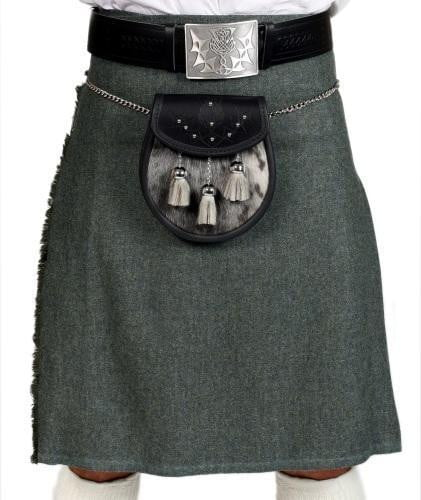
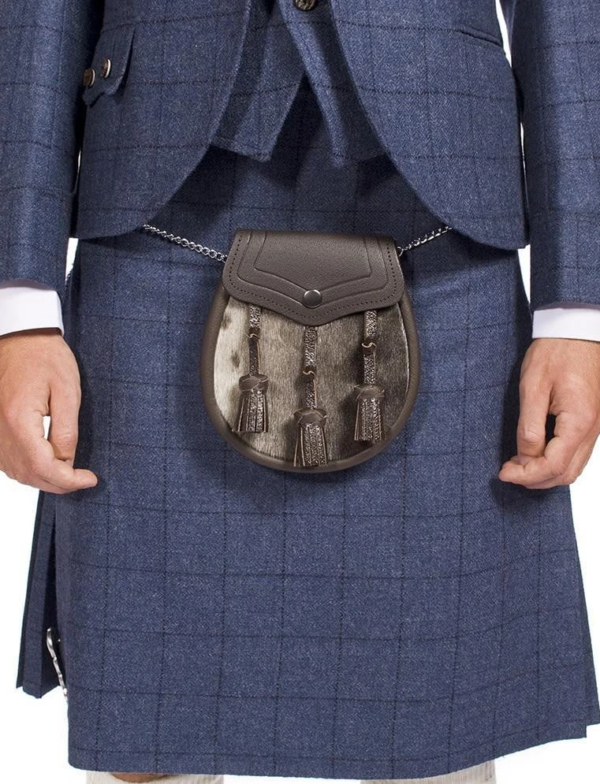
A tweed kilt takes the wraparound silhouette of the traditional Scottish kilt and cuts it from woven tweed instead of tartan. What separates it visually is texture rather than pattern. Where a tartan kilt announces itself through the interlocking sett of colours, a tweed kilt is quieter — a woven earth-tone cloth, usually in herringbone, twill, or a subtle overcheck, that reads landed rather than clan. It's the kilt of country wear, shooting parties, semi-formal daywear, and rural Highland dress rather than the ceremonial tartan of weddings and Burns Night.
Tweed has been part of Scottish and Highland dress for two centuries, but tweed kilts specifically are a slightly newer tradition — a category that grew out of country sporting wear in the twentieth century, sitting between the formal tartan kilt and the practical working garment. Today they're worn for shooting, stalking, and Highland sporting occasions, semi-formal daywear where a tartan reads too formal or too clan-specific, weddings with a country or rural dress code, and by men who want a kilt in the wardrobe that pairs with a sports jacket rather than a Prince Charlie. For a formal Highland event or clan gathering, the correct choice is a Scottish tartan kilt, not a tweed one.
Materials and construction
We work with three grades of tweed. Harris Tweed is the highest — hand-woven in the Outer Hebrides from pure virgin wool dyed and spun in the Islands, protected by the Harris Tweed Act of 1993, and stamped with the orb trademark that certifies its origin. It's the tweed with a legal definition. From $249. Shetland tweed is our mid-tier — woven from Shetland-sourced wool, softer to the hand than Harris, with a broader colour palette and less strict certification. From $199. Estate tweed is our workhorse — mill-woven British tweed in traditional country patterns (herringbone, glen check, houndstooth) at a more accessible price point. From $189.
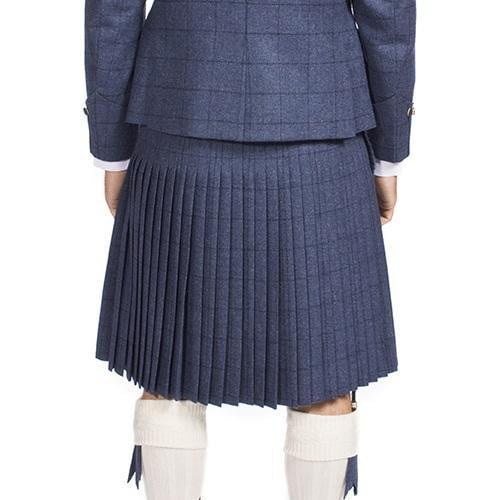
Weights range from 13oz for lighter daywear to 18oz for cold-weather sporting use. Tweed is heavier and more structured than most tartans, which gives the kilt a firmer drape and stronger shape retention. Pleats are hand-basted so the herringbone or check pattern continues cleanly across the back of the kilt when viewed straight on — the same skill and labour as a tartan kilt, sometimes more, because a subtle overcheck is harder to align than a bold tartan sett. Hardware is antiqued brass or leather-covered — nothing shiny, in keeping with country wear tradition. Every tweed kilt is inspected against the measurements you sent us before it ships.
The tweed patterns and colours we offer
Herringbone. The V-shaped weave that reads as the archetypal tweed pattern. Available in brown, moss green, grey, and heather in all three tweed grades. The safest starting point — pairs with almost any sports jacket or shirt in the wardrobe.
Glen check (Prince of Wales). Small woven check in muted earth tones, most often in grey, brown, or moss with a subtle overcheck line. Reads more formal than herringbone. Right for semi-formal daywear and country weddings.
Estate checks. Traditional country patterns associated with specific Scottish estates and shooting parties — subtle plaid overlaid on a solid ground, often in green, blue, or brown. Reads landed and traditional. Right for shooting, stalking, and country sporting occasions.
Plain and heather tweed. Undyed or heathered tweed with no pattern beyond the natural fleck of the wool. The quietest option. Right for men who want the tweed texture without any pattern statement, and for pairing with strongly patterned jackets or ties.
Not sure which fits your use case? Message us with the occasion — we'd rather trade three emails now than remake a kilt in six weeks.
Choosing your tweed kilt
Choose by grade first, pattern second, weight third. For men who want the definitive article and are buying once — Harris Tweed, in any pattern, in a weight that suits your climate. For men who want the tweed look without the Harris price — Shetland or estate tweed in herringbone or glen check. For shooting, stalking, and cold-weather sporting use — 16oz or 18oz in estate check or plain heather. For semi-formal urban and country wear — 13oz to 15oz in herringbone or Prince of Wales. Tweed pairs naturally with a sports jacket, waistcoat, brogues, and a plain shirt or open-collar knitwear; it does not pair with the Prince Charlie or Argyll jackets used for formal tartan wear.
Every tweed kilt ships in ten working days, is cut and hand-basted at our workshop, and is guaranteed to fit the measurements you sent us. If it doesn't, we remake it. See our returns policy for full terms. Tweed is one of several styles of men's kilts we make — see also Scottish tartan, hybrid, and leather styles.
British wovenHarris, Shetland,
and estate tweeds
and estate tweeds
10 daysCut, hand-basted,
shipped
shipped
Hand-bastedPattern-matched
across every pleat
across every pleat
Free remakeIf the fit isn't
perfect
perfect
Frequently asked
Questions before ordering
What is a tweed kilt?
A tweed kilt is a kilt cut from woven tweed instead of tartan wool. It keeps the wraparound silhouette of the traditional Scottish kilt — belt-fastened at the waist, hem falling to the middle of the kneecap — but replaces the interlocking sett of a tartan with the woven texture of tweed, usually in earth-tone herringbones, glen checks, or estate patterns. Tweed kilts sit between formal tartan and workwear utility on the dress spectrum. They're worn for country daywear, shooting and stalking, semi-formal occasions where tartan reads too clan-specific, and rural Highland dress. Tweed has been part of Scottish country wear for two centuries, and the tweed kilt as a garment developed through twentieth-century country sporting tradition.
What's the difference between a tweed kilt and a tartan kilt?
Fabric and register. A tartan kilt is cut from woven tartan wool — a specific interlocking sett of colours identified with a clan, family, district, or universal pattern — and reads formal, clan-connected, and ceremonial. A tweed kilt is cut from woven tweed — a textured earth-tone cloth in herringbone, twill, or subtle check — and reads country, semi-formal, and landed rather than ceremonial. Tartan is the correct kilt for weddings under Scottish dress code, Burns Night, clan gatherings, and full Highland dress. Tweed is the correct kilt for shooting, stalking, country weddings, semi-formal daywear, and rural occasions. Many men who wear kilts regularly own both.
What is Harris Tweed and is it worth the extra cost?
Harris Tweed is the only tweed protected by an Act of Parliament — the Harris Tweed Act of 1993 defines it as tweed hand-woven at the weaver's home in the Outer Hebrides of Scotland, from pure virgin wool dyed and spun in the Islands. Every genuine bolt is stamped with the orb trademark of the Harris Tweed Authority. It's the definitive article, and for a garment you'll own for twenty or thirty years, the premium is usually worth it — Harris tweed ages beautifully, holds structure through decades of wear, and carries an authenticity that Shetland and estate tweeds don't. If you're buying tweed once and want the real thing, Harris. If you're buying to try the category or want the tweed look at a more accessible price, Shetland or estate tweed are genuinely good cloths.
How do you care for a tweed kilt?
Tweed is dry-clean only — never machine wash, which will felt and shrink the wool irretrievably. Brush the kilt after each wear with a soft clothes brush to lift dirt and refresh the nap. Spot-treat surface marks with a slightly damp cloth and let air-dry before storing. Store on a wide hanger or folded flat in a cotton bag with cedar to deter moths; wool is vulnerable to moth damage in long storage. Take to a proper dry cleaner once a year for full cleaning, or after any significant staining. With this care a tweed kilt lasts thirty years or more and improves in drape as the wool relaxes over time.
Can I wear a tweed kilt to a wedding?
Yes, to the right kind of wedding. For country and rural weddings, semi-formal weddings with a countryside dress code, and modern Scottish weddings without a strict Highland dress requirement, a tweed kilt is entirely correct and often preferred — it reads landed and traditional without being tied to a specific clan. For formal Highland weddings, Burns Night dinners, and clan-specific ceremonies, tradition calls for a full tartan kilt in an eight-yard yardage with proper Highland accessories. If you're the groom, check the invitation and family expectations. If you're a guest at a country wedding where the dress code allows, tweed is often the more sophisticated choice than tartan.
What do you wear with a tweed kilt?
Tweed pairs with country and sporting-wear rather than formal Highland dress. Standard styling — a sports jacket (in tweed, wool, or moleskin) in a complementary earth tone, a plain shirt or open-collar knitwear, a waistcoat if you want to dress it up, and brogues or country boots. A plain leather belt with a simple brass or antiqued buckle. Wool hose (long socks) in a solid earth tone that picks up the tweed. A sporran is optional in tweed contexts — a plain leather day sporran works well, but the ornate dress sporran of formal Highland dress does not. Avoid the Prince Charlie or Argyll jackets used for formal tartan wear; they belong to a different register.