BLACK FRIDAY IS HERE! ✦ 20% OFF EVERYTHING · Shop the Sale →
About our hybrid kilts
Hybrid kilts, hand-cut to your measurements since 2017
Kilt & Jacks has been making hybrid kilts by hand since 2017. Every hybrid kilt we ship — whether tartan-and-leather, tartan-and-denim, tartan-and-canvas, or leather-and-canvas — is drafted from three measurements you send us: waist at the natural waistline (not the trouser waist, which is the single most common measurement mistake), hip at the widest point, and length from waist to the middle of the kneecap. There is no factory sizing. There is no closest fit. Prices from $129, combining fabrics in configurations no traditional kilt maker would attempt.
What makes a hybrid kilt different
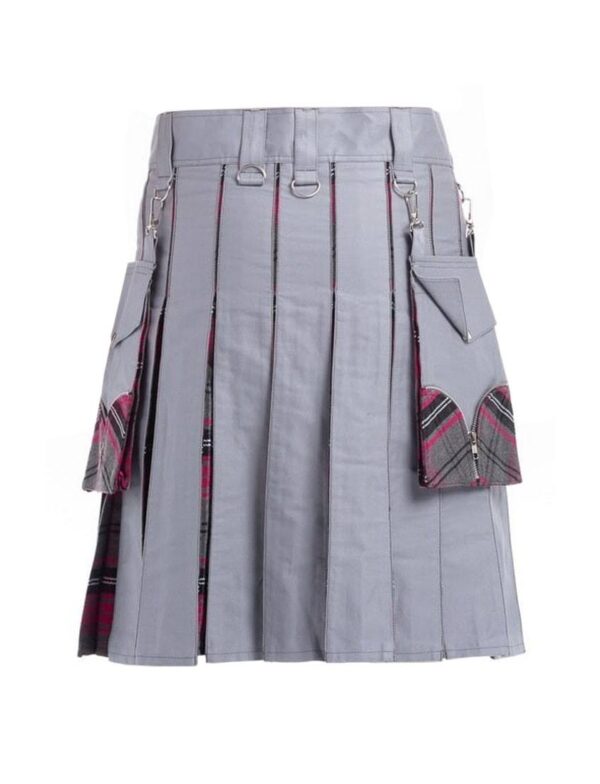
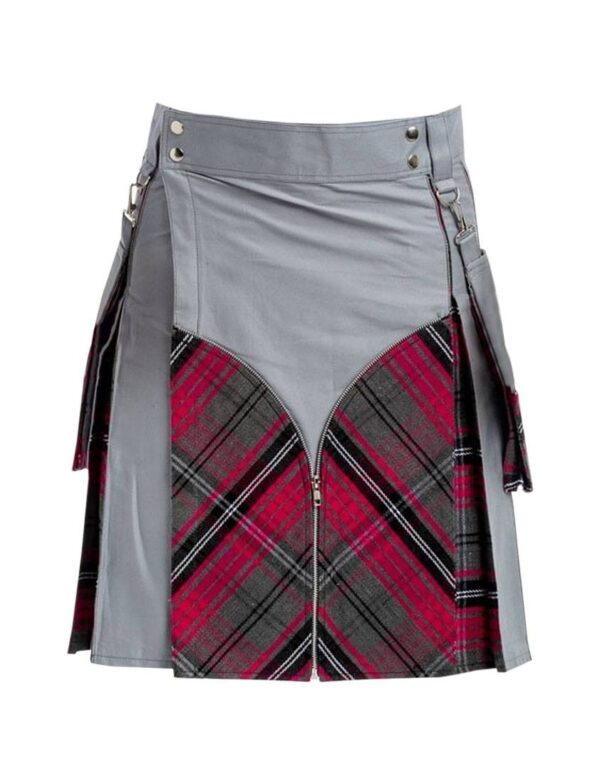
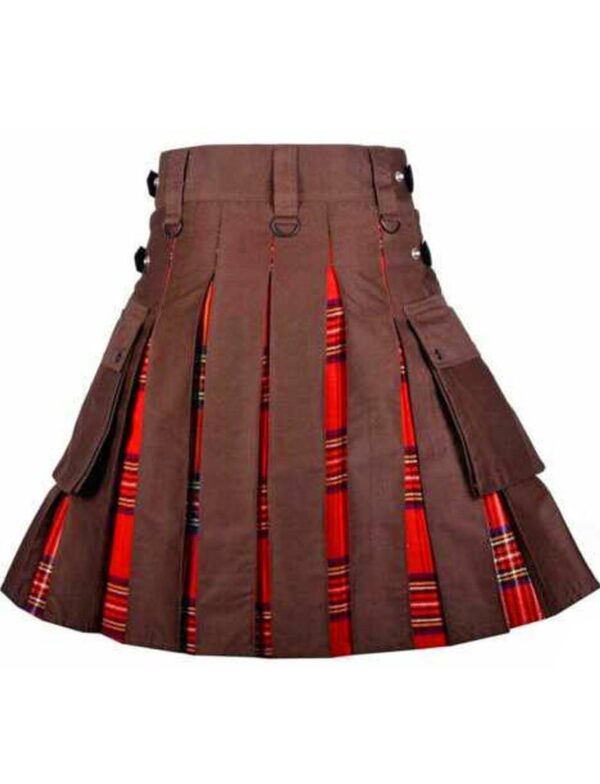
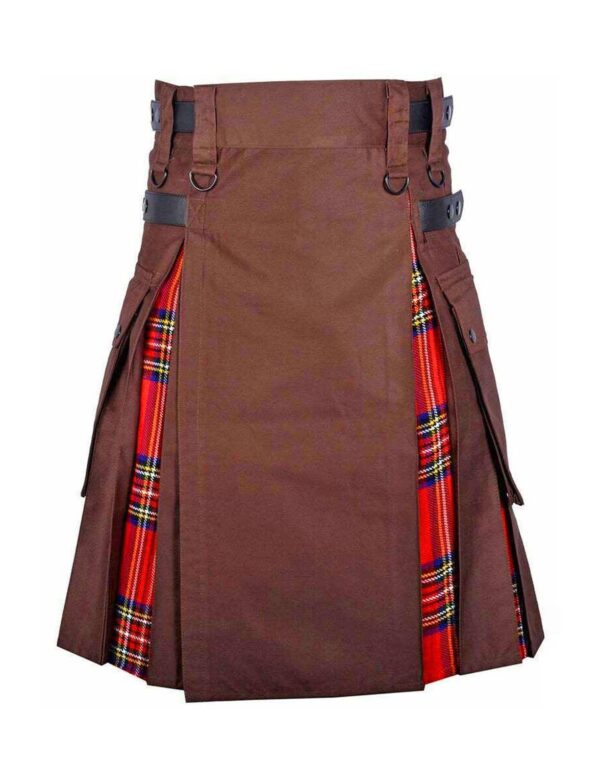
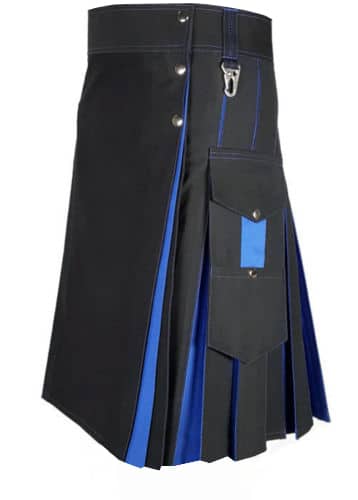
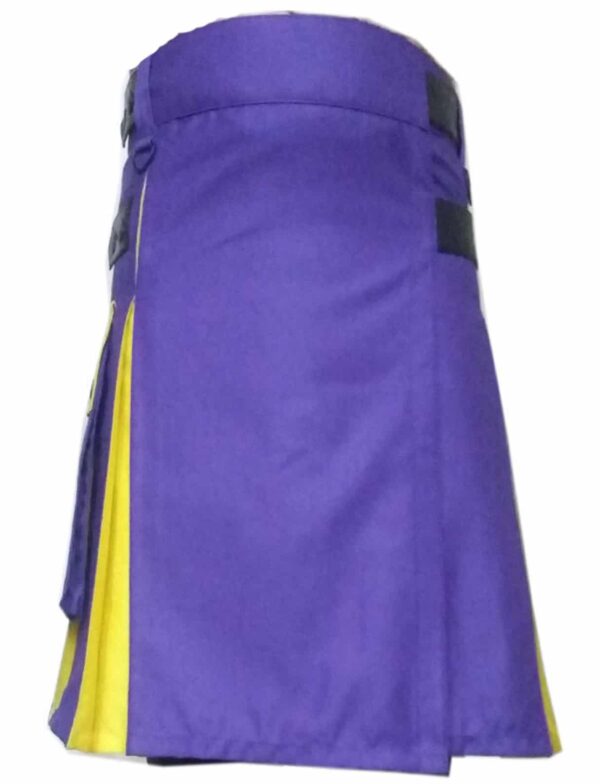
A hybrid kilt takes the wraparound silhouette of the traditional Scottish kilt and combines two fabrics in one garment — most commonly a tartan apron at the front with leather, denim, or canvas panels at the sides and back, or reversed with a plain fabric apron and tartan panels. The result is a kilt that reads both traditional and modern, both Scottish and personal, both heritage garment and everyday piece. It's the answer for men who want to signal Highland roots without committing to full traditional dress, or who want to modernise a family tartan without abandoning it.
Hybrid kilts have no historical basis in Scottish tradition — they are a modern invention, emerging through the utility kilt movement of the early 2000s as makers experimented with mixing tartan and workwear fabrics. Today they occupy a specific and growing niche: alternative weddings where the couple wants Scottish reference without traditional formality, festival wear for men with Scottish heritage who want to signal it casually, and daily wear for men who own a clan tartan but don't want to reserve it for once-a-year occasions. If you're being fitted for a traditional Highland wedding, formal Burns Night, or clan ceremony under a strict dress code, the correct choice is a full Scottish tartan kilt in an eight-yard yardage, not a hybrid.
Materials and construction
The tartan component is 16oz worsted wool — the same weight and quality as our full tartan range — sourced where possible from the Scottish Register of Tartans for clan, universal, and district setts. The paired fabric depends on the hybrid style: full-grain or split leather for leather hybrids, 12oz cotton denim for denim hybrids, or heavy cotton canvas for canvas hybrids. Fabrics are chosen to complement rather than compete — dark tartan with black leather, muted tartan with blue denim, earth-tone tartan with olive canvas.
Construction is the technical challenge that separates good hybrid kilts from poor ones. The tartan section requires hand-basting so the sett matches across the pleats — the same skill as a full tartan kilt. The paired fabric is stitched to hold shape and drape independently, then joined to the tartan at the transition with reinforced seams that carry the weight difference between wool and heavier materials. Hardware is solid brass or matte black, chosen to work across both fabrics. Belt loops are reinforced with double-stitched bar tacks. Every hybrid kilt is inspected against the measurements you sent us before it ships.
The hybrid combinations we make
Tartan and leather. Tartan apron at the front with full-grain or split leather panels at the sides and back. The most popular hybrid — reads Highland at the front and modern at the sides. Right for alternative weddings, gothic-Scottish crossover events, and men who want their clan tartan visible but modernised. From $149.
Tartan and denim. Tartan apron with 12oz cotton denim panels. The casual daily-wear hybrid — reads workwear-Scottish, machine-washable, and less formal than leather. Right for festival wear, daily rotation, and men who want their family tartan in casual weekly use rather than reserved for ceremonies. From $129.
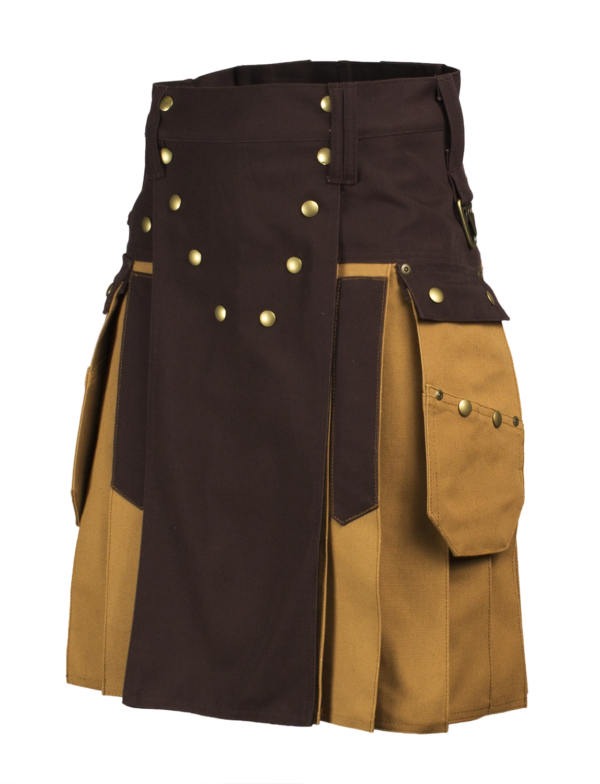
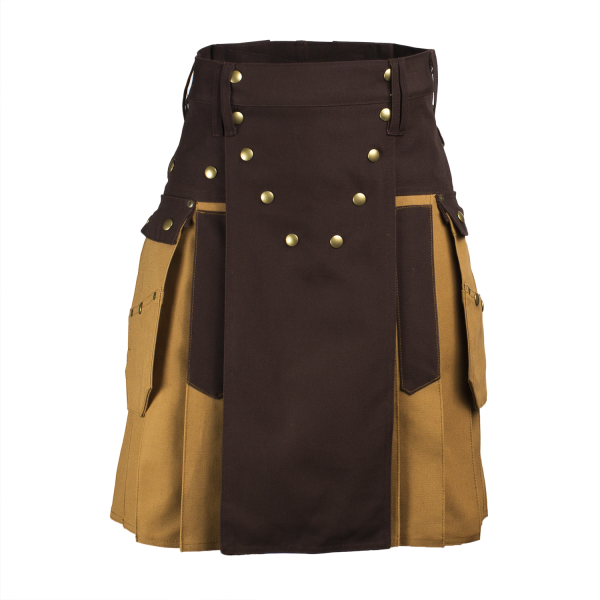
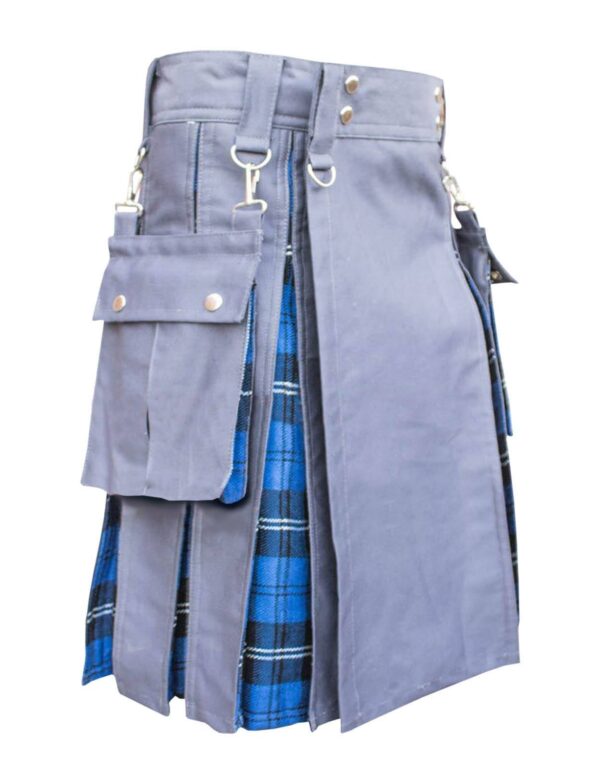
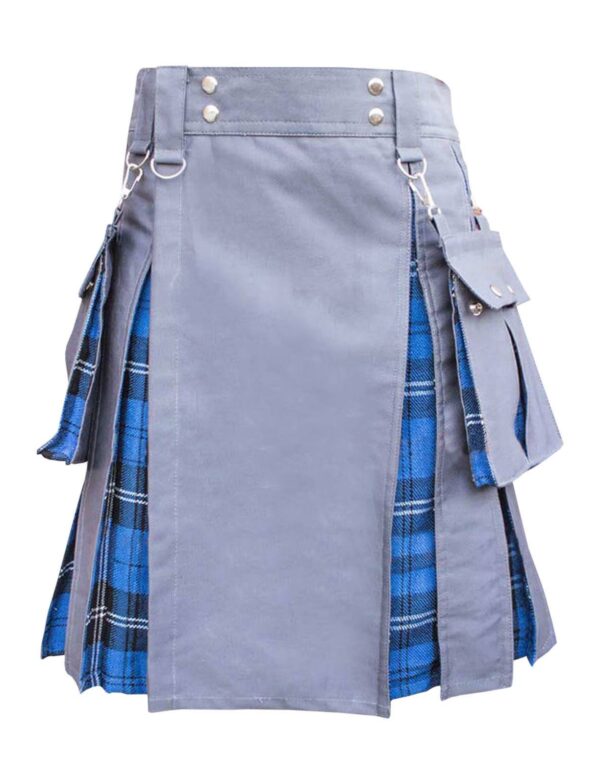
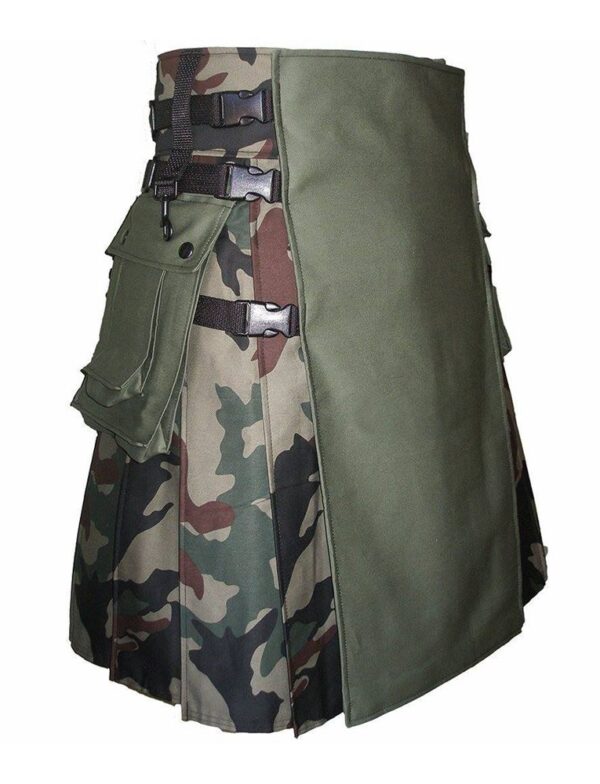
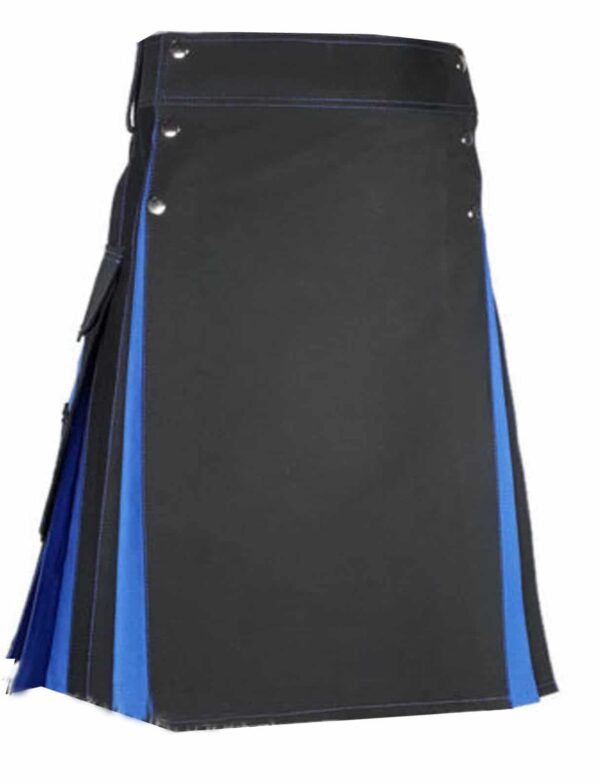
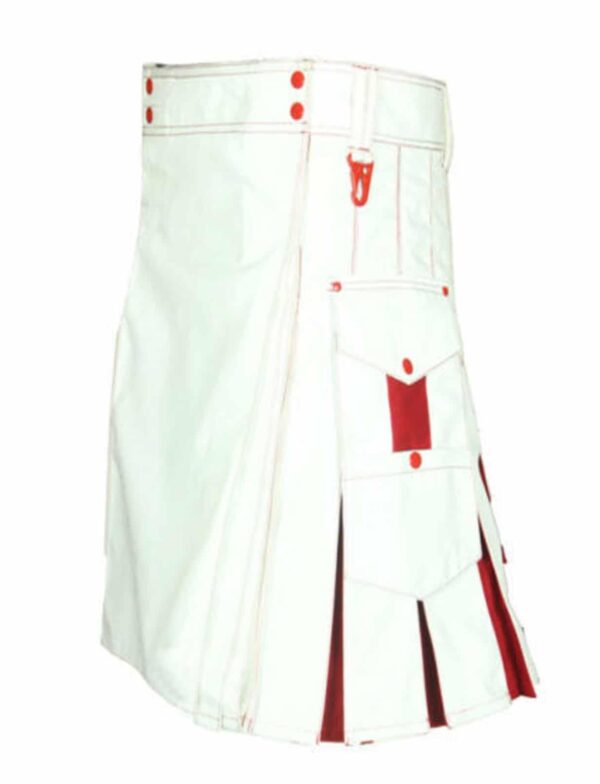
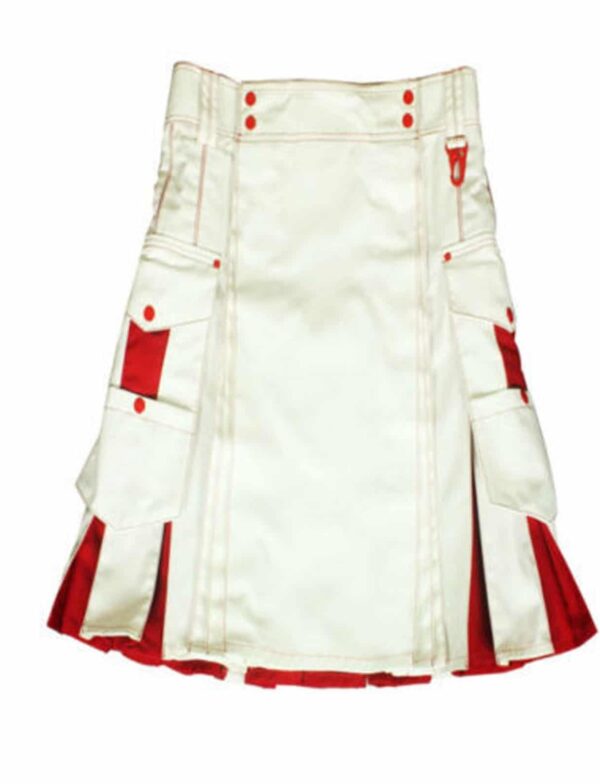
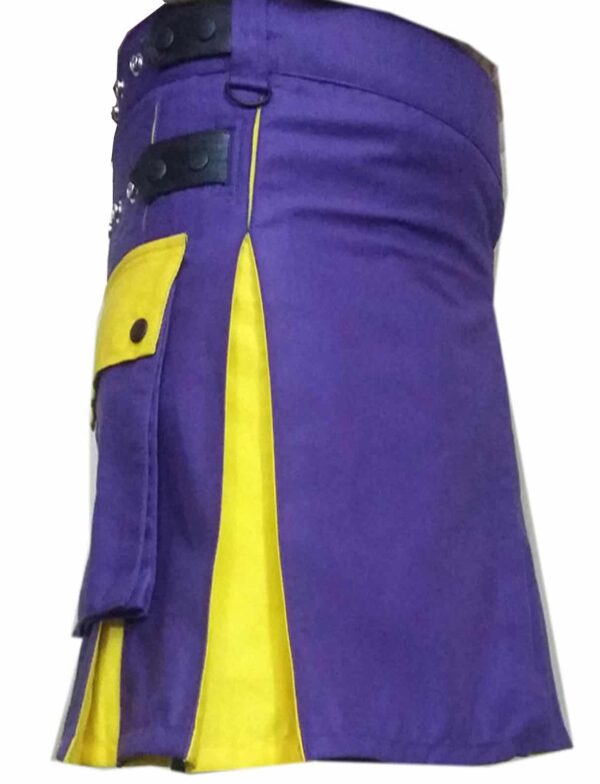
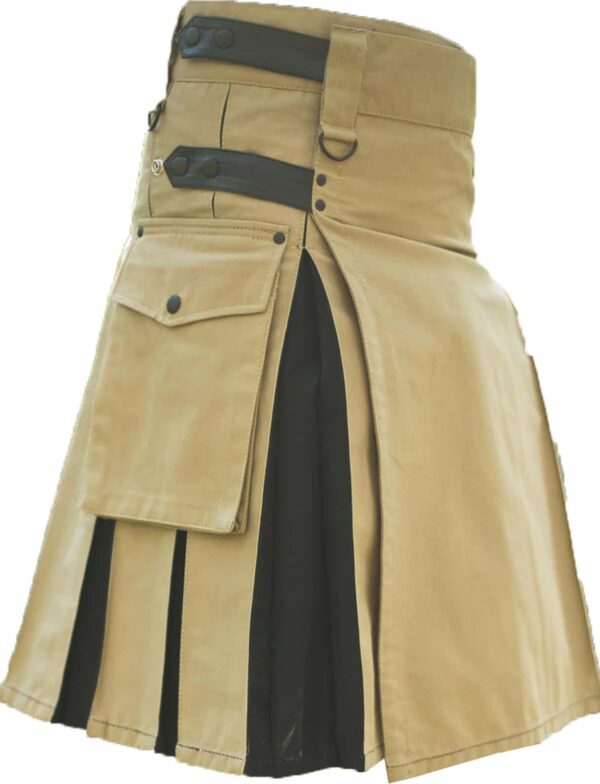
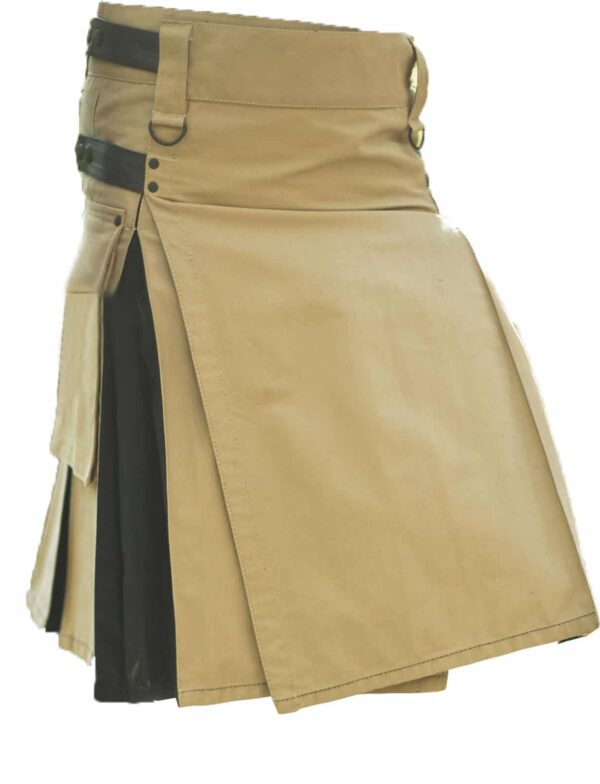
Tartan and canvas. Tartan apron with heavy cotton canvas panels, cargo pockets, and utility hardware. The functional hybrid — combines Scottish signalling with everyday pocket practicality. Right for outdoor wear, everyday utility, and men who want the tartan visible with the load-carrying practicality of a utility kilt. From $129.
Reversed hybrids. Any of the above with the fabrics inverted — leather, denim, or canvas apron with tartan panels at the sides and back. Reads more modern than traditional, with the tartan as a signal at the sides rather than the main event. Right for men who want the Scottish reference subtle rather than upfront.
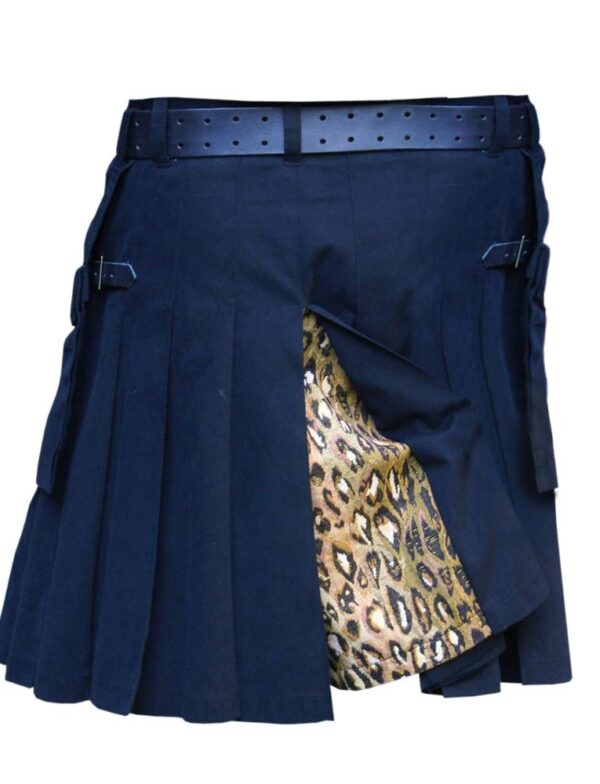
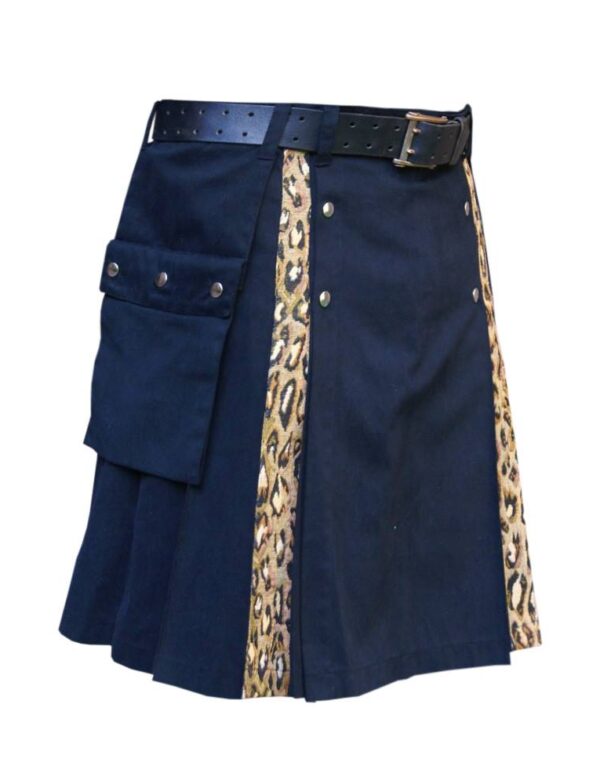
Leather and canvas. A non-tartan hybrid — leather panels with heavy canvas apron and cargo functionality. Right for men who want the mixed-fabric look without the tartan element, combining the durability of canvas with the visual weight of leather. From $179.
Not sure which fits your use case? Message us with the occasion and any clan tartan preference — we'd rather trade three emails now than remake a kilt in six weeks.
Choosing your hybrid kilt
Choose by occasion first, tartan second, paired fabric third. For alternative weddings and semi-formal events, tartan-and-leather in your clan or a universal sett. For daily and festival wear where you want the tartan casual, tartan-and-denim. For outdoor and everyday utility, tartan-and-canvas. For men who want the mixed-fabric silhouette without any Highland reference, leather-and-canvas. If you don't know which tartan is yours, ask us or search the Scottish Register of Tartans — most surnames of Scottish, Irish, or Welsh origin map to at least one recognised sett. If you have no ancestral connection, universal tartans (Black Watch, Royal Stewart, Flower of Scotland, Isle of Skye, Caledonia) are open to anyone.
Every hybrid kilt ships in ten working days, is cut and hand-basted at our workshop, and is guaranteed to fit the measurements you sent us. If it doesn't, we remake it. See our returns policy for full terms. Hybrid is one of several styles of men's kilts we make — see also Scottish tartan, leather, and utility styles.
Two fabricsTartan with leather,
denim, or canvas
denim, or canvas
10 daysCut, stitched,
shipped
shipped
5,000+ tartansEvery clan
woven to order
woven to order
Free remakeIf the fit isn't
perfect
perfect
Frequently asked
Questions before ordering
What is a hybrid kilt?
A hybrid kilt is a kilt made from two different fabrics in one garment — most commonly a tartan apron at the front combined with leather, denim, or canvas panels at the sides and back. It keeps the wraparound silhouette of the traditional Scottish kilt but combines the heritage look of tartan with the durability and modern read of a second material. Hybrid kilts have no historical basis in Scottish dress; they emerged through the American utility kilt movement in the early 2000s as makers experimented with mixing tartan and workwear fabrics. Today they're worn to alternative weddings, festivals, and daily contexts where a full tartan kilt reads too formal and a plain leather or canvas kilt loses the Scottish reference entirely.
Can I wear a hybrid kilt to a Scottish wedding?
It depends on the wedding's dress code and the family. For weddings with a strict Highland dress code — an eight-yard tartan and full Highland accessories are traditionally required — a hybrid may not be appropriate. For alternative and modern Scottish weddings, hybrid kilts are increasingly common and welcomed, particularly among younger couples who want to reference Scottish heritage without the full formality. If you're the groom, check with the host family or wedding planner before committing. If you're a guest, err toward a full Scottish tartan kilt unless the invitation or dress code specifically allows alternative styles.
Do I have to use my clan tartan for a hybrid kilt?
No. You can use any tartan you like on a hybrid kilt, and modern practice accepts wearing any sett — clan, universal, Welsh, Irish, or purely aesthetic — particularly outside strictly traditional Scottish contexts. If you have Scottish, Irish, or Welsh ancestry and know your clan or family tartan, that's a natural choice. If you don't know your tartan, we can research a surname before you order. If you have no ancestral connection at all, universal tartans (Black Watch, Royal Stewart, Flower of Scotland, Isle of Skye, Caledonia) are open to anyone regardless of background. The paired fabric — leather, denim, or canvas — has no traditional restrictions.
How do you care for a hybrid kilt?
Care depends on the paired fabric. For tartan-and-leather hybrids — never machine wash, spot-clean the wool and leather separately, condition the leather every three to six months with a neutral leather conditioner, and dry-clean the tartan if it needs full cleaning. For tartan-and-denim hybrids — machine wash cold on a gentle cycle, inside-out, air dry to preserve the pleats and prevent the wool from felting; the paired construction is designed to handle washing. For tartan-and-canvas hybrids — machine wash cold on a gentle cycle, air dry, iron on medium heat if needed. Across all types, hang on a wide hanger away from direct sunlight to protect the tartan colours from fading.
How do you style a hybrid kilt?
Styling depends on the fabrics and the context. For tartan-and-leather at a semi-formal event — a plain white or black shirt, leather boots or dress shoes, and either a leather jacket or a Prince Charlie-style short jacket. For tartan-and-denim casual daily wear — plain tee or henley, leather boots or clean sneakers, and a denim or work jacket on top. For tartan-and-canvas outdoor use — utility tee or work shirt, sturdy boots, and a canvas or waxed cotton jacket. Traditional Highland accessories (sporran, sgian dubh, ghillie brogues) work with hybrids only when the event is Scottish-themed — otherwise they can look costume-like. A plain leather belt with a simple buckle usually reads best across all hybrid styles.
What's the difference between a hybrid kilt and a utility kilt?
A utility kilt is single-fabric — cotton canvas throughout, in a solid colour, built around pocket functionality and workwear practicality. A hybrid kilt is two-fabric — tartan combined with leather, denim, or canvas — built around visual contrast and combining traditional Scottish reference with modern materials. If you want tartan visible in your kilt at all, hybrid is the answer. If you don't want tartan and want the workwear read with pockets, see our utility kilts instead. The two categories overlap most in tartan-and-canvas hybrids, which combine tartan aprons with utility-style canvas panels and cargo pockets.