BLACK FRIDAY IS HERE! ✦ 20% OFF EVERYTHING · Shop the Sale →
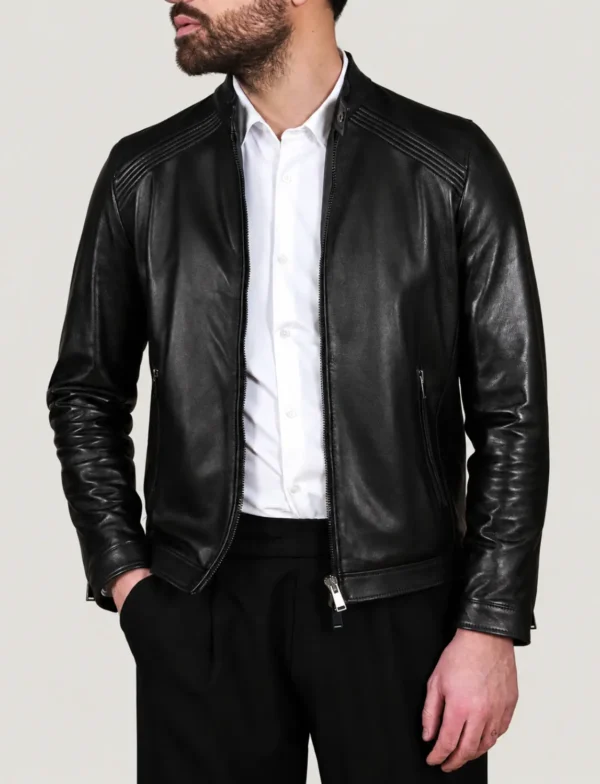
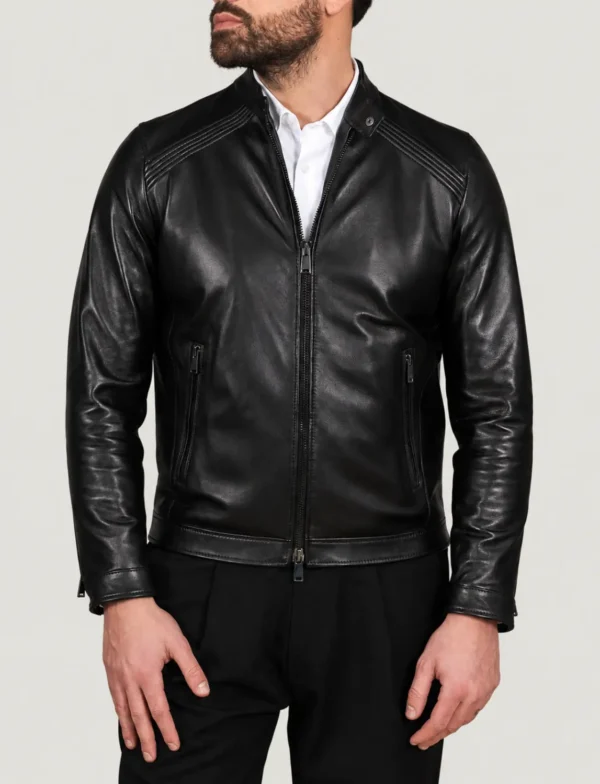
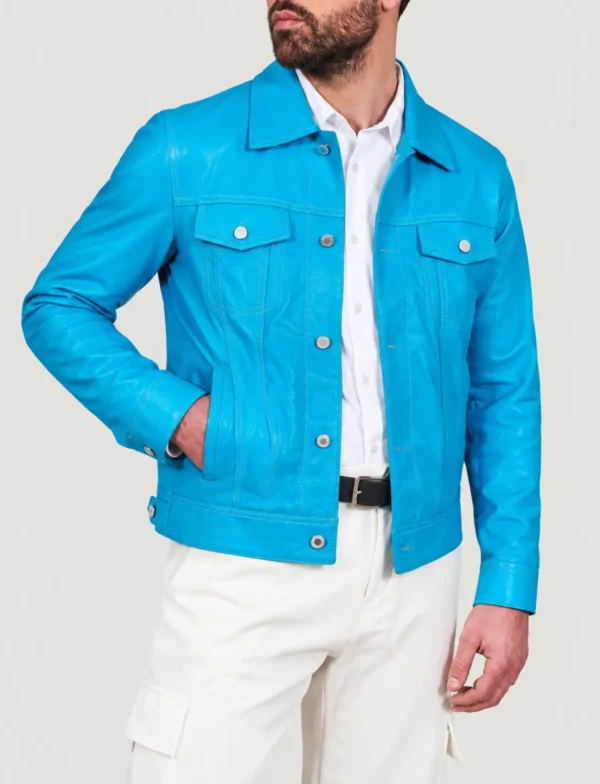
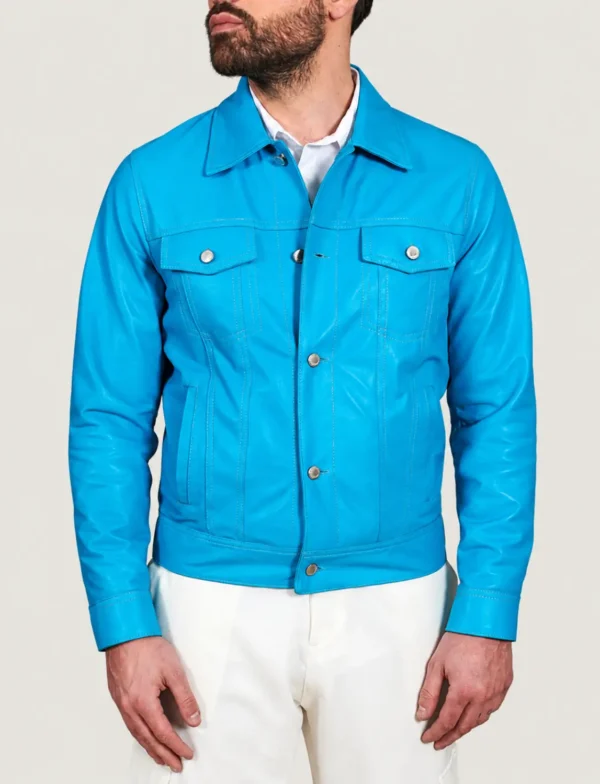
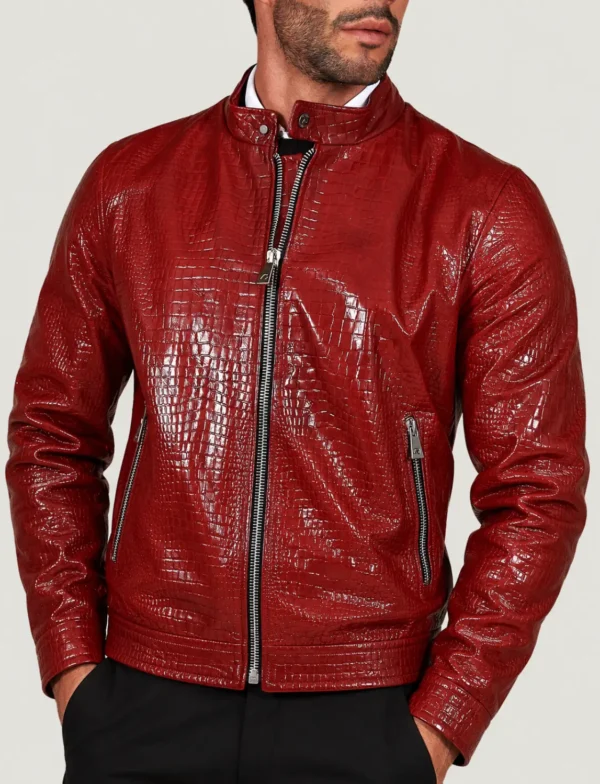
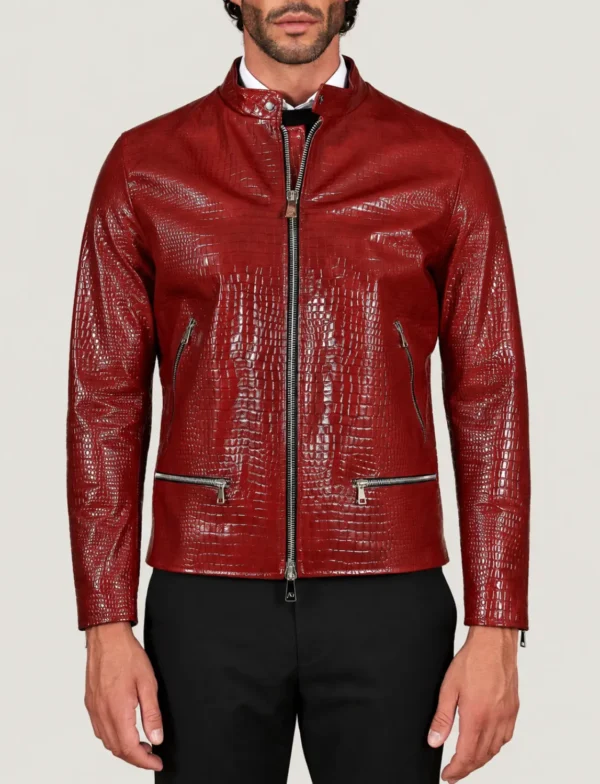
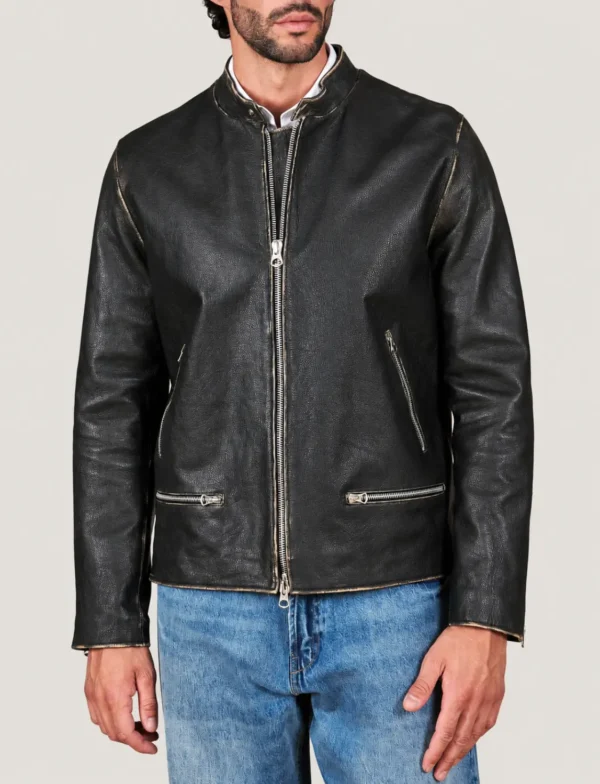
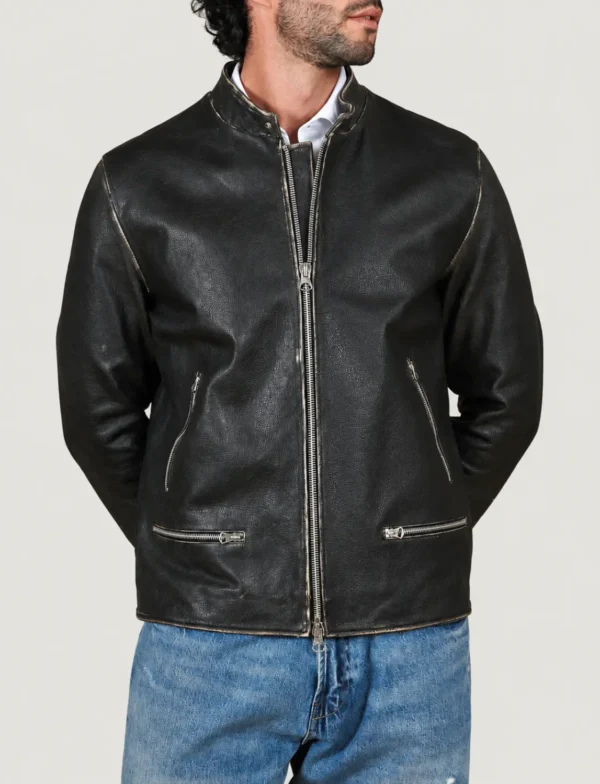
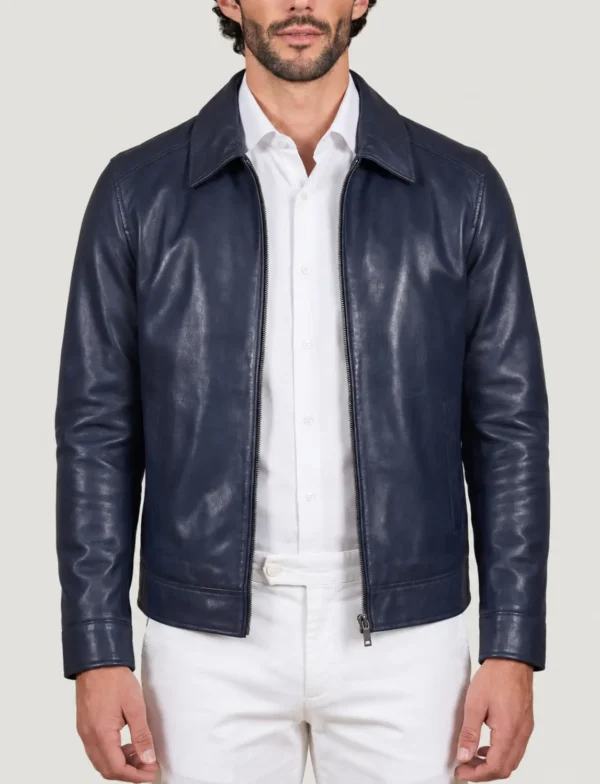
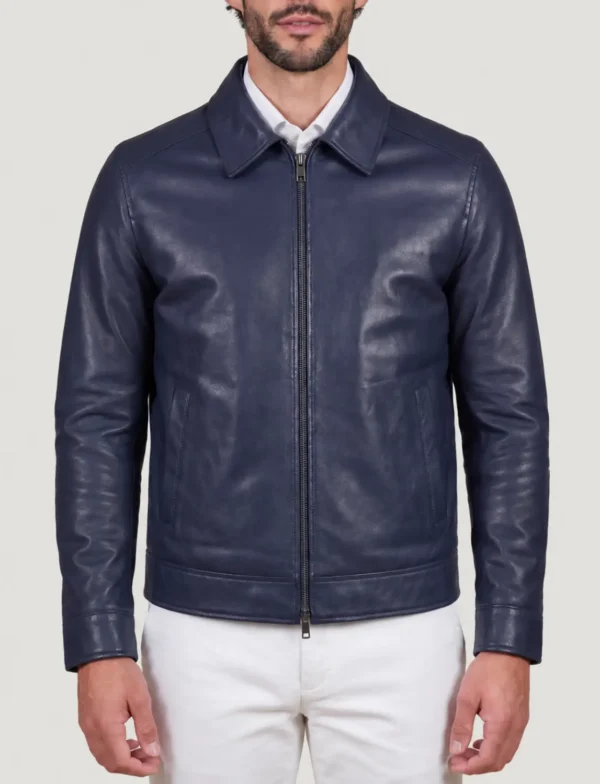
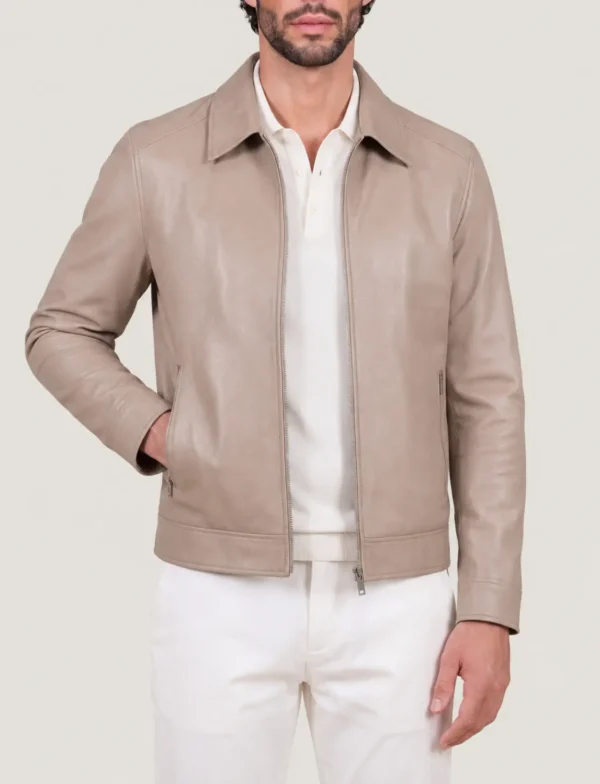
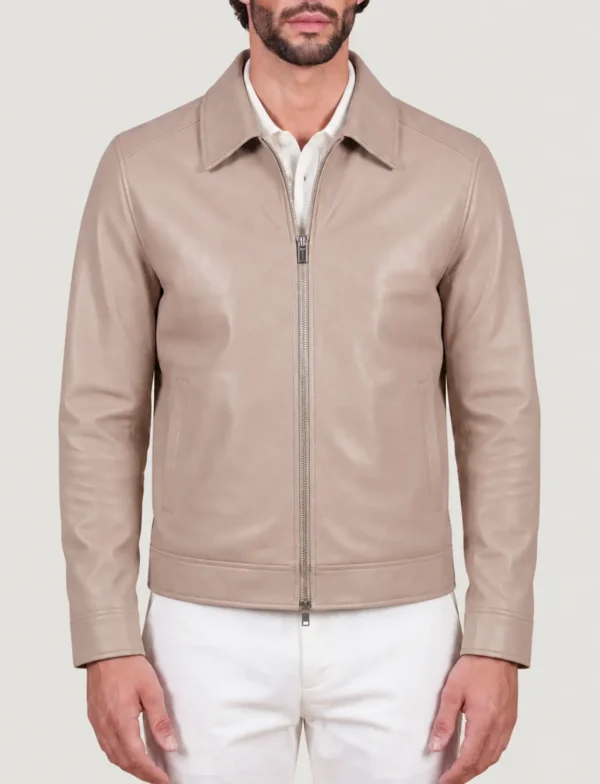
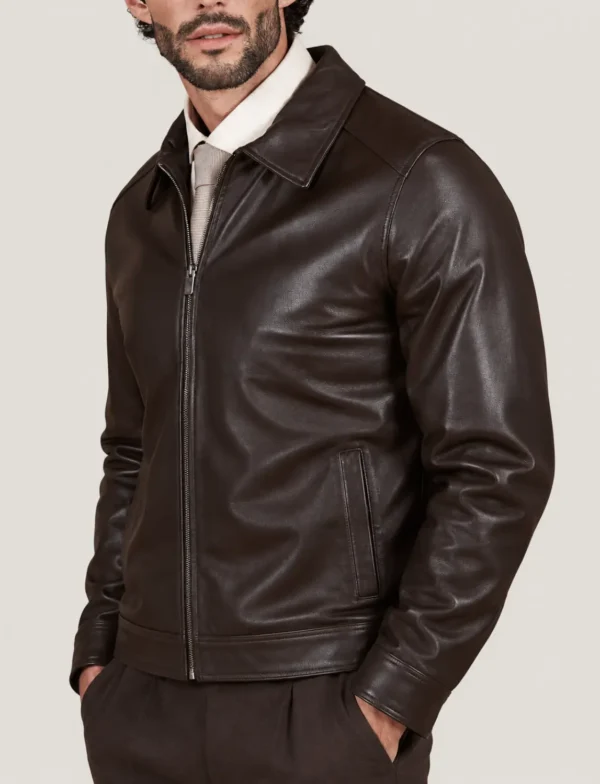
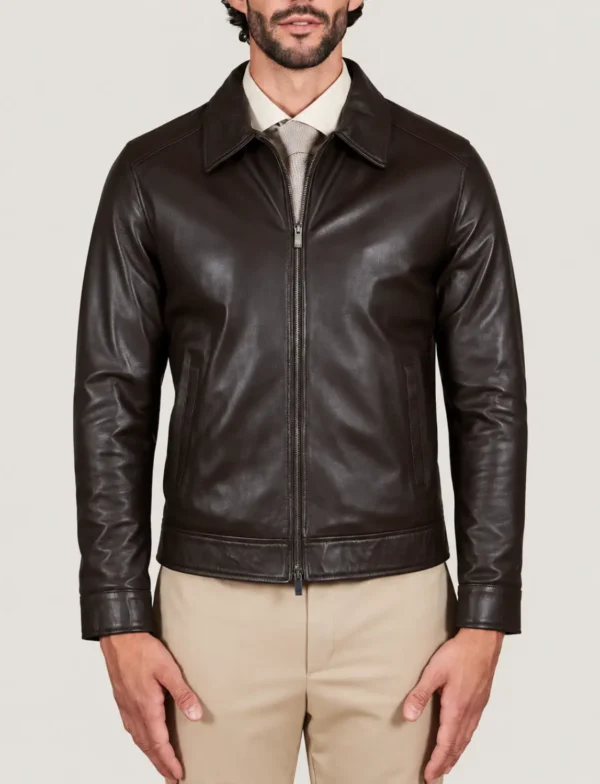
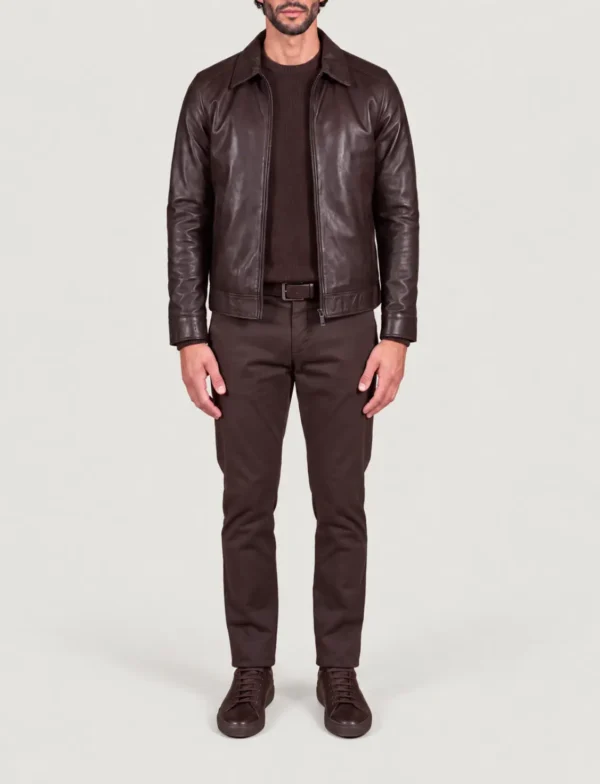
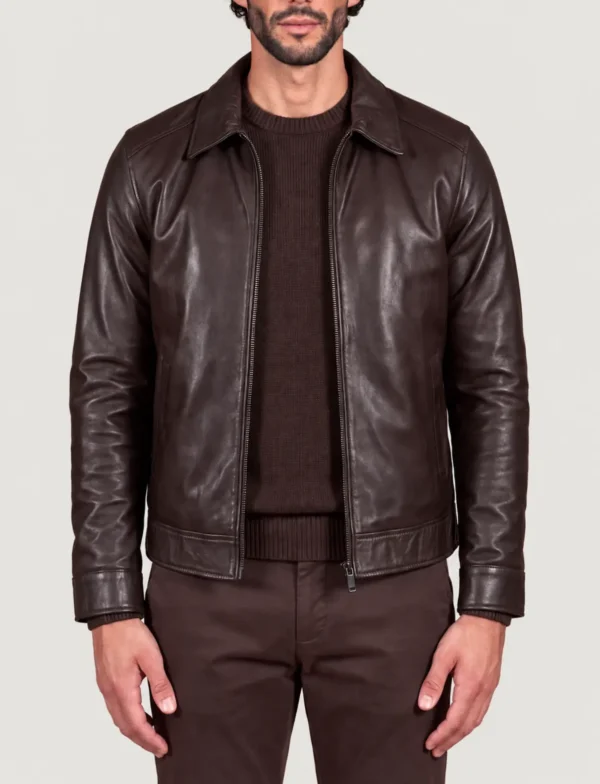
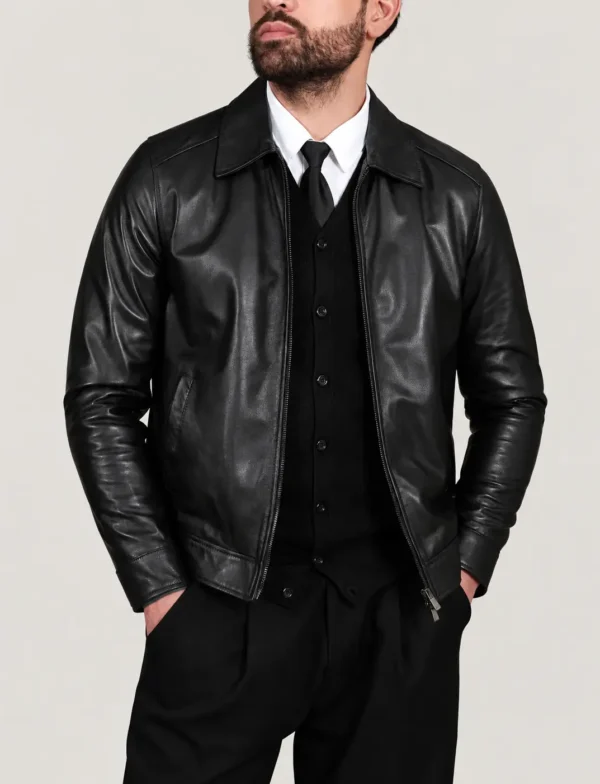
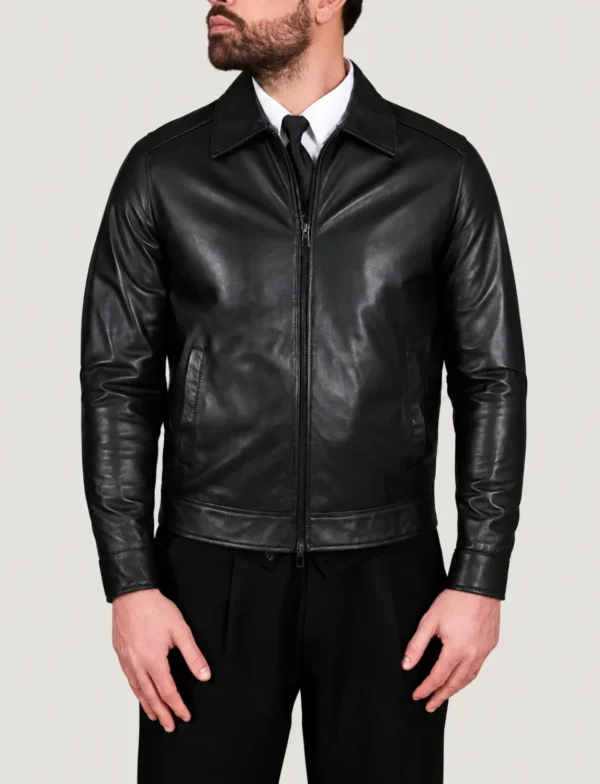
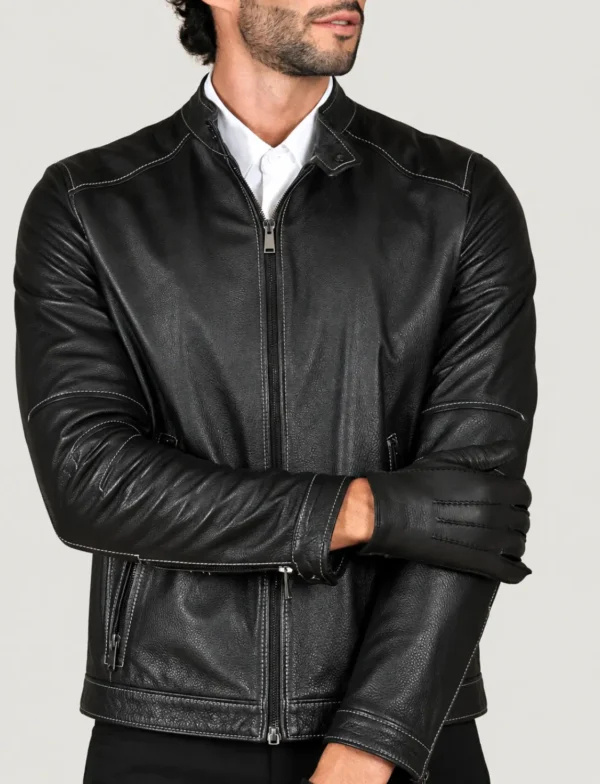
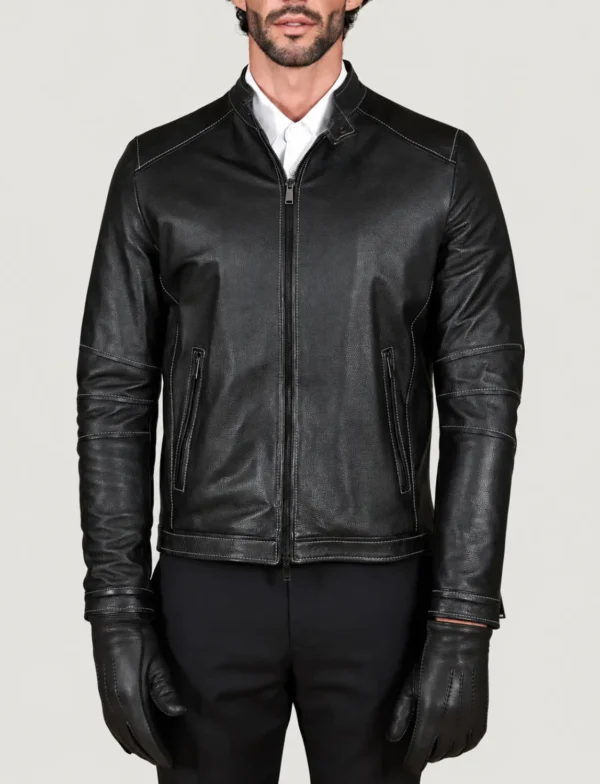
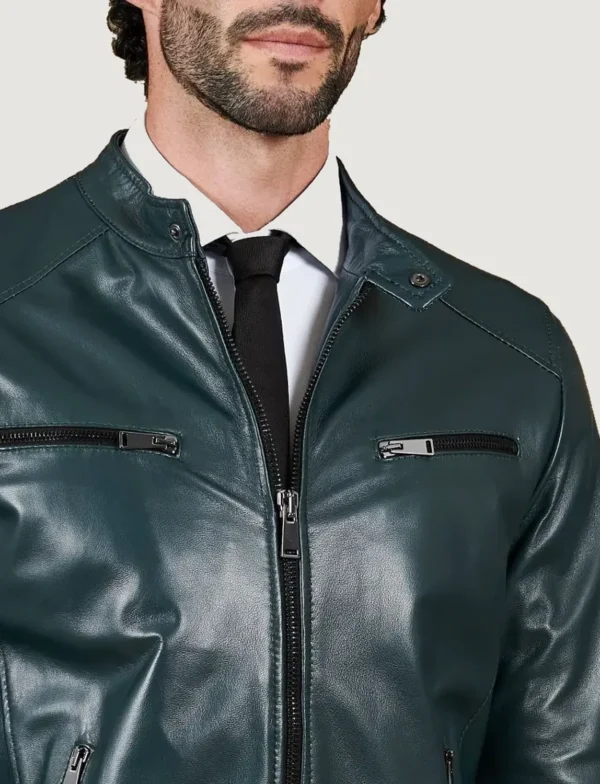
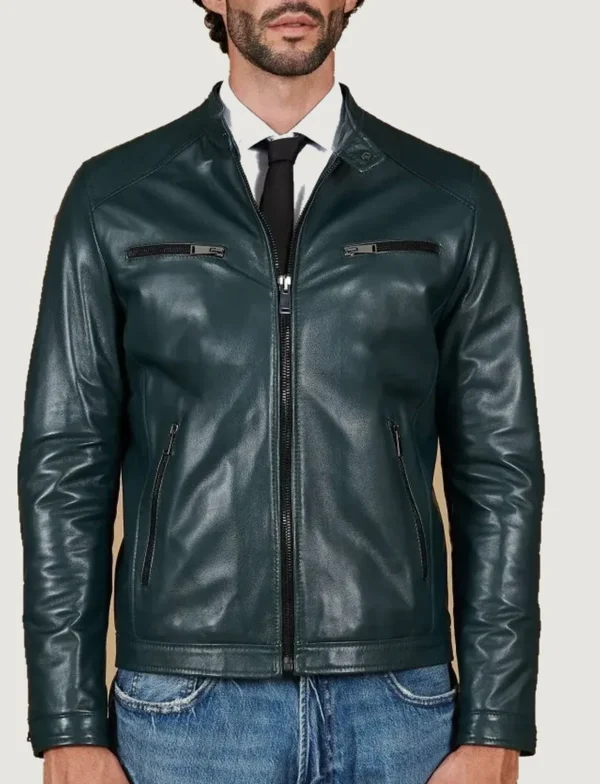
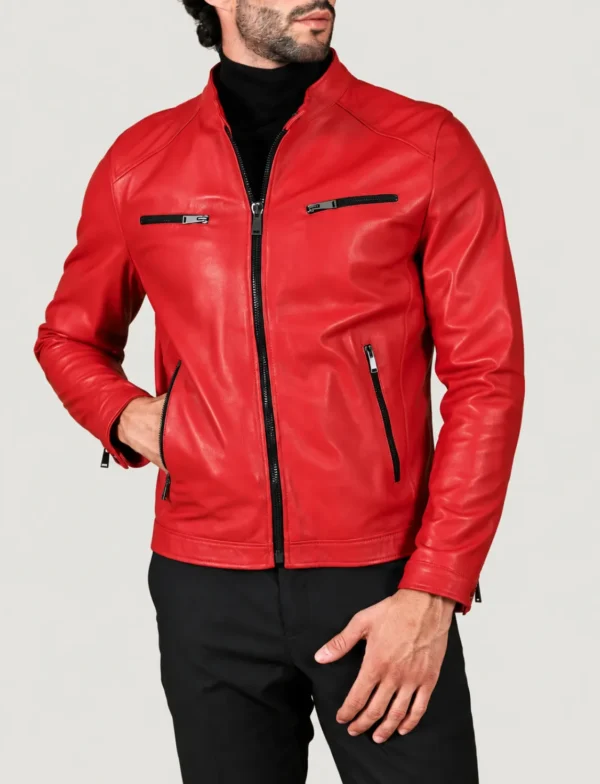
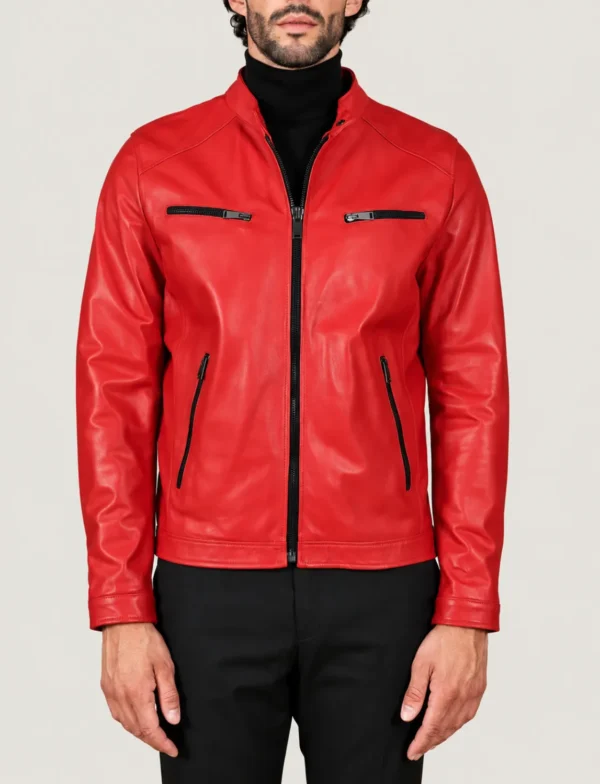
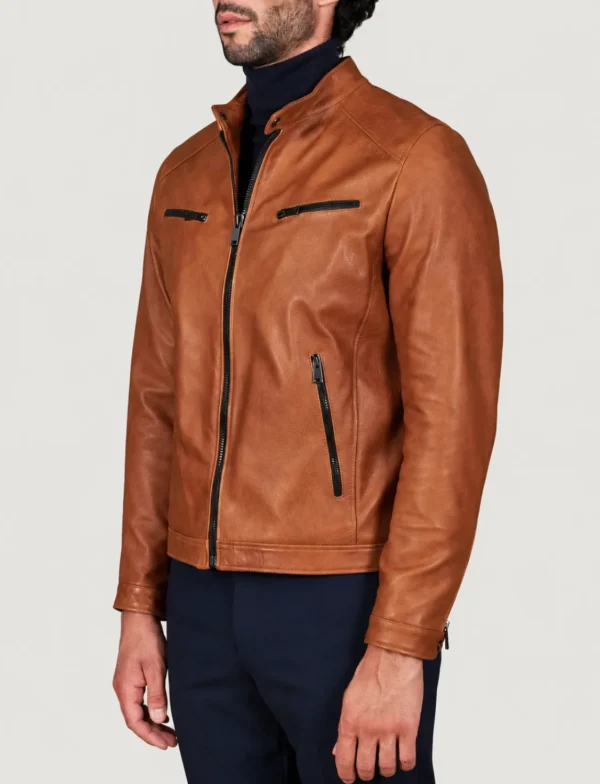
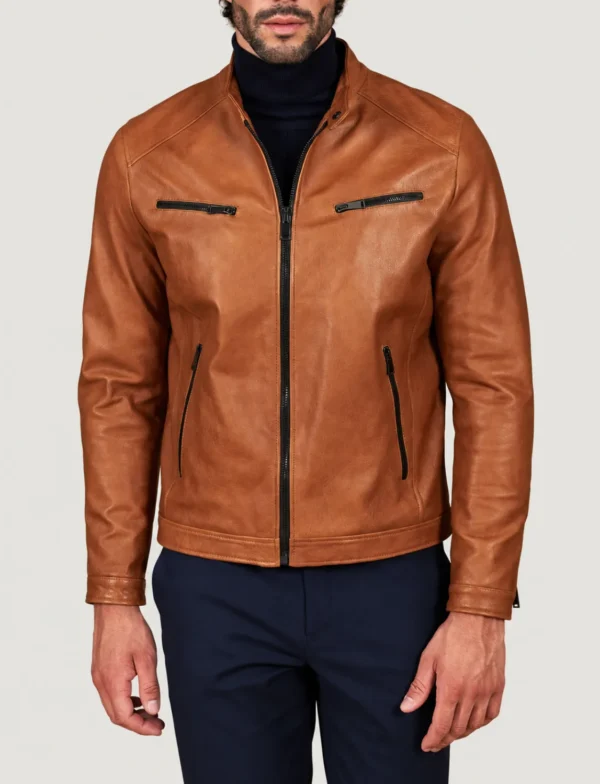
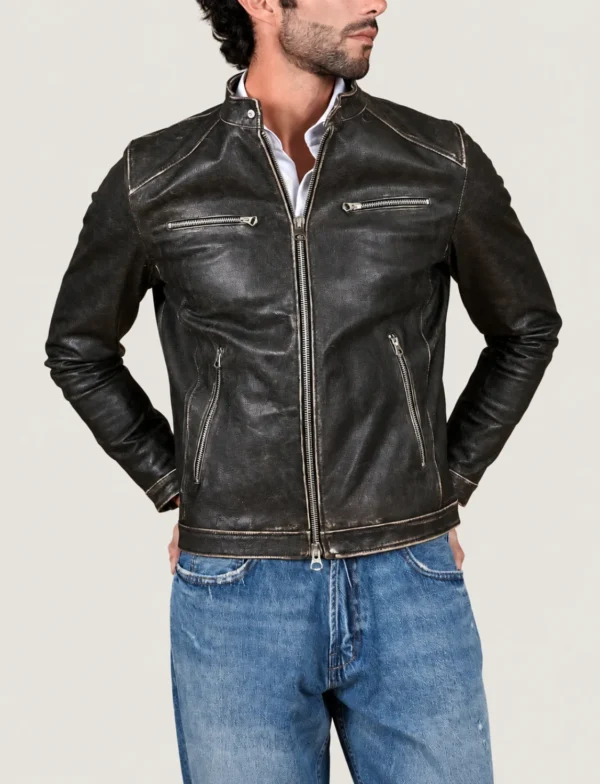
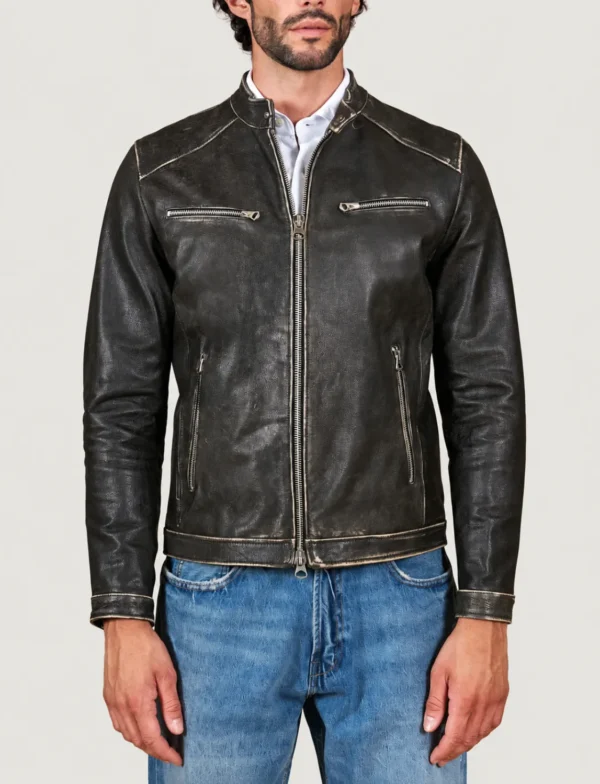
About our men's leather jackets
Leather and premium outerwear, hand-cut to your measurements since 2017
Kilt and Jacks has been making men's leather jackets by hand since 2017. Every piece we ship — whether a classic biker, a bomber, an aviator, a suede jacket, a leather blazer, a vest, a puffer, or a shearling coat — is drafted from six measurements you send us: chest, natural waist, hip, sleeve length, back length, and shoulder width. Cut and stitched by hand at our workshop, with YKK zippers, solid brass or matte black hardware, reinforced stress points, and satin or cotton linings throughout. Prices from $189 for vests and $249 for jackets.
What defines the category
Leather jackets sit apart from most menswear outerwear in one meaningful way — they're built to be owned for decades rather than replaced every few seasons. A well-made leather jacket doesn't wear out in the way a wool coat or a cotton jacket does; it wears in. The leather develops a patina from the specific way you wear it — how you put it on, where you lean, which shoulder you carry a bag on, how often you're out in weather. Ten years in, it becomes a piece of clothing that no other person on earth has an exact match for. That's the reason leather outerwear commands the price it does, and it's the reason a proper leather jacket is worth the investment over three or four cheap ones bought in succession.
The category also extends beyond pure leather into adjacent premium materials — suede for softer daily wear, shearling and fur for cold-weather warmth, wool bodies with leather sleeves for varsity heritage, and down-filled leather puffers for technical warmth. What holds the category together isn't the fabric alone; it's the register — outerwear built for longevity, considered construction, and a specific visual identity rather than fast fashion turnover.
The styles we make
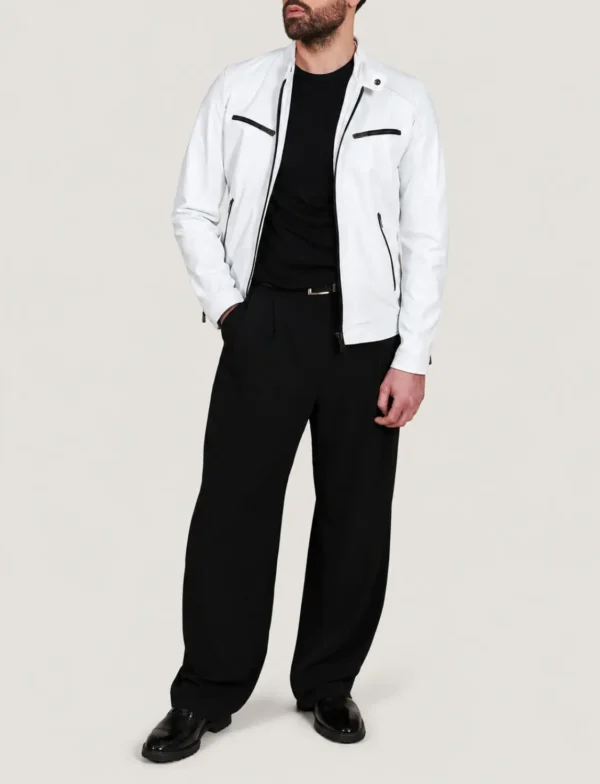
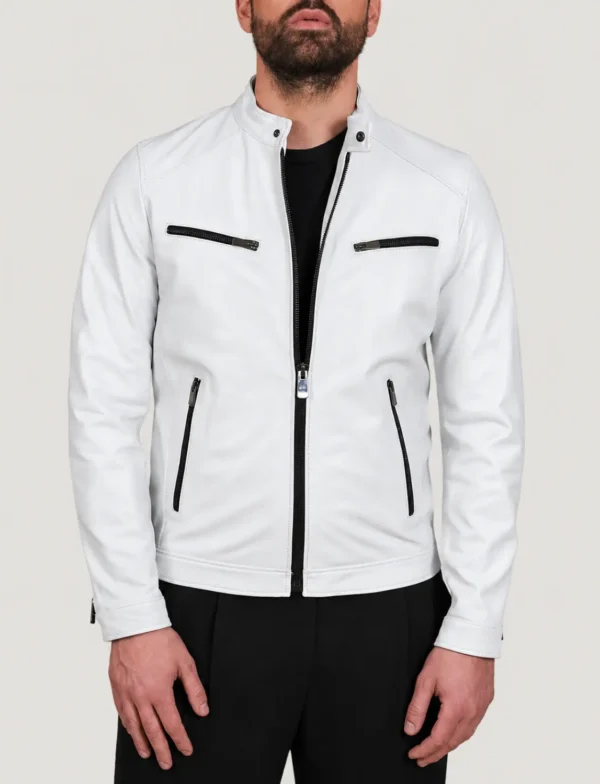
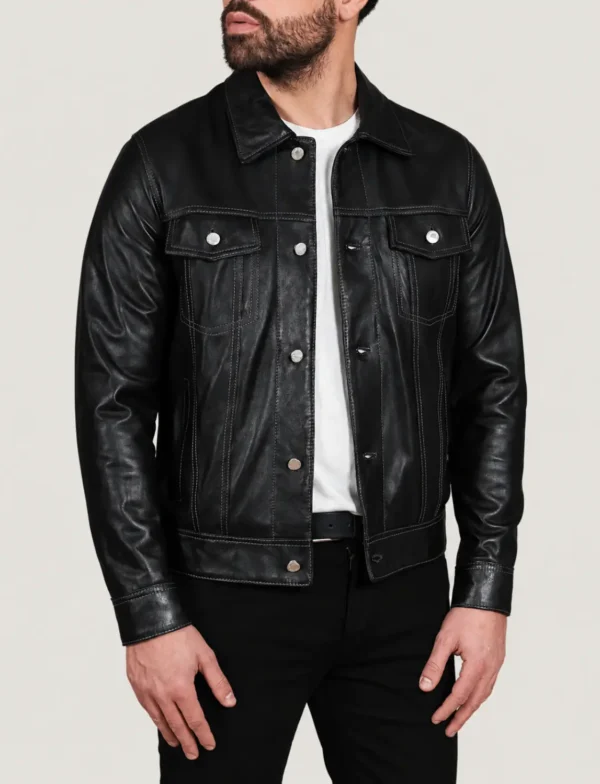
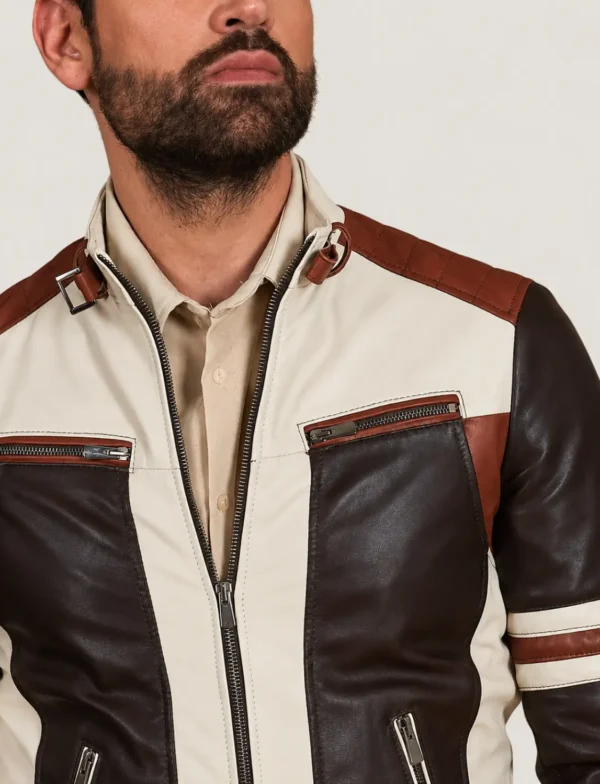
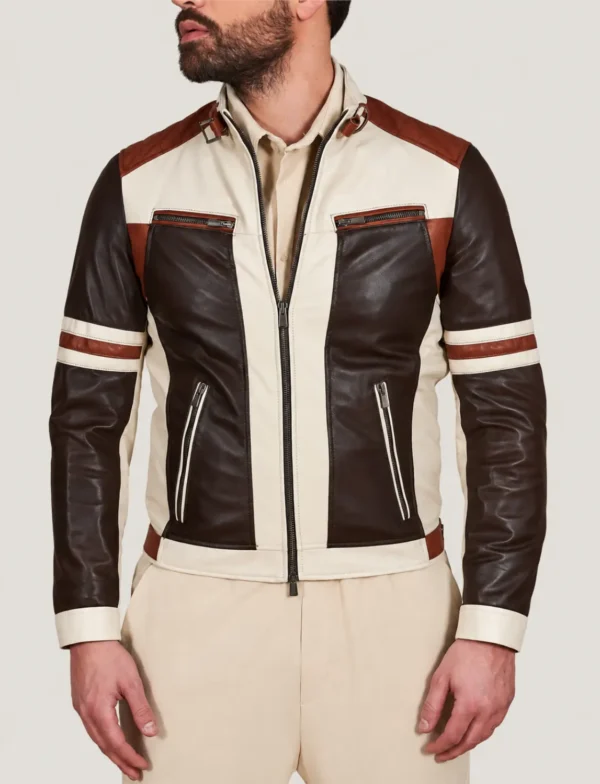
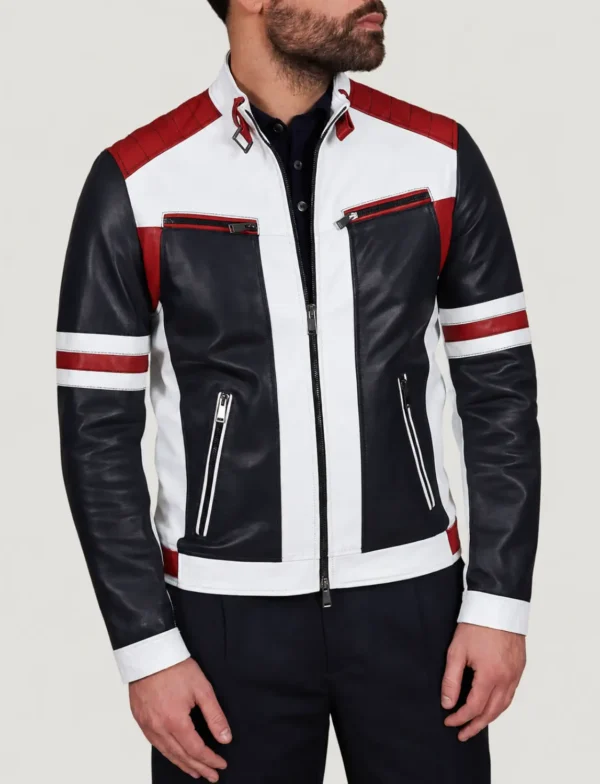
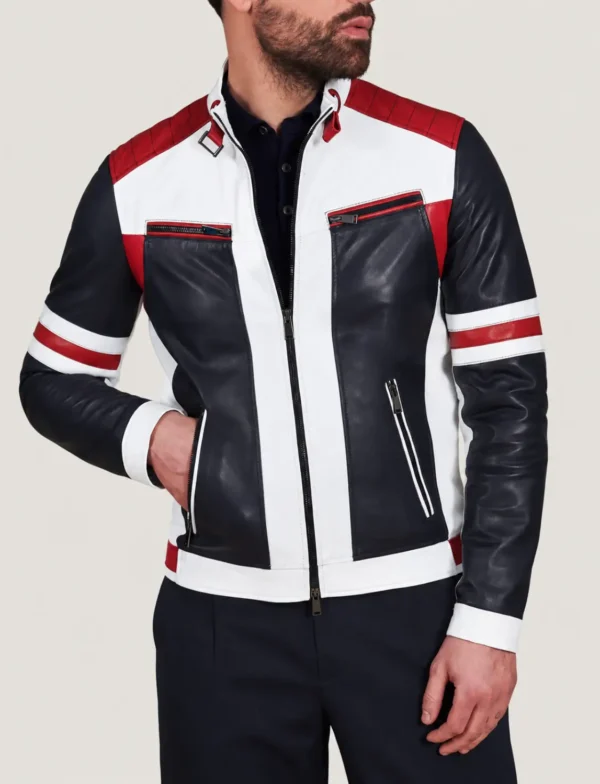
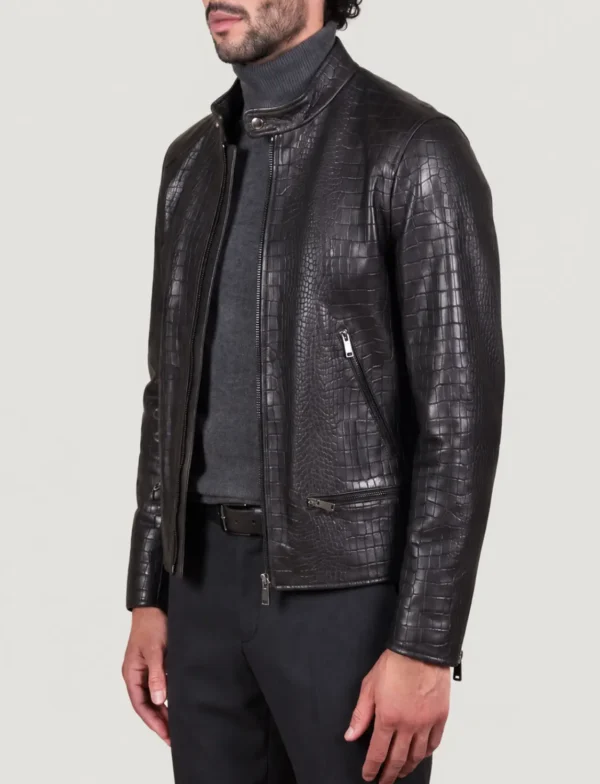
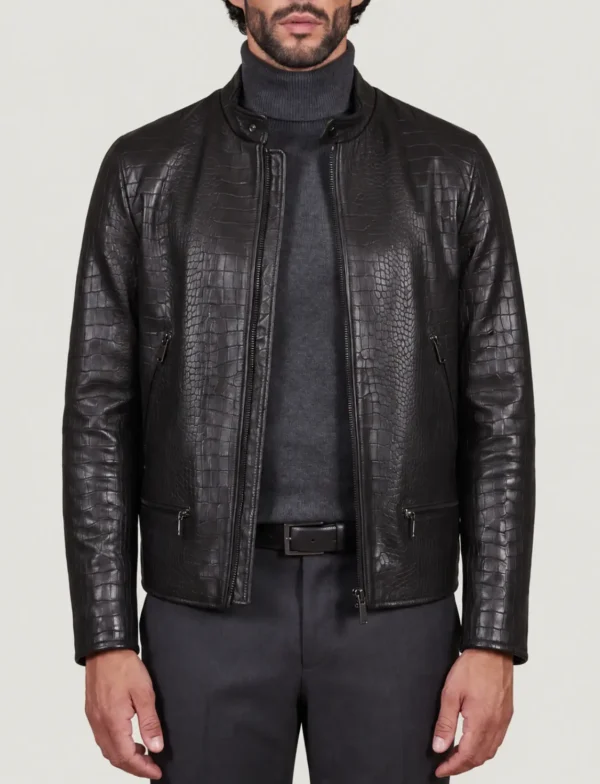
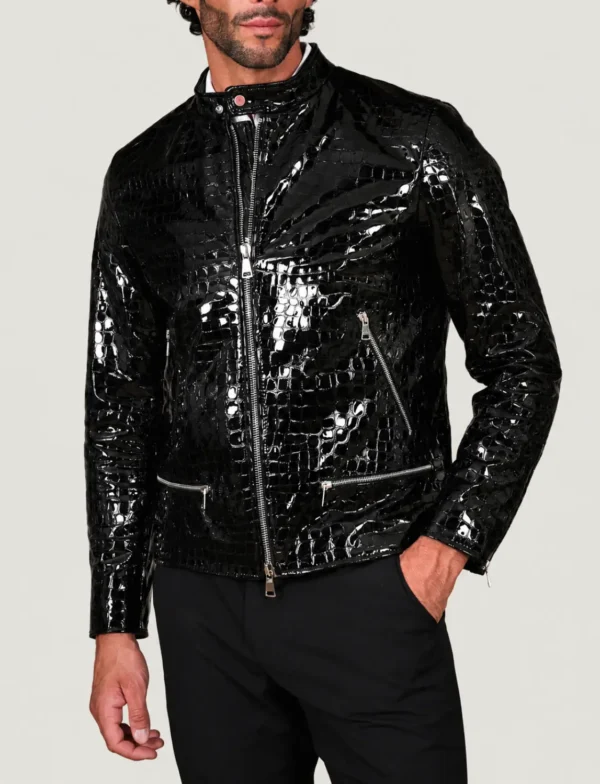
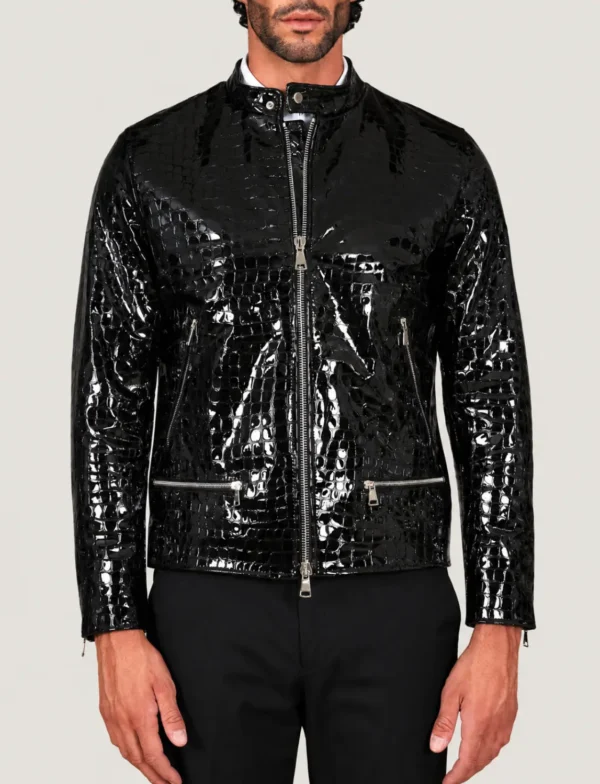
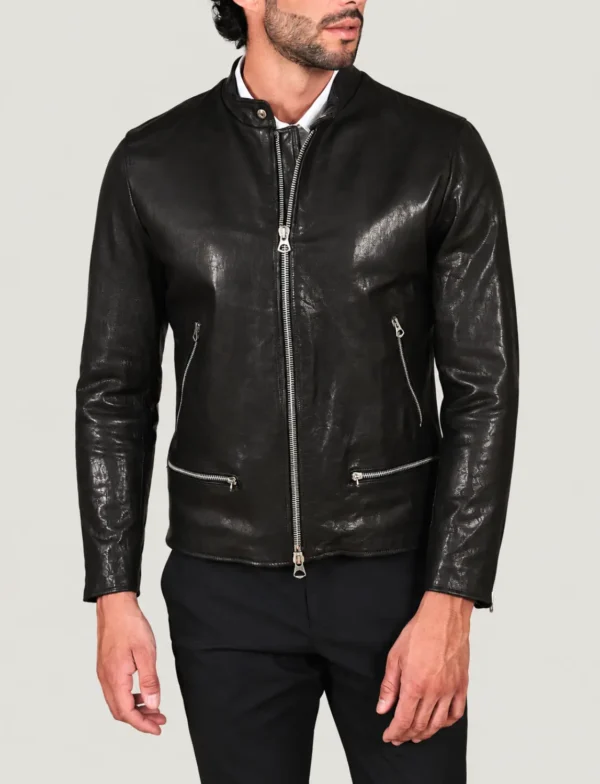
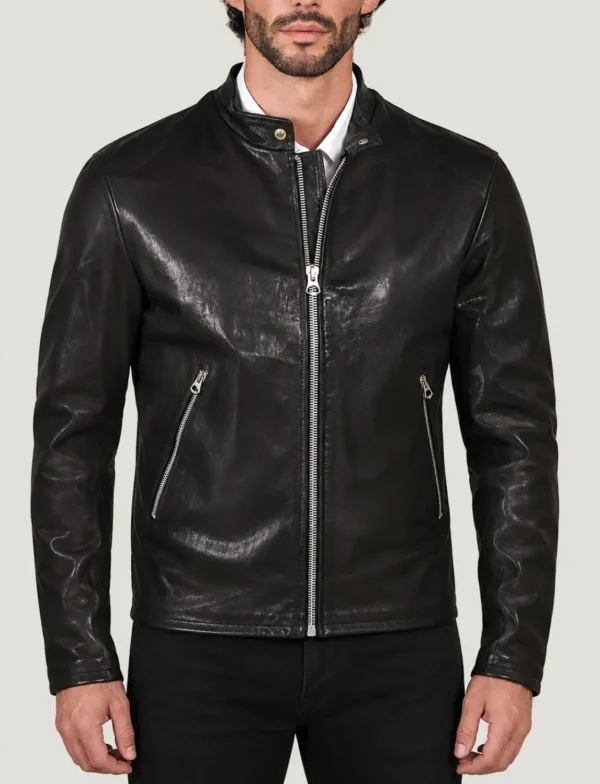
Biker jackets. The classic asymmetric-zip cut with wide lapels, snap-fastened collar, D-rings, and reinforced shoulders. The most recognisable leather jacket in menswear, drawing from motorcycle heritage and adopted across punk, rock, and mainstream fashion. Right for streetwear, gigs, riding, and daily wear.
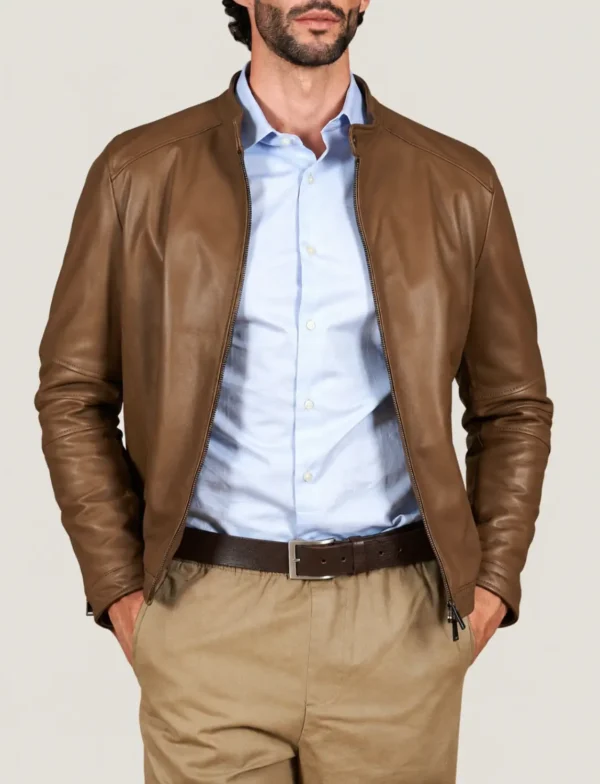
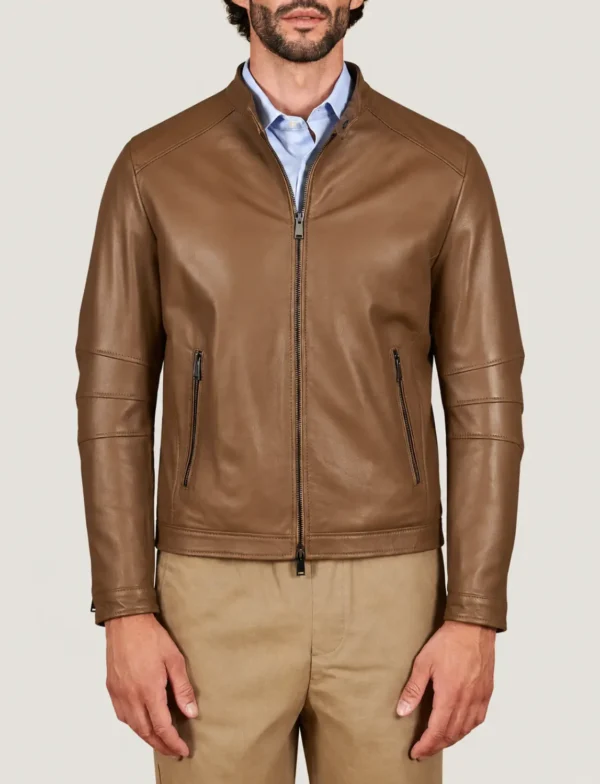
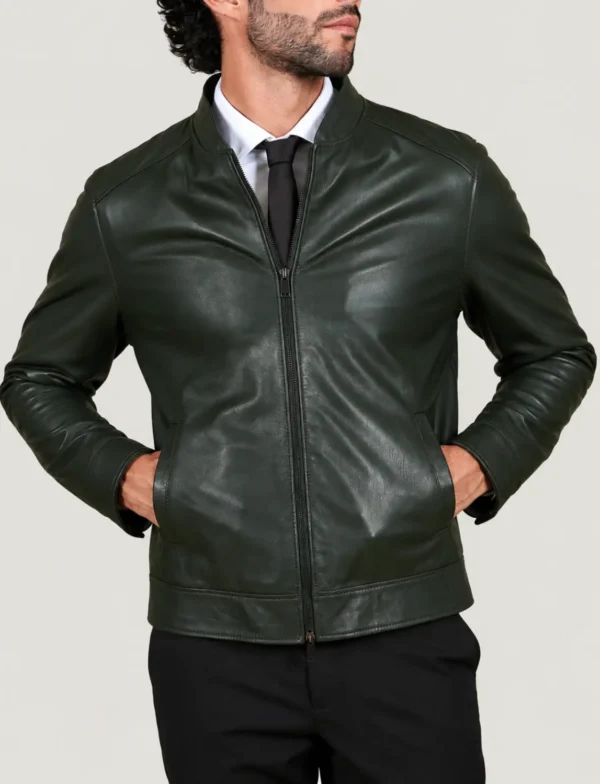
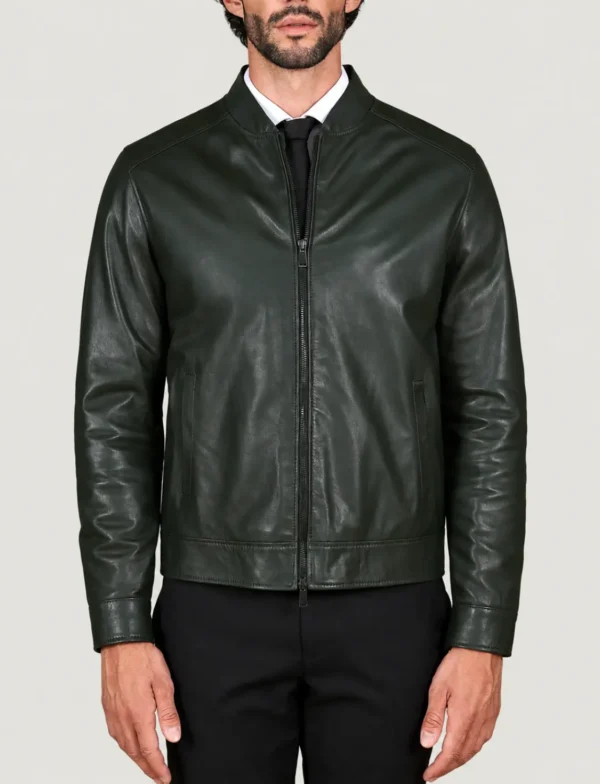
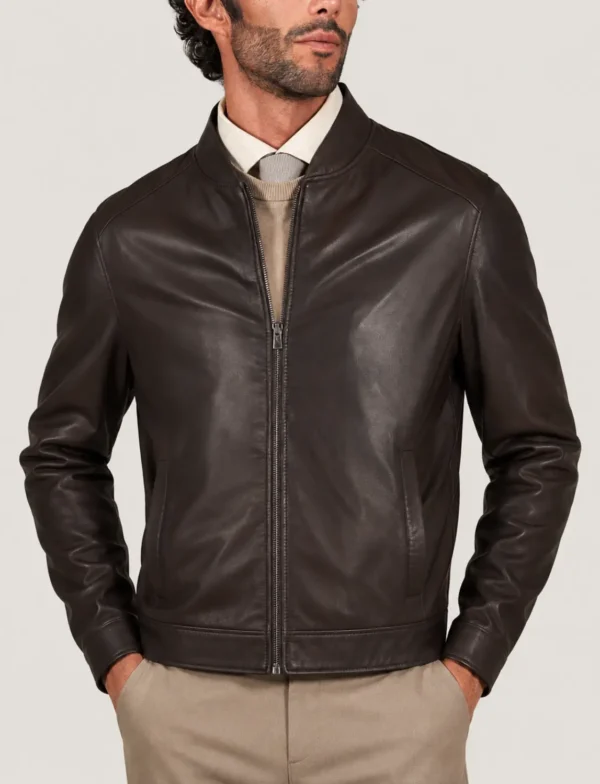
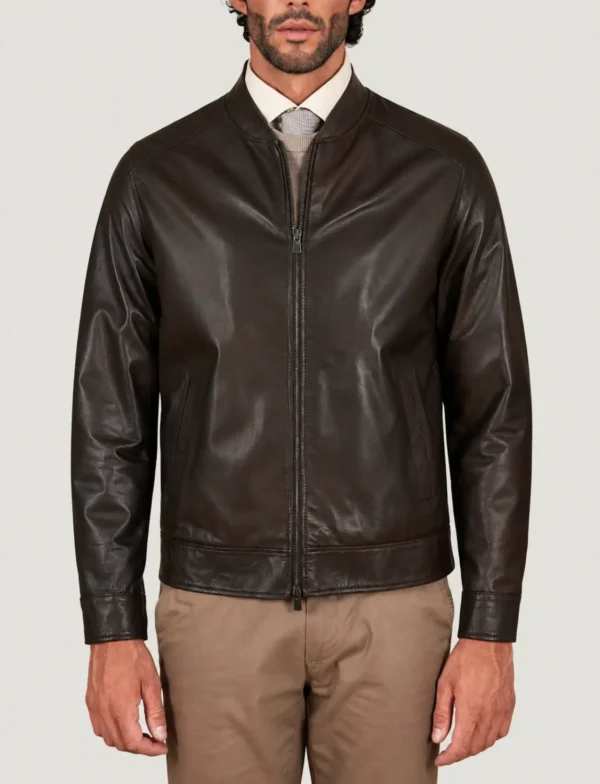
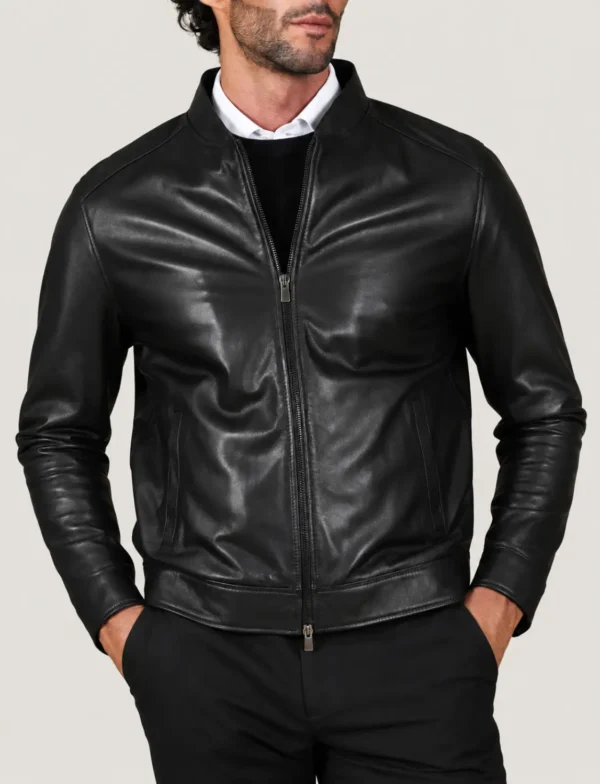
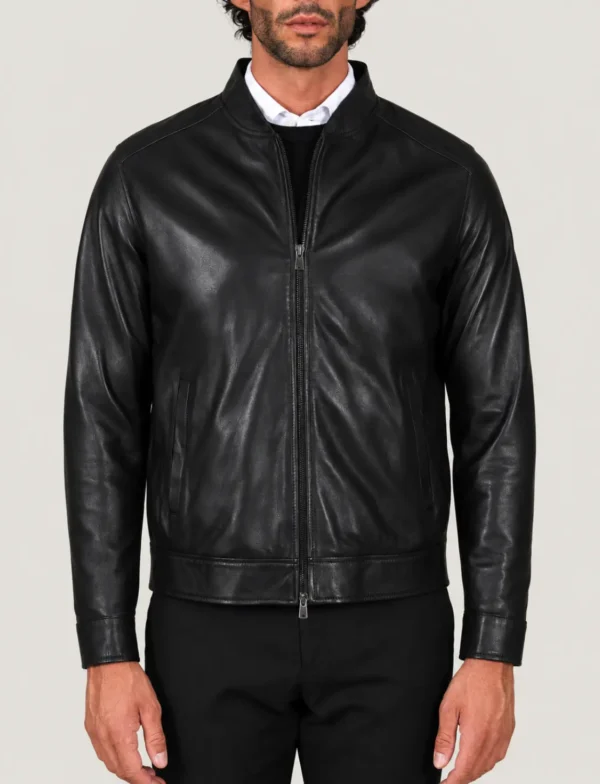
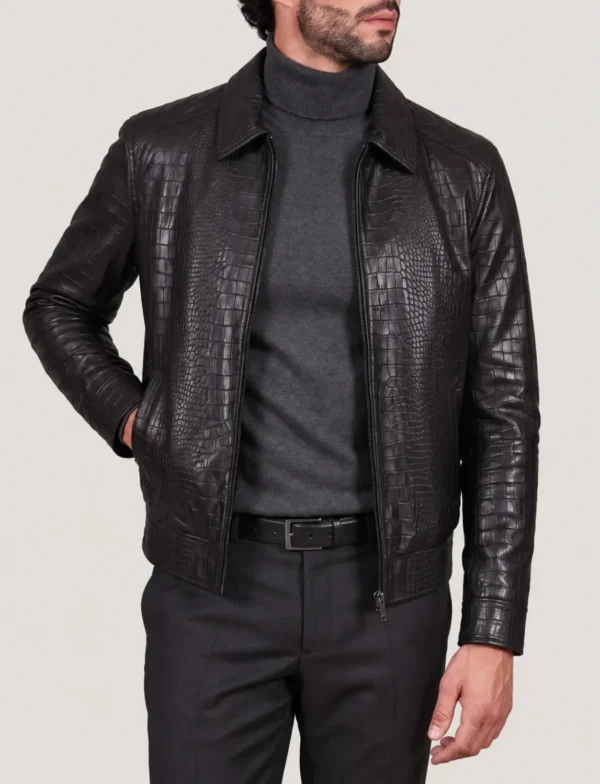
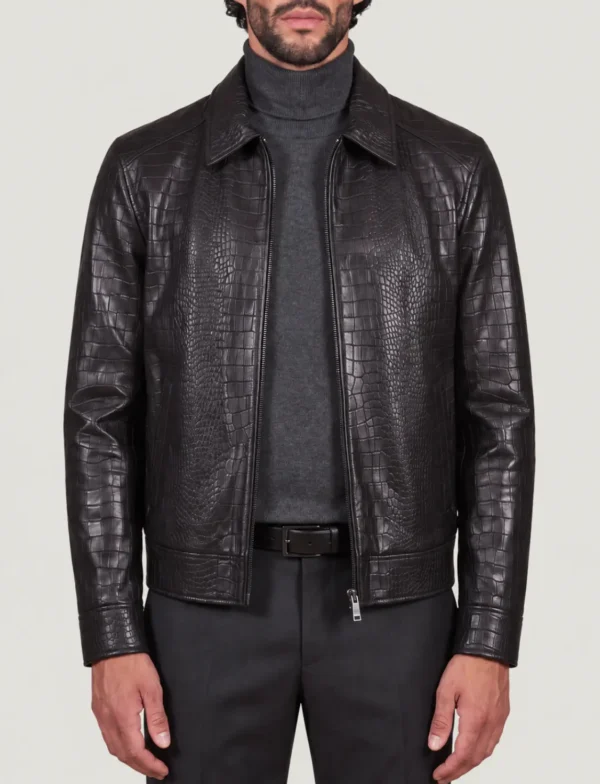
Bomber jackets. Waist-length cuts with ribbed cuffs and hems in leather or leather-and-wool combinations, drawing from mid-century military flight jacket heritage. Rounder, less aggressive than a biker, right for casual wear, cold-weather layering, and buyers who want leather in an approachable everyday silhouette.
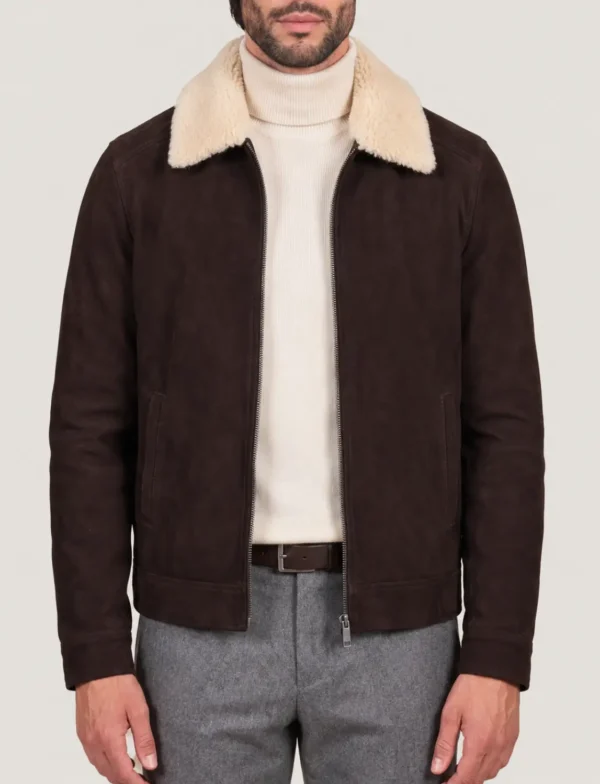
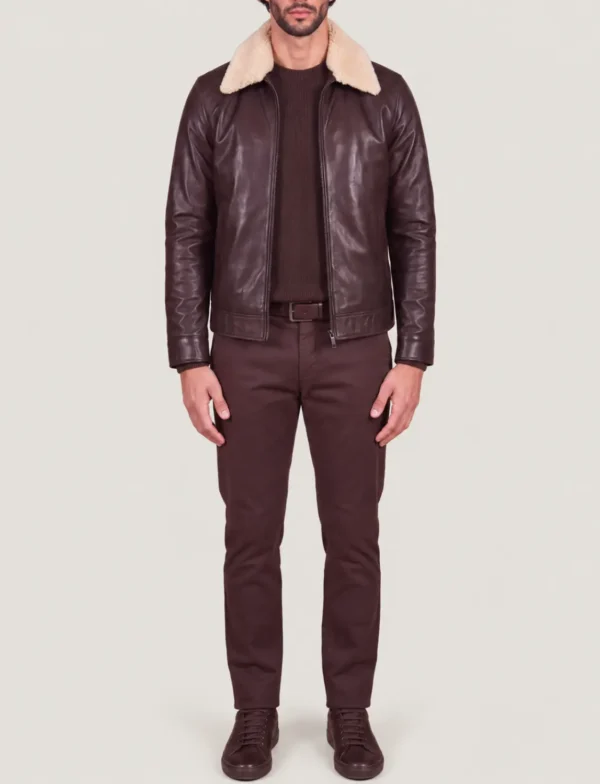
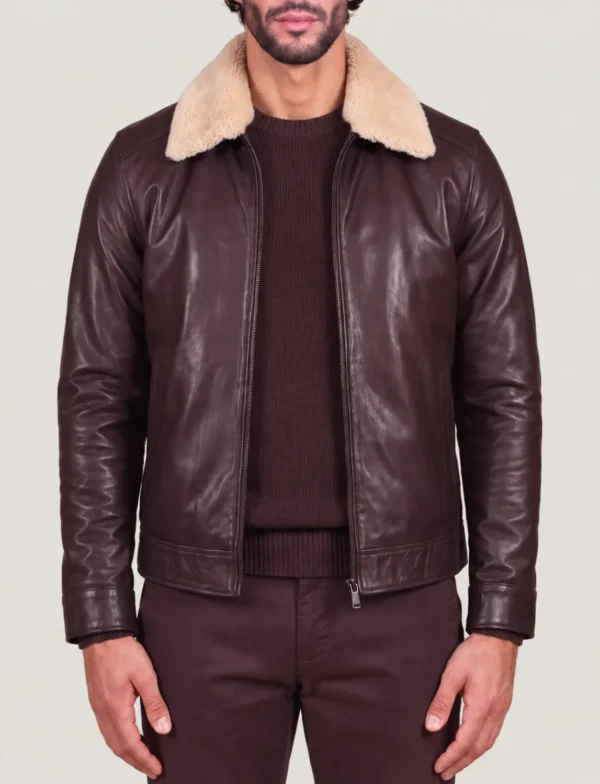
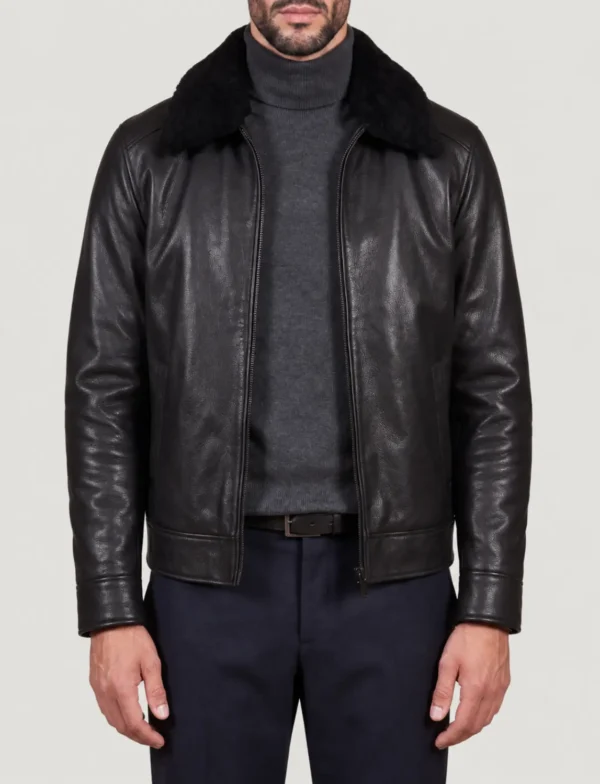
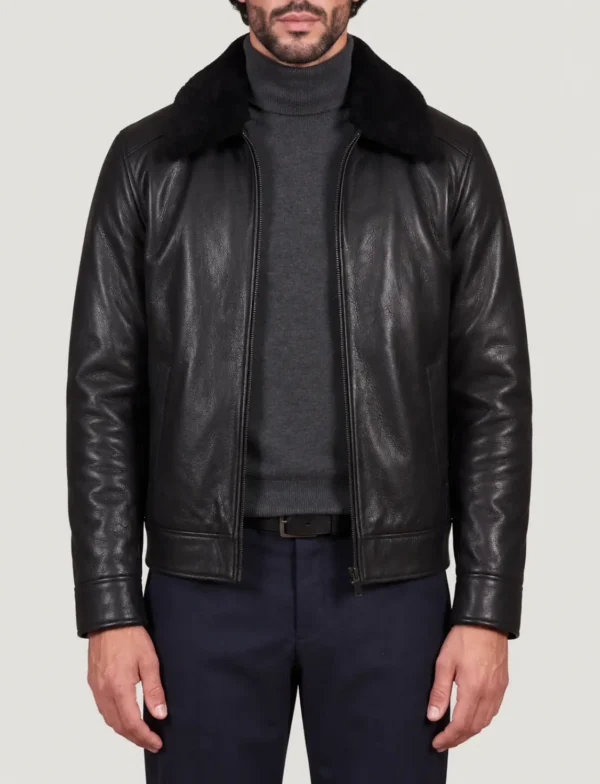
Aviator jackets. Heavier flight-jacket cuts with shearling or fur collars, wide lapels, and cold-weather construction — direct descendants of WWII pilot jackets like the B-3 and G-1. Right for cold-weather wear, statement casual dressing, and buyers who want the heritage-military read.
Hooded leather jackets. Biker, bomber, and casual cuts with attached or removable hoods for weather protection and streetwear-forward styling. Right for daily wear where leather meets utility, layered outerwear for cold and wet weather, and buyers who want leather with a modern streetwear read.
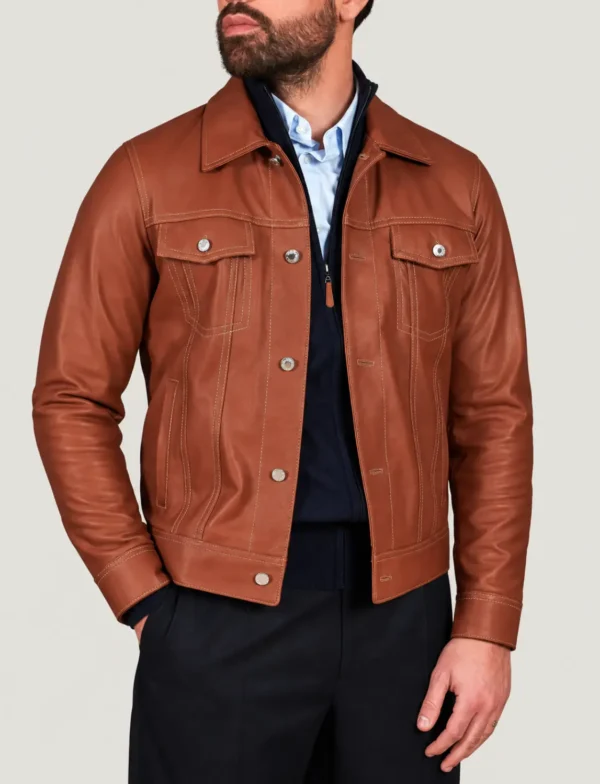
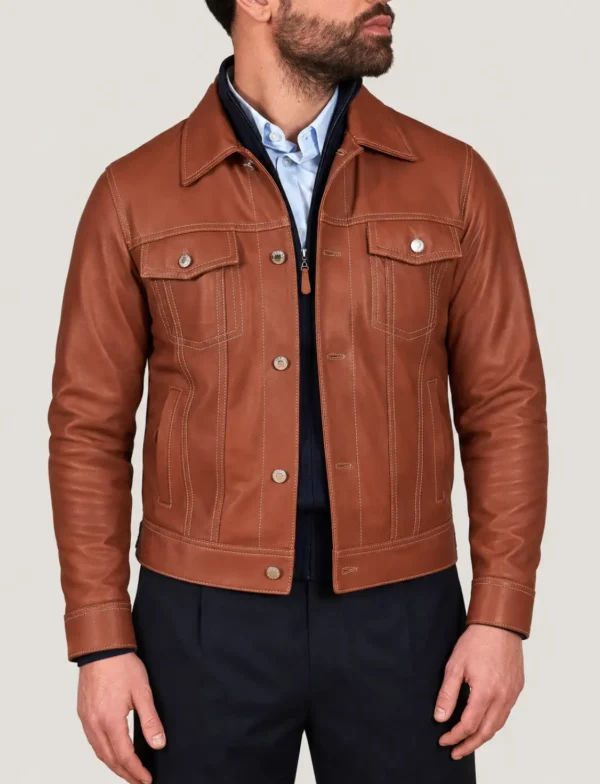
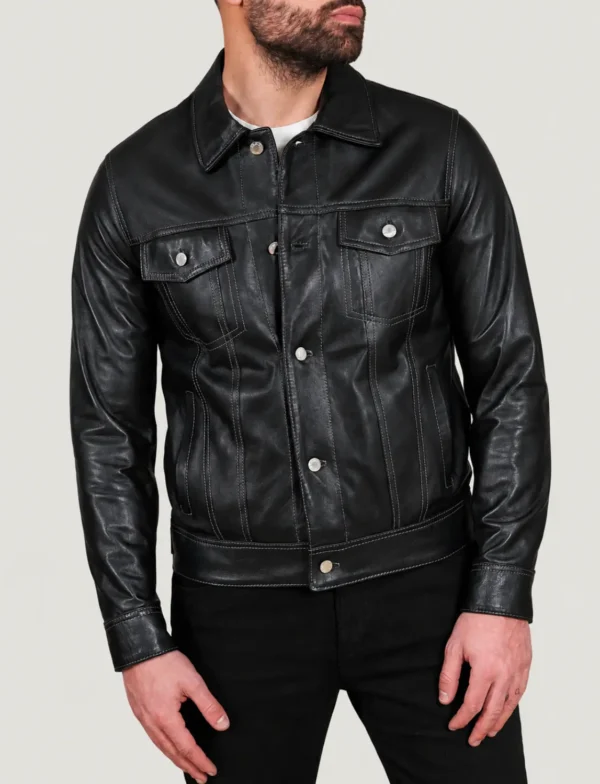
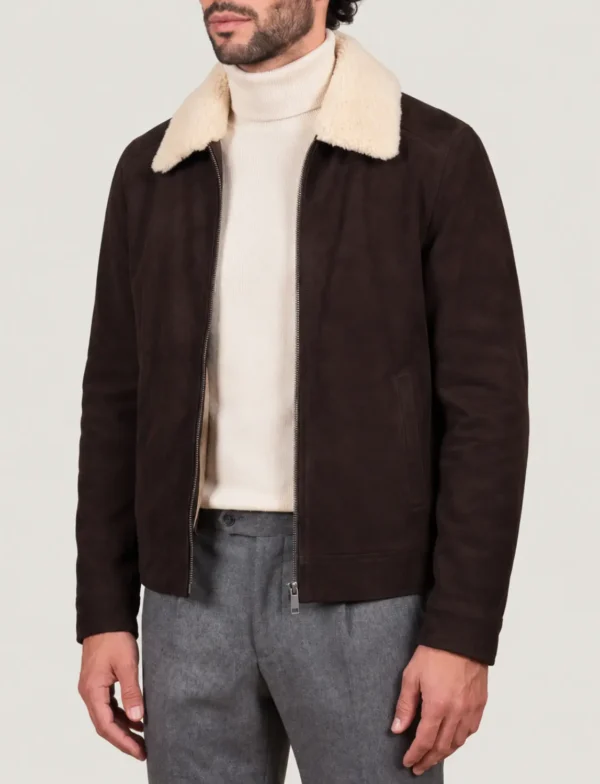
Suede jackets. Softer, matte-finish sheepskin and cowhide suede in trucker, bomber, and blazer cuts. Reads more casual and warmer in feel than smooth leather, right for smart-casual wear, weekend layering, and buyers who want the leather-jacket silhouette without the shine and formality of full-grain leather.
Leather blazers. Structured tailored jackets in leather with notch or peaked lapels, closer to menswear tailoring than to riding gear. Right for smart-casual events, business-adjacent contexts, and buyers who want leather in a formal register.
Leather vests. Sleeveless leather in biker, waistcoat, and utility cuts — often with hardware detailing, patch panels, and layered strap construction. Right for motorcycle and biker-scene wear, warm-weather layering over shirts, and buyers who want leather statement pieces without the sleeves.
Puffer jackets. Down or synthetic-filled leather puffers combining technical cold-weather insulation with premium leather outer construction. Right for serious winter wear, buyers who want leather warmth without the weight of shearling, and modern streetwear layering.
Fur and shearling. Sheepskin shearling and fur-lined coats and jackets built for the coldest wear — B-3 aviator descendants, ranch-style coats, and shearling-collared leather cuts. The warmest and heaviest pieces in the range.
Varsity jackets. Wool-body letterman jackets with leather sleeves in the American college heritage cut — snap-front closures, ribbed cuffs and collar, chenille lettering or plain.
Not sure which style suits your use case? Message us with the context and we'll match you to the right piece before you commit.
Leather grades and materials
We work in two primary leather grades. Full-grain leather is the top of the market — the outer layer of the hide with its natural grain intact, which means every mark, pore, and character of the hide is preserved. It's the strongest, most durable, and most character-rich leather available, develops the deepest patina over years, and is the honest choice for buyers who want a jacket that ages meaningfully. Top-grain leather is the second tier — the outer layer with the surface lightly sanded and finished for a more uniform appearance. It's still genuine leather with proper durability, but it ages more evenly and less dramatically than full-grain. Right for buyers who want the leather-jacket look with less variation over time. We do not use bonded, split, or corrected-grain leather.
Suede is soft-napped sheepskin or cowhide — matte, warmer in feel than smooth leather, and more casual in register. Shearling is sheepskin with the wool intact on the interior — the warmest natural insulation available in outerwear, right for cold-weather aviator and ranch-style pieces. Wool bodies on varsity jackets are dense melton wool, cut and stitched to hold shape over decades of wear.
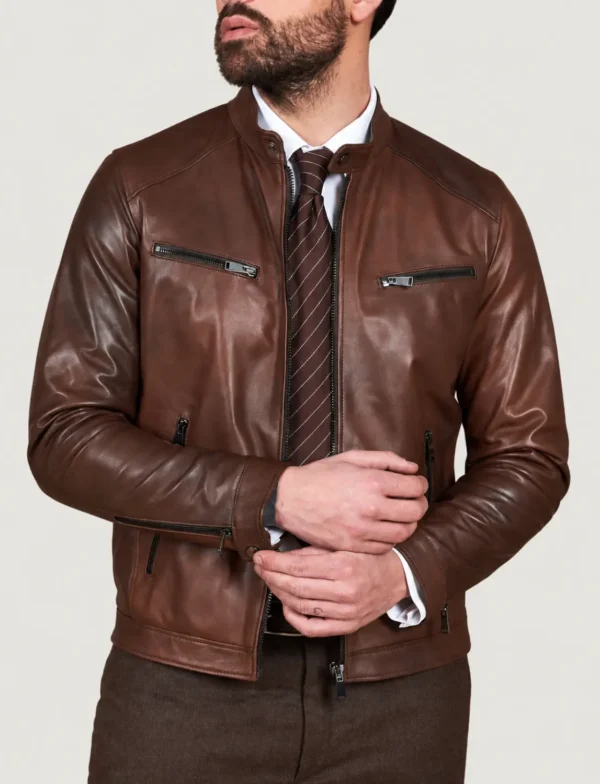
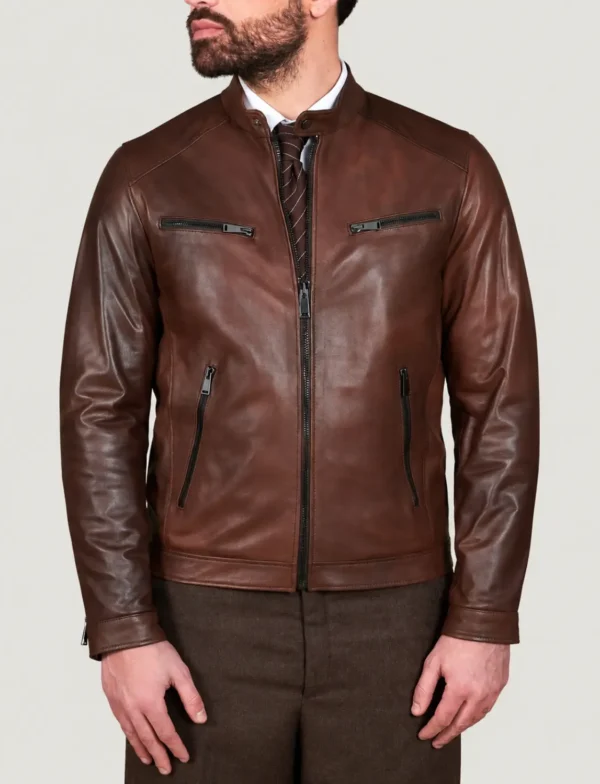
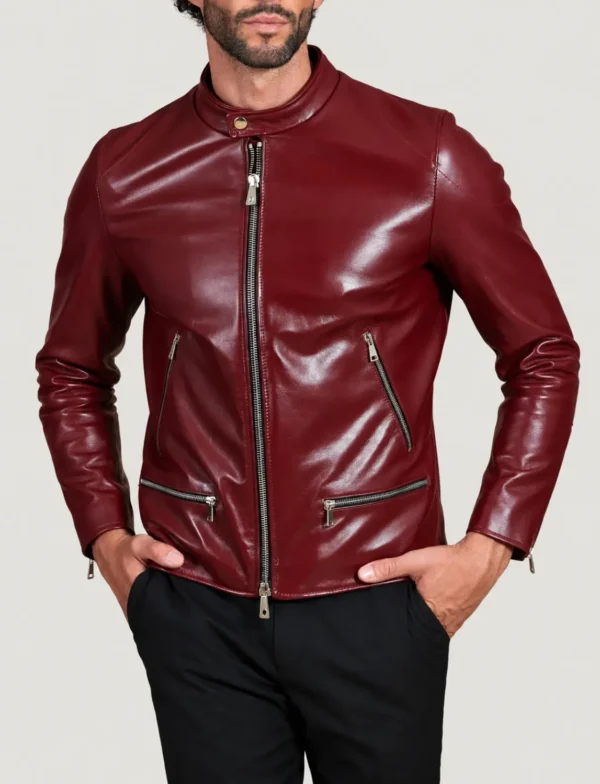
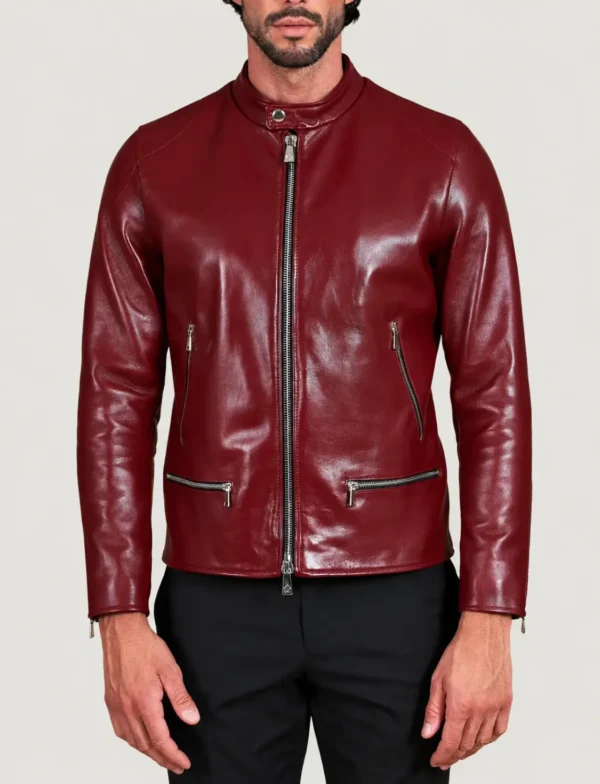
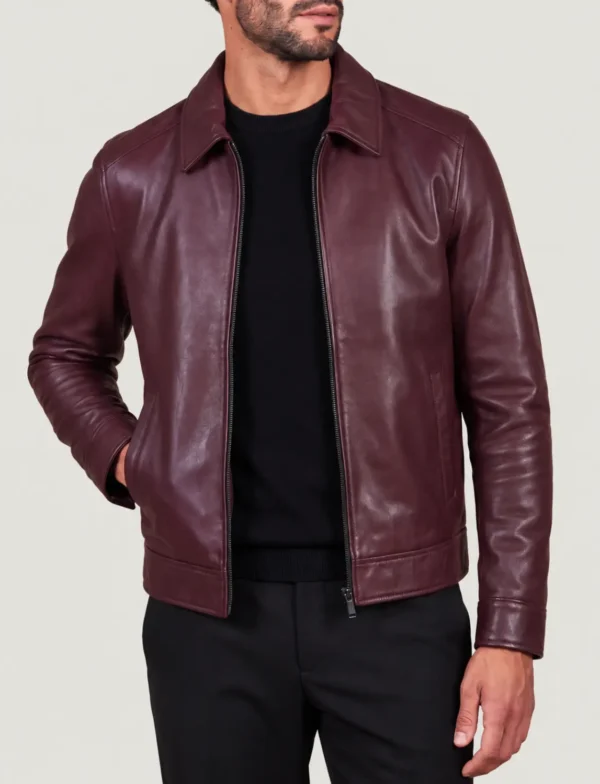
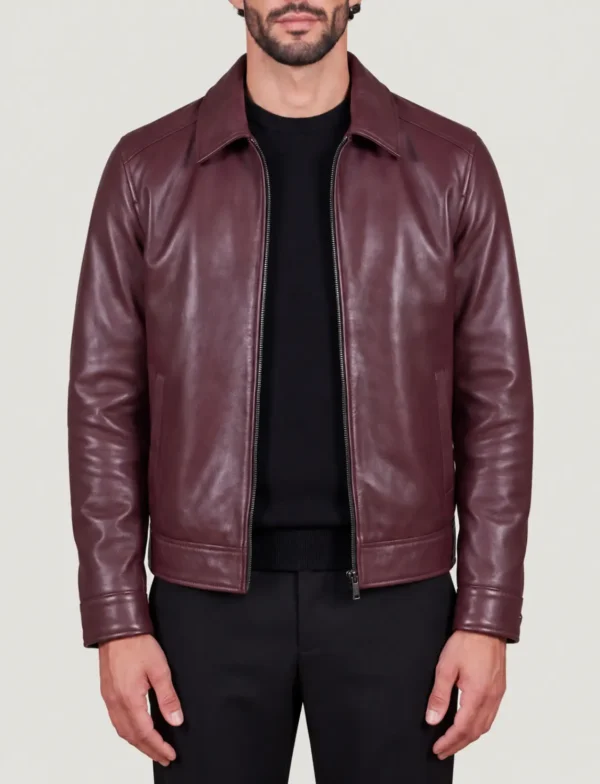
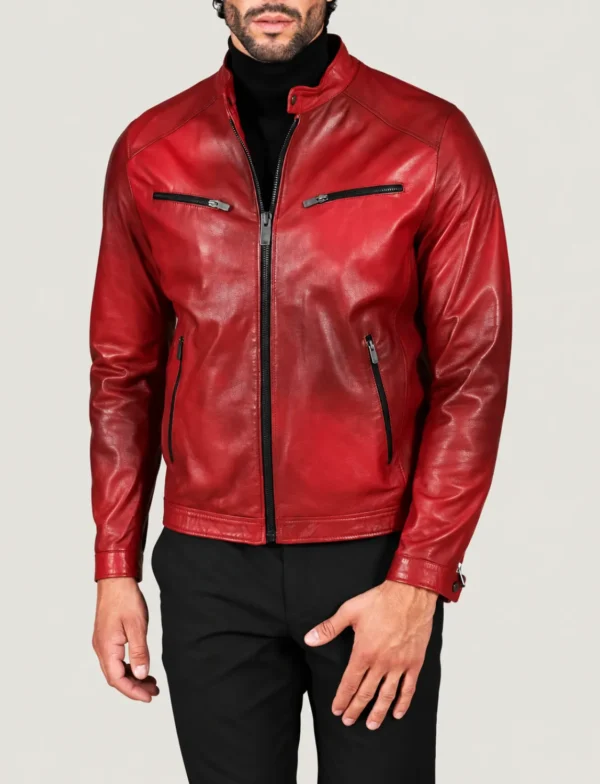
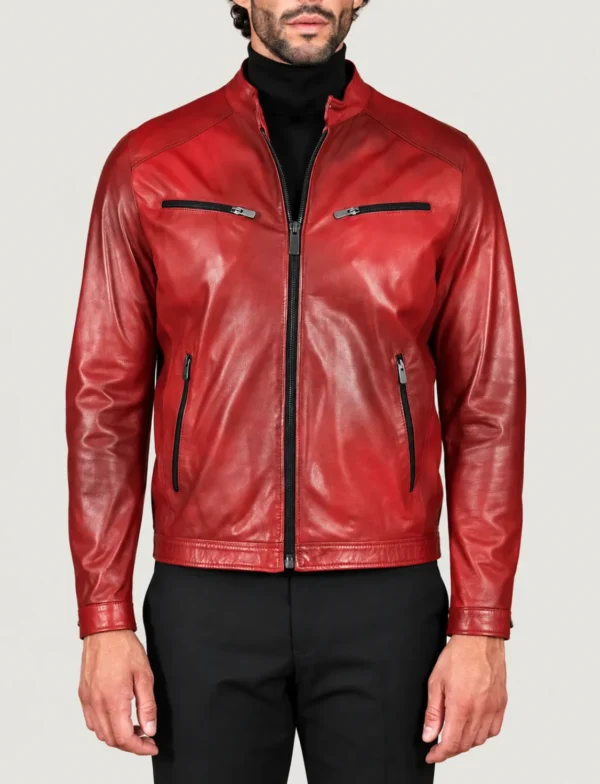
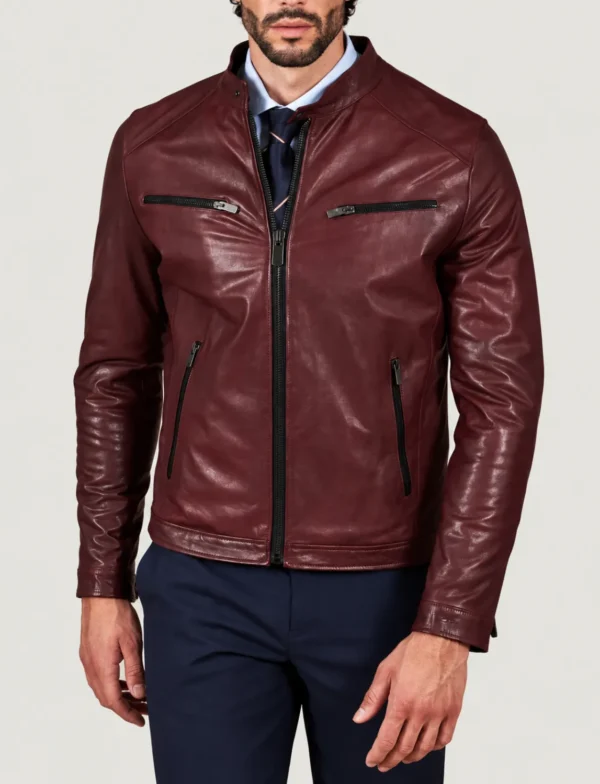
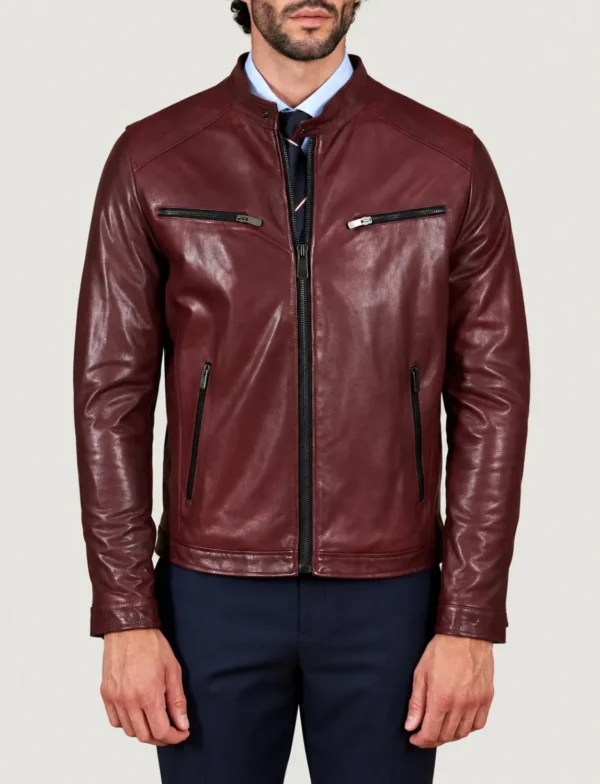
Colours available across the range: black (the default and most versatile), brown (walnut, chestnut, and darker chocolate tones), tan (lighter and more casual), and oxblood (deep red-brown, right for buyers who want distinction without departing from menswear tradition). Bespoke colours available on request — send us a reference and we'll match.
Choosing yours
Choose by context first, silhouette second, material third. For daily wear and streetwear, a black biker or bomber in full-grain leather. For riding and heavier-use contexts, a full-grain biker with reinforced construction. For cold-weather wear, an aviator with shearling collar, a shearling-lined ranch coat, or a leather puffer depending on temperature and register. For smart-casual and business-adjacent wear, a leather blazer or a suede jacket in brown. For statement casual dressing, an aviator, hooded biker, or leather vest. For a first leather jacket where you don't yet know how you'll wear it most, black full-grain in a biker or bomber cut is the answer that covers the widest range of contexts.
Leather and premium outerwear pair naturally with our utility kilts, leather kilts, and gothic kilts — the visual languages complement one another and the combination is a defining look in alternative Scottish fashion. For gothic-specific outerwear with heavier hardware, buckle detailing, and Victorian influence, see our gothic jackets and coats section. For traditional Highland formal jackets to wear with a kilt at Scottish weddings and ceremonies, see our kilt jackets and waistcoats section.
Every piece ships in ten working days, is hand-cut at our workshop, and is guaranteed to fit the measurements you sent us. If it doesn't, we remake it. See our returns policy for full terms.
10 stylesBiker, bomber, aviator, hooded,
suede, blazer, vest, puffer,
shearling, varsity
suede, blazer, vest, puffer,
shearling, varsity
10 daysCut, stitched,
shipped
shipped
Full-grain leatherOr top-grain, suede,
or shearling
or shearling
Free remakeIf the fit isn't
perfect
perfect
Frequently asked
Questions before ordering
What's the difference between full-grain and top-grain leather?
Full-grain is the outer layer of the hide with its natural grain intact — every mark, pore, and character preserved. It's the strongest and most durable leather available, develops the deepest patina over years, and ages into personal character with every wear. Top-grain is the same outer layer but lightly sanded and finished for a more uniform appearance — still genuine leather with proper durability, but it ages more evenly and less dramatically than full-grain. Full-grain is the honest premium choice; top-grain is right for buyers who want a more consistent look over time. Both are genuine leather. We do not use bonded, split, or corrected-grain leather, which are common in cheaper jackets but don't age or last in the same way.
Which style should I choose for my first leather jacket?
A black biker or bomber jacket in full-grain leather. Both cover the widest range of contexts a first-time buyer is likely to wear a leather jacket in — daily rotation, gigs, streetwear, alternative fashion, cold-weather layering, and casual evenings. Biker jackets have a stronger visual presence (asymmetric zip, wider lapels, more hardware) and read more classic-rock or motorcycle-heritage. Bombers have a rounder, more approachable silhouette (ribbed cuffs and hem, straight zip) and read more everyday and versatile. Choose biker if you want the jacket to be a statement piece; choose bomber if you want leather that works quietly across most contexts. Black works across every register and pairs with every colour palette, so it's the safest first choice.
What's the difference between suede and leather?
Suede is the inner side of the hide, buffed to a soft napped finish. Smooth leather (full-grain or top-grain) is the outer side of the hide. Suede reads softer, warmer in feel, more casual in register, and takes colour more richly than smooth leather — but it's less water-resistant and shows marks more visibly. Smooth leather reads sharper, ages with patina, is more weather-resistant, and works across more registers from streetwear to formal. Choose suede for smart-casual and weekend wear, warmer months, and buyers who prefer the softer visual language. Choose smooth leather for daily rotation, riding-heritage cuts, statement dressing, and buyers who want maximum longevity across the widest range of contexts.
How warm is shearling compared to a puffer?
Shearling is the warmest natural insulation available in outerwear — sheepskin with the wool intact on the interior traps air and body heat with no synthetic equivalent. A shearling aviator or ranch coat handles genuinely cold conditions (-10°C and below) with no additional layering needed. Leather puffers are down or synthetic-filled and warm, but not to the same level — right for cold conditions (0°C to -10°C) with light layering. Shearling is heavier, more expensive, and reads more heritage. Puffers are lighter, more technical in appearance, and read more modern-streetwear. Choose shearling for serious winter wear and heritage register. Choose puffer for versatile cold-weather wear where you also want a modern silhouette.
How should I care for leather and suede?
For smooth leather — wipe surface marks with a slightly damp cloth and air-dry away from direct heat. Condition twice a year with a proper leather conditioner (Saphir Renovateur, Lexol, or similar) to keep it supple. Never machine wash or dry-clean. Store on a wide shaped hanger away from direct sunlight. If it gets soaked, let it dry naturally at room temperature and condition once dry. For suede — brush regularly with a suede brush to lift dirt and restore nap. Spot-clean with a suede eraser for dry marks. Waterproof with a suede protector spray before first wear and reapply annually. Avoid rain where possible. For shearling — brush the wool interior periodically and air out after wear. Professional cleaning only, once every few years or after significant staining. With this care, a leather or shearling jacket lasts thirty years and improves in character over time.
Can I request bespoke colours, linings, or hardware?
Yes. All our jackets can be customised beyond the standard configurations — bespoke leather or suede colours matched to a reference you send us, alternative lining fabrics (satin in specific colours, printed linings, tartan linings for buyers wanting Scottish accent), hardware finish options (brass, matte black, chrome, antique nickel), and detail-level requests like specific pocket configurations, zip placement, or contrast stitching. Add your customisation requests to the order notes at checkout, or message us before ordering to confirm feasibility. We don't charge extra for standard customisations. Complex bespoke work may carry an additional fee, which we'll quote before we start cutting.
Are these jackets suitable for motorcycle riding?
Our biker jackets and leather vests are cut in the classic motorcycle silhouette and use full-grain leather, which offers meaningful abrasion resistance. However, we do not currently make jackets to CE-rated motorcycle safety standards — no armour inserts at shoulder, elbow, or back, and no impact-tested construction. If you want a leather jacket that looks like a biker jacket and offers general leather protection for casual riding, our biker cut is right for you. If you need a jacket rated for track use, high-speed riding, or that meets specific EU or US motorcycle safety certifications, buy from a specialist motorcycle apparel brand. Our jackets are heritage-cut leather outerwear that draws from motorcycle tradition, not certified riding gear.
How does leather outerwear pair with a kilt?
Naturally, and it's one of the defining looks in alternative Scottish fashion. A black biker or bomber jacket with a utility kilt, gothic kilt, or leather kilt reads as coherent alternative streetwear — the visual language of leather and hardware complements the utility hardware of the kilt rather than fighting it. Suede jackets pair well with tweed and casual kilts for a softer smart-casual look. Long shearling coats over a kilt read as a statement outfit right for winter events and alternative weddings. Leather jackets do not pair well with traditional Highland formal kilt outfits — for Scottish weddings and ceremonies where a kilt is worn formally, see our kilt jackets and waistcoats section for Prince Charlie, Argyll, and doublet cuts.