BLACK FRIDAY IS HERE! ✦ 20% OFF EVERYTHING · Shop the Sale →
About our harps
Harps in the lyre and Celtic traditions, supplied since 2017
Kilt and Jacks has been supplying harps to musicians and buyers of the tradition since 2017. Every harp we ship — whether a small 7-string lyre for a complete beginner, a full-range 22-string lyre for a serious performer, a lap-sized Celtic harp for the developing clàrsach player, or a floor Celtic harp for professional and traditional performance — is quality-checked at our workshop before dispatch, tuned before shipping, and backed by our replacement guarantee. We supply harpists worldwide, from complete beginners drawn to the instrument through mythology, meditation, folk revival, or Celtic heritage, through developing players building serious practice, through professional performers and educators using the instrument in contemporary and traditional contexts.
The range divides into two distinct harp traditions that share the instrument name but come from genuinely different cultural sources: lyre harps — the ancient Greek and Middle Eastern instrument revived in the modern era through folk music, meditation practice, mythology-adjacent contemporary culture, and TikTok-driven global community; and Celtic harps (clàrsach in Scottish Gaelic, cláirseach in Irish) — the traditional Gaelic harp of Scotland and Ireland, with roots reaching back over a thousand years and a serious modern revival supporting professional and educational infrastructure. Both are legitimate paths into harp playing, and the right choice depends on the tradition you want to enter and how you want to play.
Lyre harps versus Celtic harps — which is right for you
The most important choice when buying your first harp is which tradition to enter. Both traditions are genuinely accessible to modern beginners, both produce serious modern players, and both have active global communities supporting new learners. But they're different instruments serving different musical purposes, and the honest answer to "which harp should I buy" depends on what you actually want to play and how you want to play it.
Choose a lyre harp if you're drawn to the instrument through Greek mythology, meditation and therapeutic music, folk-revival aesthetic, the modern TikTok and Instagram lyre community, or the ancient tradition specifically. Lyre harps are dramatically more accessible for complete beginners — smaller, more portable, significantly cheaper, and playable with no prior musical background within days of unboxing. The modern lyre community welcomes beginners and provides genuinely free educational content across YouTube, TikTok, Reddit, and Discord. If you want to start playing harp this month without a serious financial commitment or a long learning curve, lyre harp is the honest answer.
Choose a Celtic harp if you're drawn to the Scottish or Irish Gaelic tradition specifically, want to play in the clàrsach lineage of Turlough O'Carolan and the historical Celtic harp repertoire, plan to join the serious Celtic harp community (competitions, festivals, educational institutions), or want to pursue harp as a lifetime serious instrument. Celtic harps are larger, more expensive, and require proper instruction to play in the tradition — but the tradition is genuinely rich, the modern community welcomes serious learners, and the instrument itself is one of the most beautiful and historically significant instruments in Western music. If you want to enter a specific cultural tradition with depth and seriousness, Celtic harp is the answer.
Play both if the two traditions genuinely interest you — many serious harpists own both a lyre and a Celtic harp, using each for different musical contexts. The lyre for portable meditative playing, the Celtic harp for tradition-serious performance and education. Neither cancels the other; they complement each other in a serious harp practice.
The sub-categories we supply
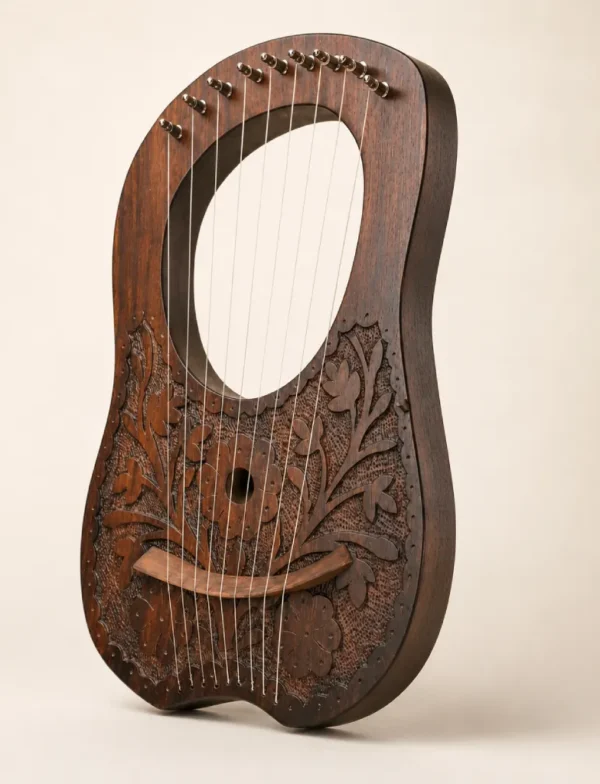
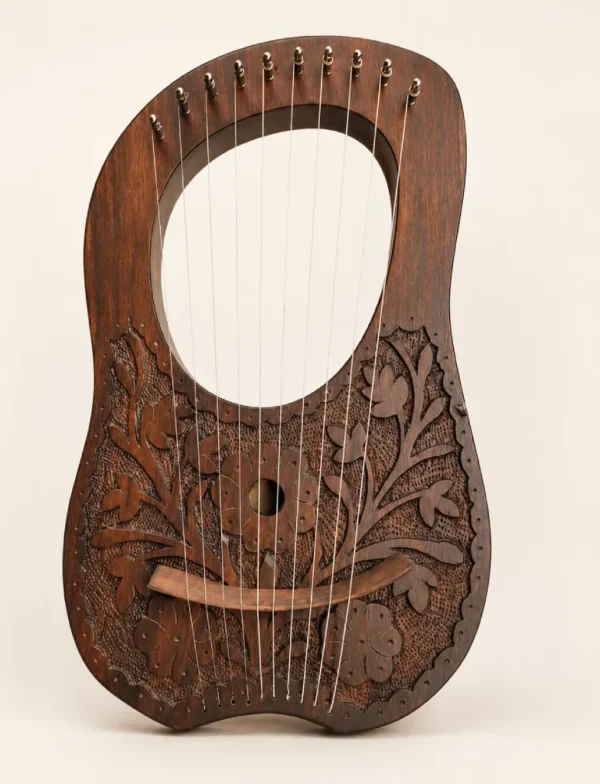
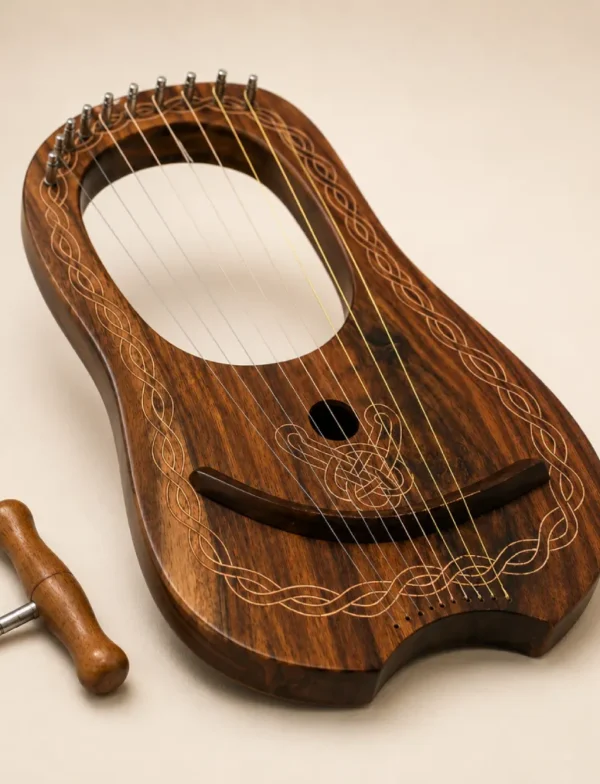
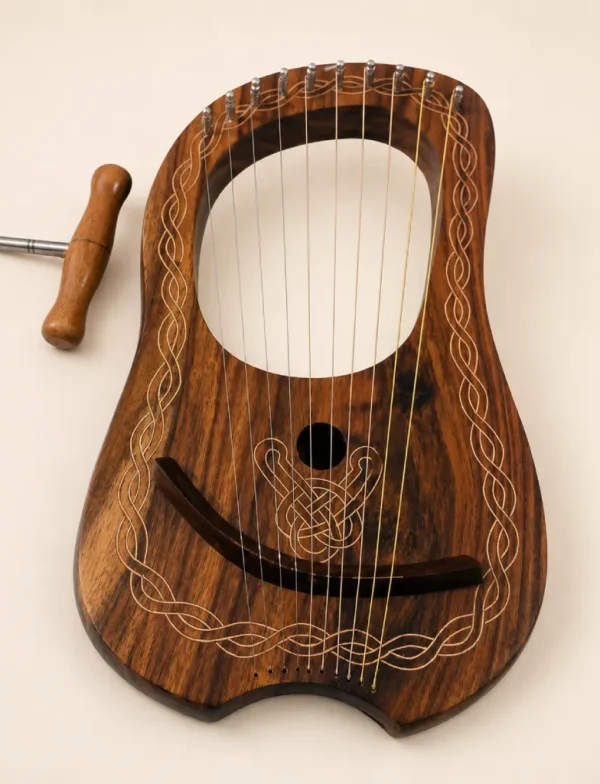
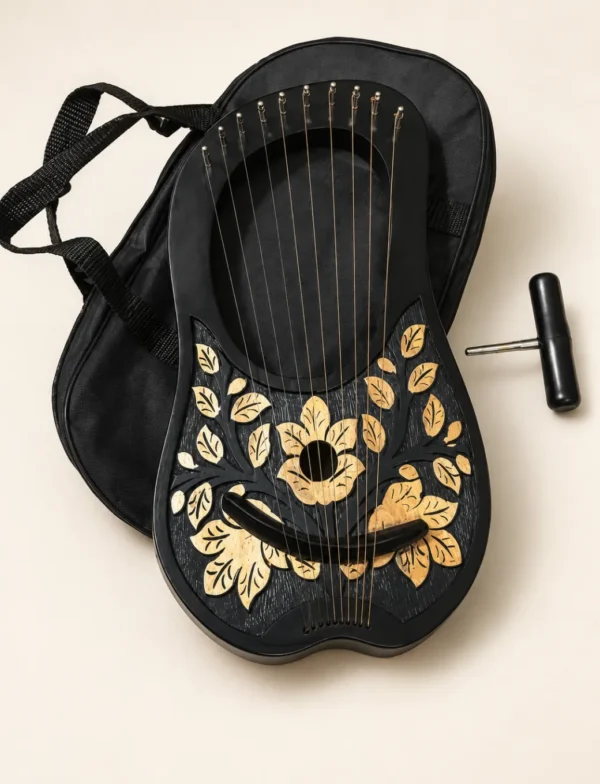
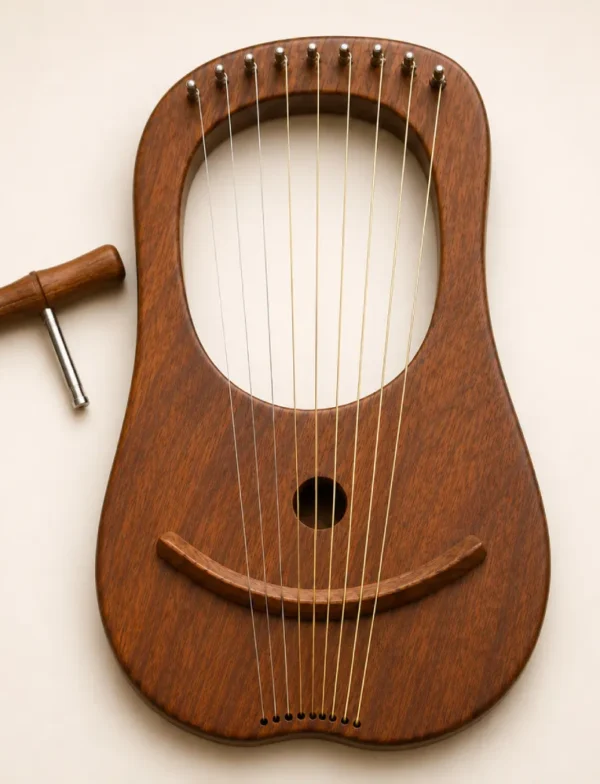
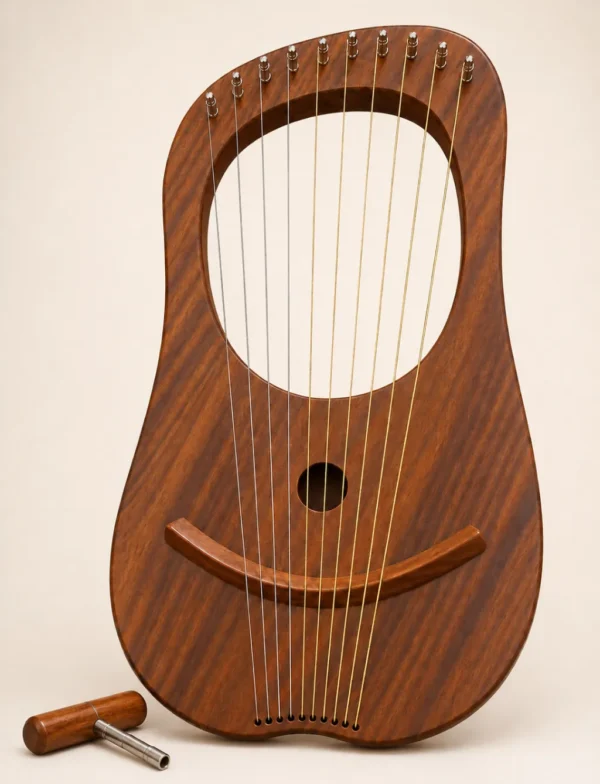
Lyre Harps. The ancient Greek instrument revived for the modern era — small, portable, accessible, and increasingly popular through folk revival, meditation, mythology-driven interest, and the global online lyre community. Available in 7-string, 10-string, 16-string, and 22-string configurations, in solid and hollow body construction, in mahogany, rosewood, maple, and walnut. Every lyre ships with tuning key, padded case, spare strings, and beginner's guide. From starter 7-string lyres suitable for complete beginners through to full-range 22-string performance instruments. See the lyre harps range.
Celtic Harps. The traditional Gaelic harp of Scotland and Ireland — clàrsach in Scottish Gaelic, cláirseach in Irish — with a serious modern revival supporting professional players, educational institutions, competitive festivals, and a genuinely rich repertoire spanning historical Gaelic tradition through contemporary Celtic composition. Available in lap harp configurations (portable, 22 to 27 strings) for developing players and travel, and floor harp configurations (26 to 38 strings) for serious performance and educational contexts. All Celtic harps supplied with lever mechanisms for key changes, and available in traditional woods including rosewood, maple, and walnut. See the Celtic harps range.
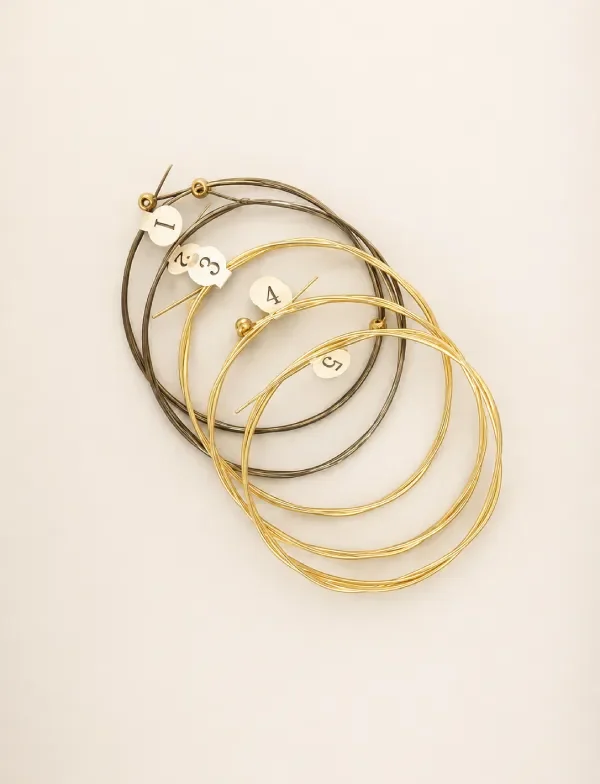
Harp Strings and Accessories. Replacement strings for lyre and Celtic harps, tuning keys and wrenches, harp cases and gig bags, tuning apps and reference materials, sheet music and repertoire books, and everything else harpists need across their playing life. String replacement is genuinely the most common ongoing purchase harpists make — lyre strings typically last 1-3 years, Celtic harp strings 2-5 years depending on playing frequency and string material. See the harp strings and accessories range.
Not sure which harp tradition suits your starting point? Message us with your context — musical experience, what draws you to the harp (specific tradition, mythology, meditation, folk revival, or general interest), and any budget or playing goals — and we'll route you to the right harp before you commit.
What comes with a harp
Every harp in the range ships with the tuning key required to tune the instrument, a padded case or gig bag for transport and storage, spare strings (at least one full spare set for lyres; select replacement strings for Celtic harps), and a beginner's tuning and playing guide covering basic instrument care, tuning to standard configurations, and simple starter melodies. Higher-range Celtic harps and larger lyres also include stand or seat guidance, tuning reference recordings, and access to online tutorial content where the maker provides it. Complete beginners can pick up any harp from our range and be tuning, playing simple melodies, and beginning proper practice within the first week without additional purchases.
Learning the harp — resources and community
Both harp traditions have genuinely accessible learning paths for modern beginners. Lyre harp learning is well-served by free online content — YouTube tutorials, TikTok playing videos, Reddit r/lyre community discussion, and Discord servers connecting beginners with more experienced players. Most lyre players can learn to a satisfying playing level entirely through free online resources, though online lyre teachers offering paid lessons via Zoom accelerate learning meaningfully for players wanting serious progress. Celtic harp learning typically benefits from more formal instruction. The tradition has established educational infrastructure — Ann Heymann's clàrsach teaching in Scotland, Sìleas or Àilie Robertson-adjacent teaching approaches, Scoil na gCláirseach in Ireland, and increasingly online Celtic harp teachers offering serious tradition-authentic instruction. If you're serious about Celtic harp, working with a qualified teacher from the beginning shapes your playing meaningfully.
For repertoire, lyre players typically start with simple folk melodies, popular songs adapted to lyre range, and traditional Greek and Mediterranean melodies, expanding into original modern compositions from the growing lyre-composer community. Celtic harp players typically start with basic Celtic tunes (jigs, reels, slow airs adapted for harp), progressing into the O'Carolan repertoire and other historical Gaelic harp music, and increasingly modern compositions from contemporary Celtic harp composers. Both traditions have rich playable music at every skill level, and the online communities for each are welcoming to serious beginners.
Every harp ships in ten working days, is quality-checked and tuned before dispatch, and comes with our replacement guarantee for manufacturing defects. See our returns policy for full terms. Harps pair naturally with the broader folk and Celtic music instruments range — many harpists also pick up tin whistles for melodic playing, and the two instruments together cover most of the folk-revival repertoire. For harpists performing in Scottish traditional context, our tartan kilts and Highland dress complete the traditional performance outfit.
2 traditionsLyre harps
and Celtic harps
and Celtic harps
10 daysQuality-checked,
tuned, shipped
tuned, shipped
Everything includedTuning key, case,
strings, guide
strings, guide
Replacement guaranteeOn manufacturing
defects
defects
Frequently asked
Questions before ordering
Should I start with a lyre harp or a Celtic harp?
The honest answer depends on what you want to play and how serious a commitment you're making. Lyre harp is the honest first-harp recommendation for most modern beginners — dramatically more affordable, more portable, accessible with no prior musical background, and supported by a genuinely welcoming global online community. If you're drawn to harp through mythology, meditation, folk revival, or general interest without a specific tradition commitment, lyre harp is the correct starting point. Celtic harp is the correct starting point if you're specifically drawn to the Scottish or Irish Gaelic tradition, want to play in the clàrsach lineage of Turlough O'Carolan and historical Gaelic harp repertoire, or plan to pursue harp as a serious lifetime instrument with proper instruction. Celtic harps are more expensive, larger, and require more formal learning — but the tradition is genuinely rich and worth the commitment for the right player. Many serious harpists eventually own both.
What's the difference between a harp and a lyre?
Physical construction and playing tradition. Harps (Celtic, concert, pedal, lever) have strings arranged in a triangular frame — strings run from the neck at the top down to a resonant sound box at the bottom, with the frame supporting string tension across the triangle. Harps are played sitting or standing at a fixed position, with both hands playing the strings from either side of the frame. Lyres have strings arranged in a single plane across a yoke — strings run parallel between two arms extending from a resonant body, without the triangular frame construction. Lyres are held against the body or in the lap and played more like a hand-held instrument. Both are stringed instruments in the harp family broadly, both are ancient, but they're genuinely different physical instruments with different playing techniques. Lyres are typically much smaller and more portable than harps. Both are legitimate instruments and both belong under the harps hub in our range.
How much does a good harp cost?
Prices vary significantly by tradition and configuration. Lyre harps range from starter 7-string instruments at accessible entry-level prices through to serious 22-string performance lyres in the mid-range. Even the top of our lyre range is significantly more affordable than any Celtic harp. Celtic harps are a genuine investment — lap harps at the lower end of the range through to floor harps at serious mid-range and professional prices. Celtic harp pricing reflects the size, complexity, and construction of a full traditional harp — dozens of strings under significant tension, a lever mechanism for each string on lever harps, careful acoustic engineering, and quality wood construction. For most modern beginners exploring harp for the first time, a lyre harp is the honest starting point precisely because it lets you commit to the instrument seriously without the Celtic harp financial commitment. If you know from the start that Celtic tradition is what draws you, the Celtic harp investment is worth making even at the beginner level.
Do I need musical experience to learn harp?
For lyre harp, no. Complete beginners with no prior musical background can learn to play the lyre within days of unboxing the instrument. The online lyre community produces countless free tutorials aimed at absolute beginners, and playing recognisable melodies within the first week is genuinely achievable. For Celtic harp, some musical background helps but isn't strictly required. Celtic harp learners without prior music training can absolutely start from zero, but progress benefits significantly from working with a qualified teacher from the beginning rather than self-teaching from online resources. If you have prior experience with any instrument — piano, guitar, tin whistle — that experience transfers meaningfully to harp learning. If you don't, expect the Celtic harp learning curve to be steeper than lyre but still genuinely accessible with proper instruction.
Can I play Celtic music on a lyre harp?
Yes, within the range constraints of the specific lyre. Small lyres (7 and 10-string) can play simplified Celtic melodies within the lyre's tuned range — many Celtic jigs, reels, and slow airs are playable on 10-string lyres with some adaptation. Larger lyres (16 and 22-string) can play the majority of Celtic melodic repertoire without significant adaptation. That said, the lyre isn't the traditional instrument for Celtic music — the Celtic harp is. If Celtic music is specifically what you want to play in the tradition, the Celtic harp is the honest instrument for that. If Celtic music is one of several styles you want to explore and portability and accessibility matter more than tradition authenticity, a 16 or 22-string lyre serves well. Many modern lyre players include Celtic tunes in their repertoire alongside meditative playing, folk songs, and modern compositions.
How long does it take to learn harp?
Depends on the tradition and the depth of playing. Lyre harp — most beginners play simple melodies within the first week, comfortable multi-string playing within 3-6 months, and serious playing within 12-18 months of consistent practice. The lyre has one of the most accessible learning curves of any stringed instrument. Celtic harp — most beginners with proper instruction play basic tunes within 2-3 months, comfortable Celtic melody playing within 12-18 months, and traditional-level playing within 3-5 years of serious practice with a qualified teacher. Celtic harp is a genuine lifetime instrument — serious players continue developing for decades. Both traditions offer real playing satisfaction from early stages, so you don't need to reach professional level to enjoy the instrument.
Do you ship harps internationally?
Yes. We ship harps to the United States, Canada, Australia, New Zealand, the United Kingdom, Ireland, continental Europe, and increasingly across Asia. Lyre harps travel especially well — the compact size and light weight makes international shipping straightforward with our standard packaging and insurance. Celtic harps require larger packaging and more careful handling in transit, but we ship them internationally with full insurance and tracking, and they've arrived undamaged at harpists worldwide since 2017. All international orders arrive with our replacement guarantee intact — if the harp arrives damaged or defective, we replace it at no cost. Customs and import duties are the buyer's responsibility outside the shipping origin, and duty rates for musical instruments vary by country. If you're unsure how customs will treat a harp order in your country, contact us before ordering.
How do I care for a harp?
Wooden harps benefit from stable humidity and temperature — avoid leaving them in unheated rooms, cars, or environments with extreme humidity swings. Keep the harp in its case when not in use to protect the finish and prevent dust buildup on the strings. Wipe the strings periodically with a soft dry cloth to remove skin oils and prevent premature string degradation. For wooden harp bodies, occasional gentle wood conditioning (twice a year is sufficient for most instruments) keeps the wood from drying out. Retune the harp regularly — daily for the first few weeks after purchase as strings settle, then weekly for lyres and every few days for Celtic harps in active use. New strings will stretch and need frequent retuning for the first 7-14 days of playing before they settle. Replace strings as they age, corrode, or break — lyre strings typically last 1-3 years, Celtic harp strings 2-5 years depending on playing frequency and string material.