BLACK FRIDAY IS HERE! ✦ 20% OFF EVERYTHING · Shop the Sale →
About our bagpipes
Bagpipes for Sale — For Every Stage of Your Piping Journey
Kilt and Jacks has been supplying bagpipes to pipers, pipe bands, and Scottish tradition buyers worldwide since 2017. Every set of pipes we ship — whether a starter practice chanter for a first-year piper, a set of Great Highland Bagpipes for a grade-level competition player, a Border pipe for the indoor Scottish tradition, or a coordinated pipe band order across the corps — is quality-checked at our workshop before it leaves us, tuned before shipping, and backed by our replacement guarantee. We supply pipers at every level from complete beginners through to grade one competition players, and pipe bands across the RSPBA, EUSPBA, and international pipe band competition circuits.
The range divides into four categories that map to the piper's journey from first instrument through to full competition kit: practice chanters — the essential first instrument for every learning piper and the quiet-practice instrument for advanced players; Great Highland Bagpipes — the traditional Scottish pipes played at competition, Highland games, Scottish weddings, and pipe band performance; Border pipes and small pipes — the quieter indoor Scottish pipes used in Celtic and traditional music contexts; and reeds and accessories — the consumables and maintenance supplies every piper replaces across their playing life.
The four sub-categories
Practice Chanters. Every piper starts here. The practice chanter is a single reed-blown instrument played by mouth — essentially the melody pipe of the Great Highland Bagpipes on its own, without the bag and drones — and it's the correct first instrument for every learning piper regardless of age or ambition. Available in rosewood, sheesham, African blackwood (on request), and polypenco, with long or short chanter length options. From starter-grade practice chanters for first-year pipers through to premium blackwood chanters for advanced players and competition soloists. See the practice chanters range.
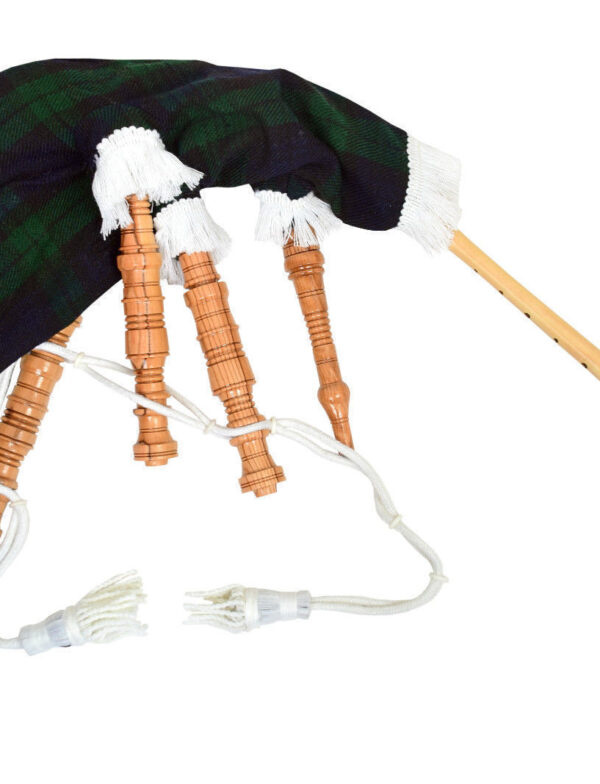
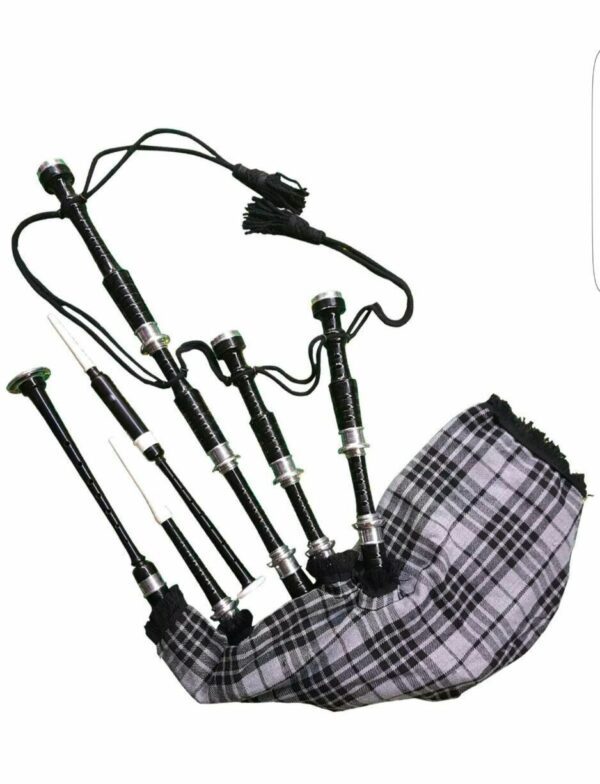
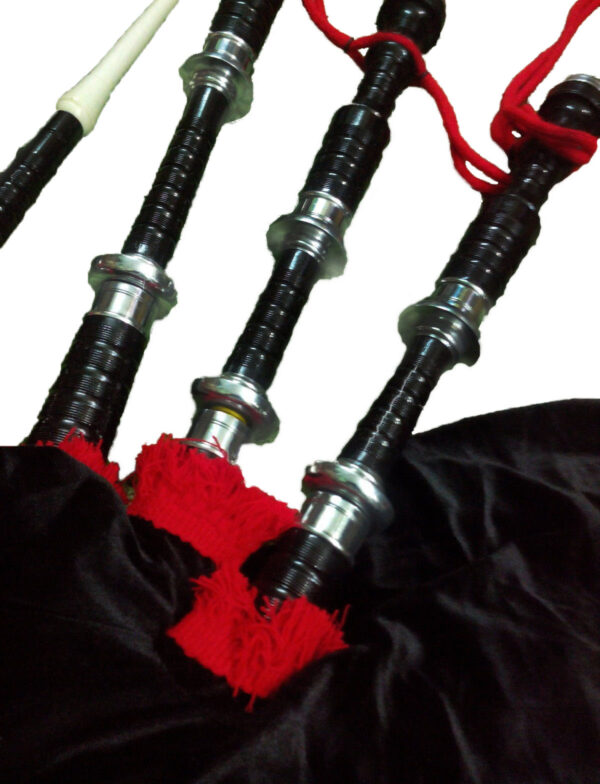
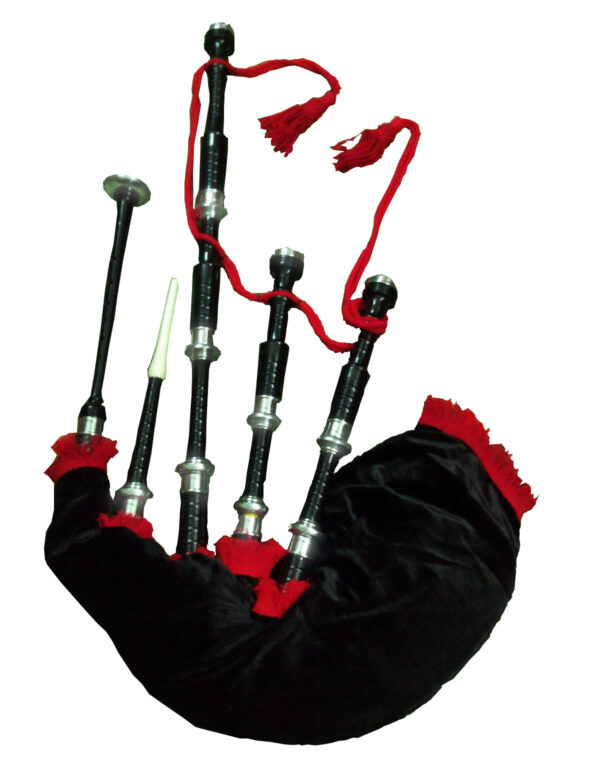
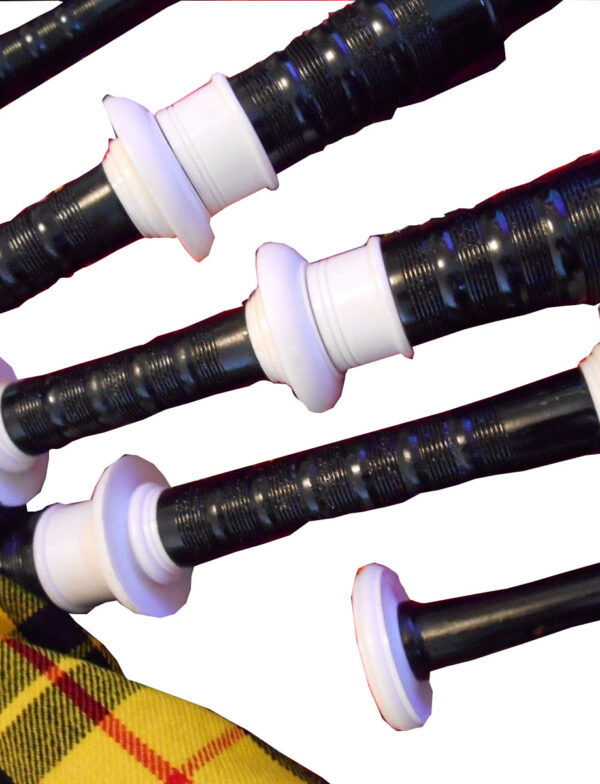
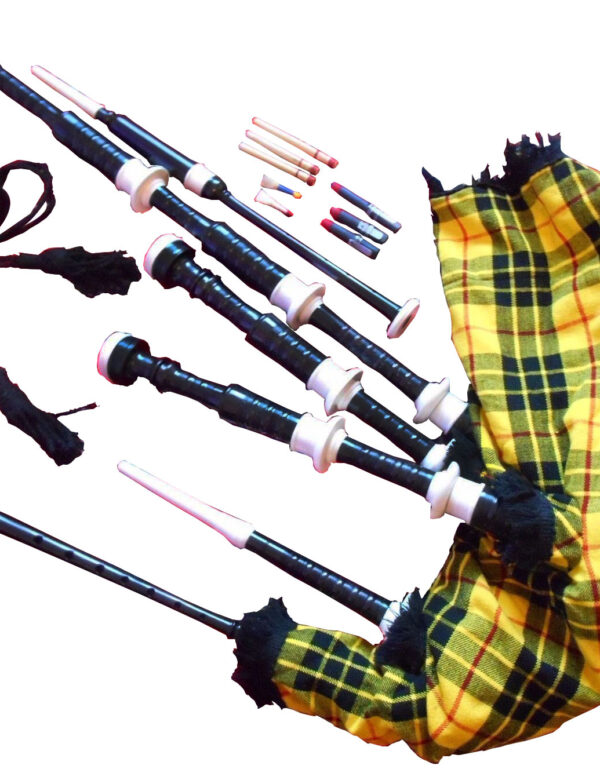
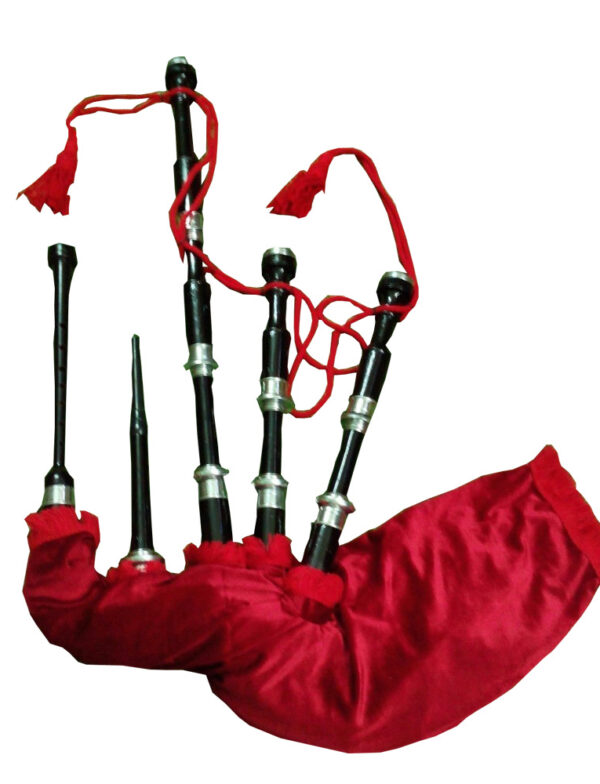
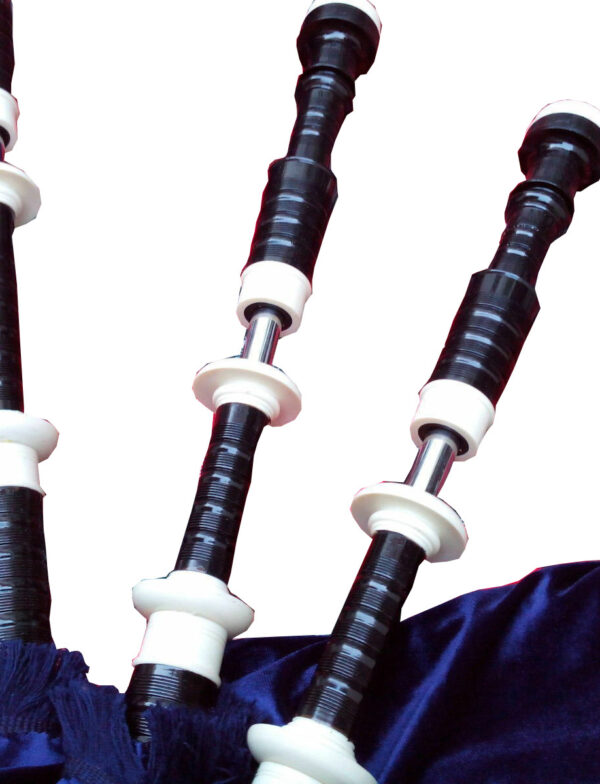
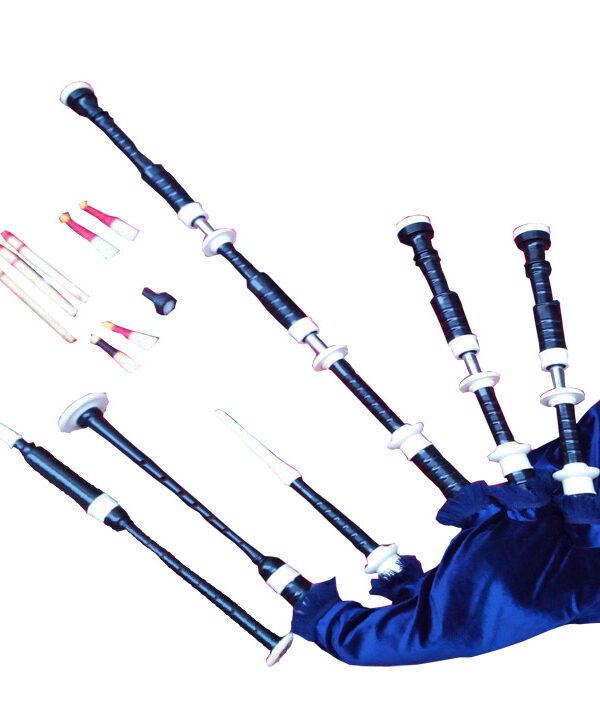
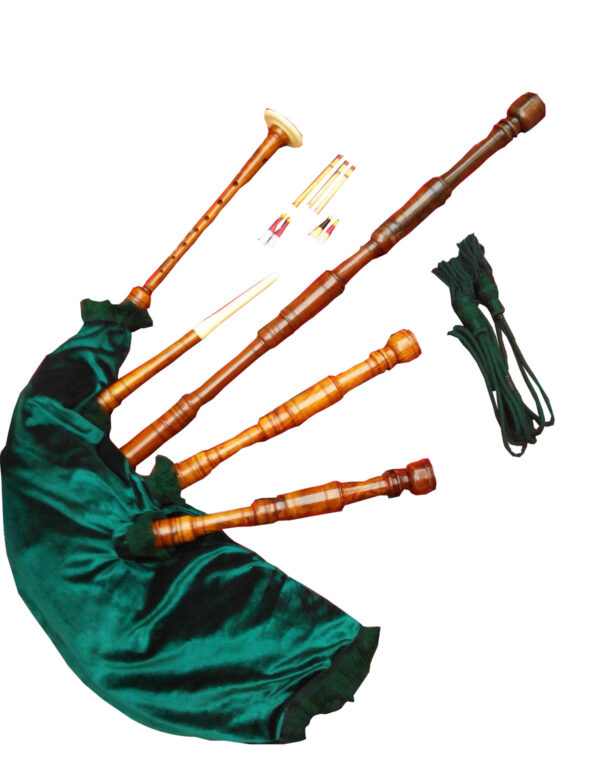
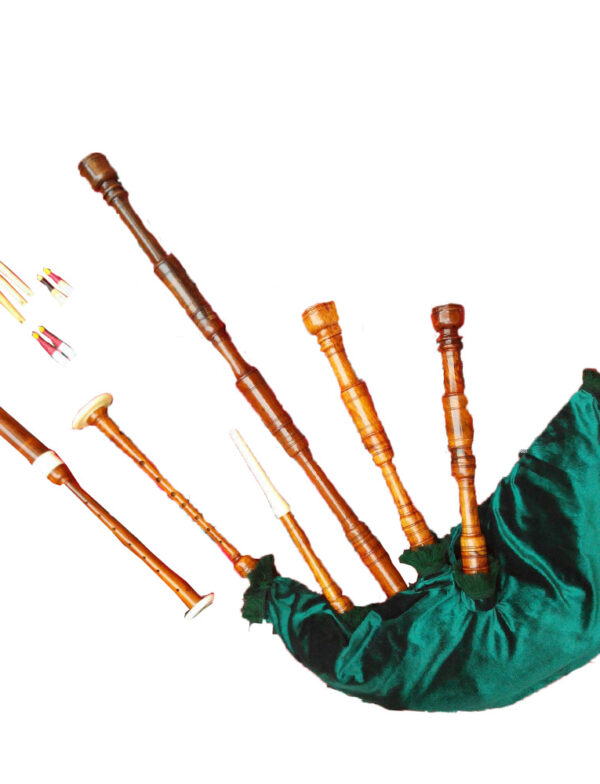
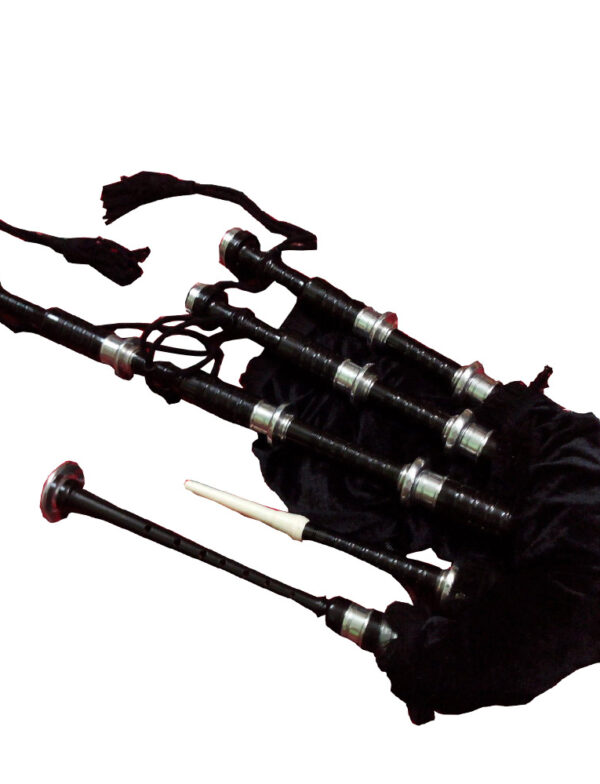
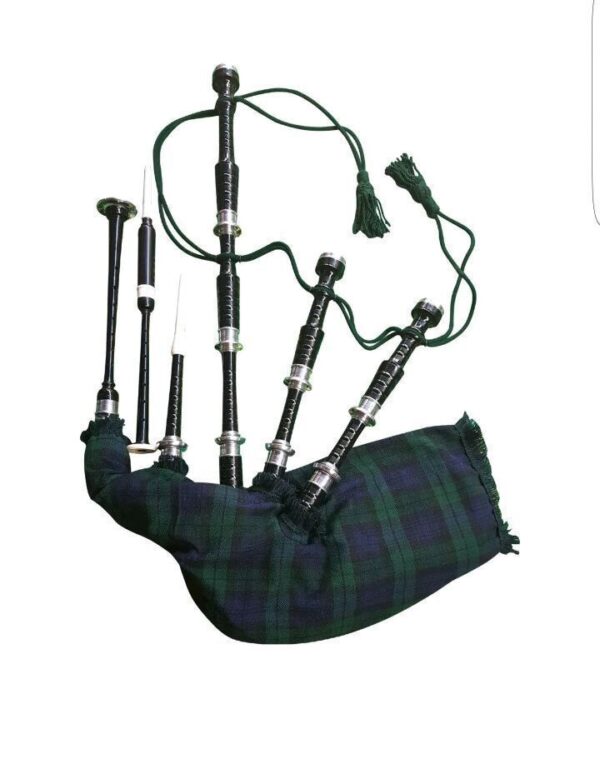
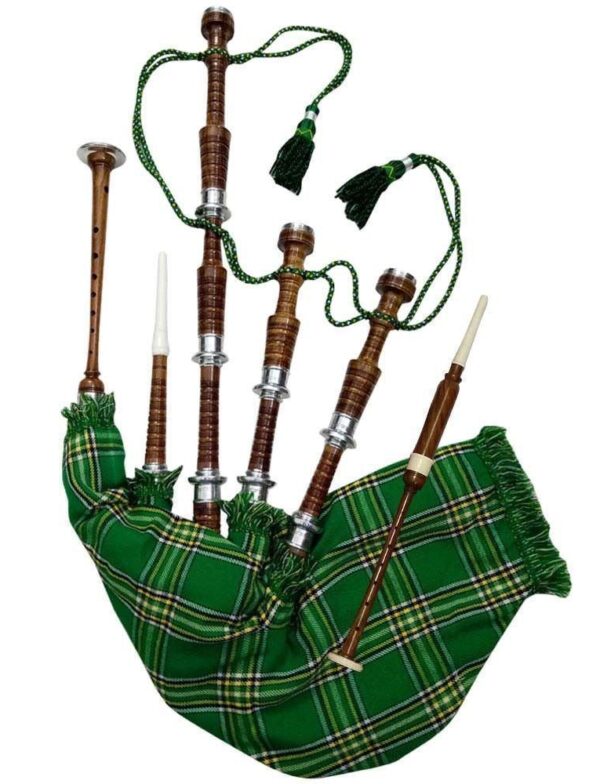
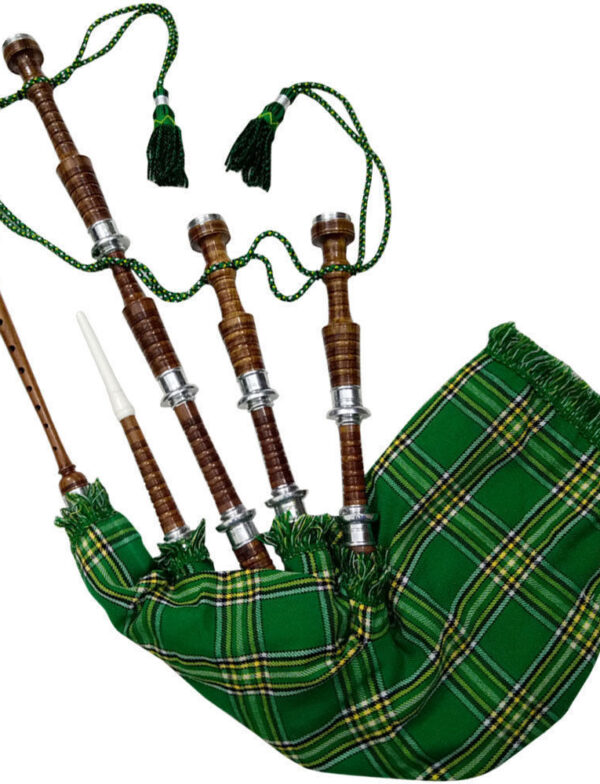
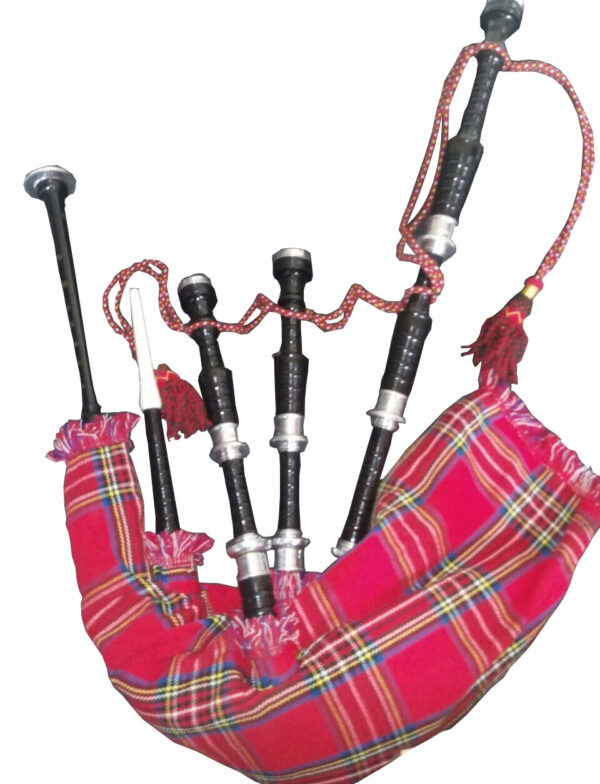
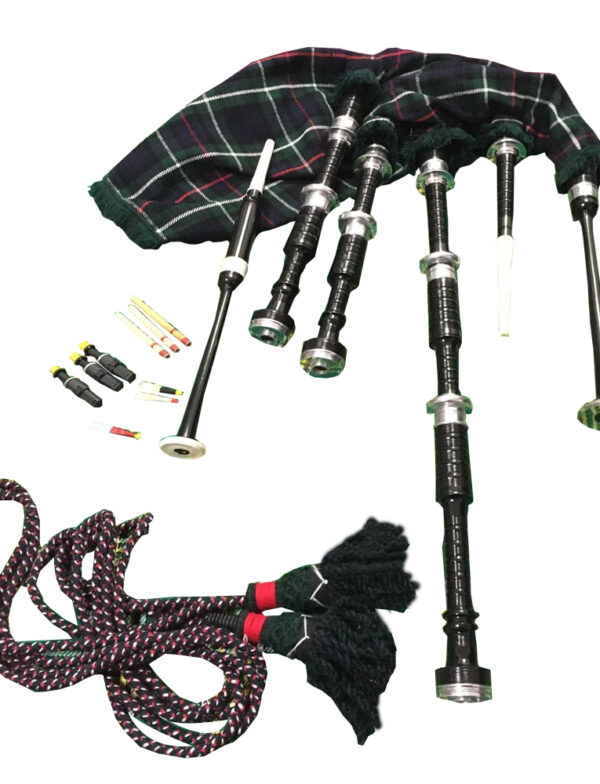
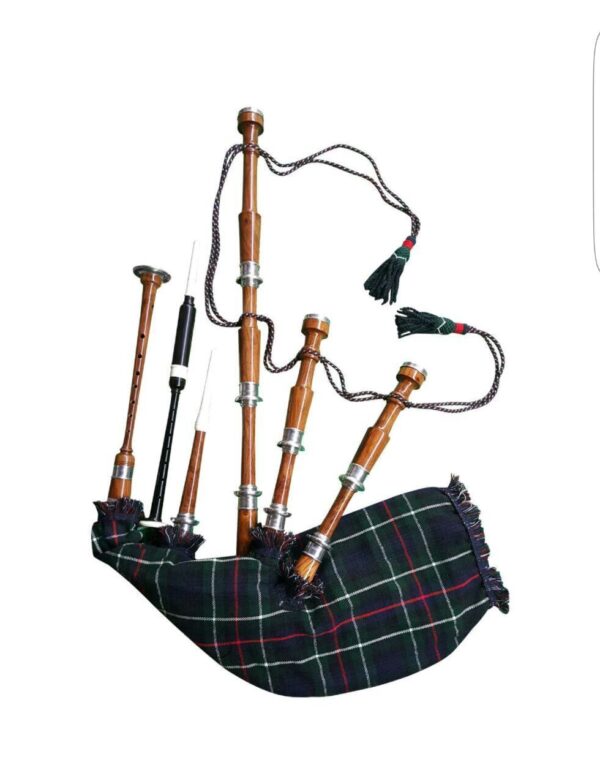
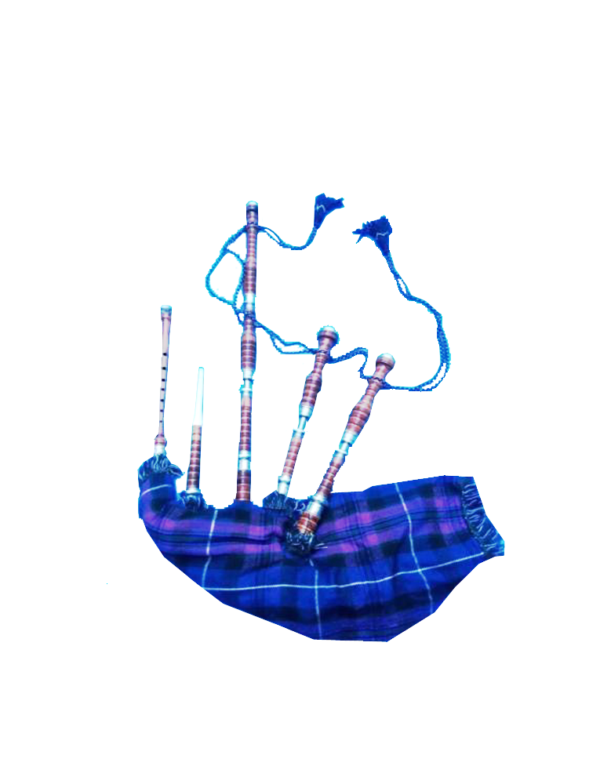
Great Highland Bagpipes. The traditional Scottish pipes — bag, blowpipe, chanter, and three drones (two tenor drones and one bass drone) — played at every pipe band competition, Highland games, Scottish wedding, and traditional Scottish ceremony worldwide. Available in rosewood, sheesham, African blackwood (on request), and polypenco, with hide or synthetic bag options, cane or synthetic reed options, and full or half-mounted silver or nickel fittings. From student-grade Great Highland Bagpipes suitable for pipers moving up from the practice chanter through to competition-grade pipes for grade one performance. See the Great Highland Bagpipes range.
Border Pipes and Small Pipes. The quieter Scottish pipes — Border pipes (a bellows-blown Scottish pipe with a chanter close to the Great Highland pitch, played in Border and Lowland Scottish tradition), and small pipes (quieter mouth-blown or bellows-blown pipes suitable for indoor playing, session music, and Celtic performance where the volume of the Great Highland Bagpipes would overwhelm the room). Increasingly popular among Great Highland pipers wanting an indoor instrument, Celtic musicians in session contexts, and pipers exploring the Scottish piping tradition beyond the pipe band ensemble. Available in the same wood options as the Great Highland range. See the Border and small pipes range.
Reeds and Accessories. The consumable and maintenance side of piping — chanter reeds, drone reeds (cane and synthetic), reed protectors, hemp, wax, cork, bag seasoning, moisture control systems, cases, drone stands, and every other supply pipers replace across their playing life. Reeds especially are frequent-replacement items — a serious piper replaces chanter reeds regularly as they wear and drone reeds as playing conditions change. See the reeds and accessories range.
Not sure which sub-category you need? Message us with your context — piping level, current instrument, and what you're looking to buy — and we'll route you to the right range before you commit.
Wood options — the four choices we offer
Wood choice matters more in bagpipes than in almost any other instrument. It affects tone, weight, price, climate suitability, and long-term durability. We offer four wood options across the range, from the accessible entry point through to the traditional premium choice available on request.
Rosewood. A warm, honey-toned traditional pipe wood with a rich playing tone and a beautiful natural grain that shows through the polished finish. Rosewood is heavier than polypenco but lighter than African blackwood, produces a mellow tone that many pipers prefer for solo playing and quieter ensemble contexts, and reads visually as a traditional handmade instrument. Sits at the mid-tier of our wood pricing — significantly more premium than polypenco, more accessible than sheesham or African blackwood. Suited to pipers moving up from a starter instrument who want proper wood tone without the price of the premium options.
Sheesham (Indian Rosewood). A denser, harder wood than standard rosewood, sheesham produces a brighter, more projected tone that many competition pipers prefer for pipe band and outdoor performance. Slightly heavier than rosewood, extremely durable across climate variations (an important consideration for pipers in humid or high-altitude conditions), and finished to a deep chocolate-brown with visible grain. A serious playing wood for pipers past the starter stage — increasingly the wood of choice for pipe band ensemble playing and competition solo work in the mid-tier price range.
African Blackwood (on request). The traditional premium pipe wood — the wood used by every established Scottish pipe maker for their top-tier competition instruments. African blackwood produces the projected, clear, carrying tone that defines the competition pipe band sound, ages beautifully over years of playing, and is the wood used at every level of grade one competition. It's also significantly more expensive than the other wood options (both due to the wood itself and the increased care required in machining and turning it), sensitive to climate variations, and requires proper maintenance to remain in playing condition. Available on request — contact us with your specification and we'll quote timing and pricing for African blackwood instruments. Suited to competition pipers at grade three and above, serious solo players, and pipers building instruments they'll play for decades.
Polypenco. A high-density synthetic material that many pipers now choose for practice chanters and starter Great Highland Bagpipes. Polypenco is significantly cheaper than any of the wood options, completely stable across climate variations (no cracking, no seasonal adjustment, no maintenance concerns), lighter than any wood pipe, and produces a tone that many modern pipers genuinely prefer for practice, outdoor performance in variable weather, and travel instruments. It doesn't age or develop the character of wood pipes, and won't be found at the top tier of solo competition, but for practice chanters, learning instruments, pipe band ensemble use, and travel pipes, polypenco is a legitimate choice made by serious pipers globally.
Not sure which wood suits your piping? Message us with your context — piping level, playing conditions (indoor or outdoor, climate variability, travel), and budget — and we'll recommend the wood that fits before you commit.
Bag, reed, and fitting options
Beyond wood choice, Great Highland Bagpipes carry a series of specification choices that affect price, playing feel, and maintenance requirements. Bag options — traditional sheepskin or cowhide bags (which require seasoning and periodic maintenance but produce the traditional playing feel most pipers train on), or modern synthetic bags (which require no seasoning, are stable across climate variations, and are increasingly the choice for pipe band ensemble use). Reed options — cane chanter reeds and cane drone reeds (traditional, expressive, but requiring frequent adjustment and replacement), or synthetic drone reeds (stable, consistent, low maintenance, and increasingly used in competition pipe bands). Chanter reeds remain predominantly cane at competition level. Fitting options — nickel fittings (standard), silver fittings (traditional and appearance-forward), and full-mount or half-mount configurations depending on your preference for visual detail and price point.
For pipers ordering their first serious set of Great Highland Bagpipes, message us with your context and we'll walk through the specification choices that suit your playing before you commit to the order.
Choosing your bagpipes
Choose by piping level first, wood and specification second, budget third. If you're a learning piper — first six months of piping, or gift-buying for someone starting pipe band lessons — you need a practice chanter in polypenco or rosewood. Nothing more, nothing else. Great Highland Bagpipes at this stage will slow progress. If you're a learning piper past the first six months with an instructor confirming you're ready, add a student-grade Great Highland Bagpipes in polypenco or rosewood to your practice chanter. If you're a competition piper at grade three and above, or a solo competition player, the wood, bag, reed, and fitting choices matter significantly — most competition pipers at this level use sheesham or African blackwood pipes with synthetic bags and specific reed setups matched to their playing style. Message us for specification recommendations.
If you're buying for someone else, the practice chanter is almost always the right answer for anyone who isn't already an established piper. If the recipient is genuinely past the practice chanter stage, contact us before ordering so we can match the instrument to their level rather than guessing.
Every set of pipes ships in ten working days, is quality-checked and tuned before dispatch, and comes with our replacement guarantee for manufacturing defects. See our returns policy for full terms. Bagpipes pair naturally with our Highland formal jackets, tartan kilts, and sporrans — pipers and pipe bands can equip both instruments and full Highland dress from a single specialist supplier.
4 categoriesPractice chanters, GHB,
Border pipes, accessories
Border pipes, accessories
4 woodsRosewood, sheesham,
African blackwood, polypenco
African blackwood, polypenco
10 daysQuality-checked,
tuned, shipped
tuned, shipped
Replacement guaranteeOn manufacturing
defects
defects
Frequently asked
Questions before ordering
Should I buy a practice chanter or Great Highland Bagpipes first?
A practice chanter. Every piper starts on a practice chanter, and every qualified piping instructor will begin lessons on one regardless of the student's enthusiasm for the full pipes. The practice chanter lets a new piper focus on fingering technique without also managing the bag pressure, the drones, and the physical demands of playing full pipes. Most pipers spend 6 to 12 months on the practice chanter before moving to Great Highland Bagpipes, and the practice chanter remains in use throughout the piper's playing life for quiet practice and technique work. Buying full Great Highland Bagpipes as a first instrument produces frustration, slow progress, and often an unused set of pipes that sits in a case while the piper works through their first six months on a borrowed or later-purchased chanter. Start with the practice chanter — it's the correct answer for every first-time buyer.
What's the difference between rosewood, sheesham, and African blackwood bagpipes?
All three are proper pipe woods, and each produces a genuinely different playing tone and playing feel. Rosewood is warm, honey-toned, and traditional — a mid-tier wood that produces a mellow tone many pipers prefer for solo and quieter ensemble contexts, at a mid-tier price point. Sheesham (Indian rosewood) is denser and harder, producing a brighter, more projected tone that competition pipers often prefer for pipe band and outdoor performance. Sheesham is more durable across climate variations than rosewood and sits at a similar mid-to-upper price tier. African blackwood is the traditional premium pipe wood — the wood every established Scottish pipe maker uses for their top-tier competition instruments. It produces the projected, clear, carrying tone that defines grade one pipe band sound, ages beautifully over decades of playing, but is significantly more expensive and more climate-sensitive than the other options. African blackwood is available on request at Kilt and Jacks — contact us for specification and pricing. Most learning and mid-tier pipers do well with rosewood or sheesham; competition pipers at grade three and above typically move to African blackwood.
What is polypenco and is it a good choice for bagpipes?
Polypenco is a high-density synthetic material used in modern bagpipe construction as an alternative to traditional pipe woods. It's significantly cheaper than any wood option, completely stable across climate variations (no cracking, no seasonal maintenance, no adjustment concerns), lighter than any wood pipe, and produces a tone that many modern pipers genuinely prefer for practice, learning, outdoor performance in variable weather, and travel instruments. Polypenco is the standard material for learning practice chanters and starter Great Highland Bagpipes because it removes the maintenance and climate concerns of wood while producing a legitimate playing tone. It doesn't age or develop the character of wood pipes and isn't the material of choice at the top tier of solo competition, but for the vast majority of pipers — learners, pipe band ensemble players, and pipers travelling with their instruments — polypenco is a legitimate, low-maintenance choice. It's the honest first-instrument recommendation for most learning pipers.
What wood options do you offer and are they available on all pipes?
We supply bagpipes in four material options across the range: polypenco (synthetic, stable, entry-level and travel-friendly), rosewood (traditional, warm-toned, mid-tier), sheesham / Indian rosewood (denser, brighter, upper-mid tier), and African blackwood on request (premium, competition-grade, top-tier). Practice chanters are typically available in polypenco, rosewood, and sheesham as standard, with African blackwood available on request for advanced players and competition soloists. Great Highland Bagpipes are available in polypenco, rosewood, sheesham, and African blackwood (on request). Border pipes and small pipes are available in the same wood options depending on maker and specification. If you have a specific wood requirement, contact us with your specification and we'll confirm availability and timing before you commit to the order.
How do I care for bagpipes in different climates?
Wood bagpipes are sensitive to humidity and temperature changes, and proper care matters more in variable climates. In humid conditions (tropical climates, coastal regions, or summer humidity), keep the pipes dry between playing sessions using a moisture control system in the bag, wipe down the wood after playing, and store in a case with silica gel. Avoid leaving pipes in cars or unheated rooms where temperature swings can crack the wood. In dry conditions (high altitude, desert climates, or winter central heating), condition the wood periodically with a proper pipe oil to prevent cracking, humidify storage where possible, and let pipes adjust to room conditions before playing rather than going straight from a cold case to warm hands. African blackwood is the most climate-sensitive of the pipe woods and requires the most care. Sheesham is significantly more stable. Rosewood sits between them. Polypenco is fully stable regardless of climate and requires no climate-specific care. If you're a piper in a challenging climate and you're weighing wood options, polypenco or sheesham are the honest recommendations for playing stability.
What comes with a set of Great Highland Bagpipes?
A standard set of Great Highland Bagpipes includes: the bag (sheepskin, cowhide, or synthetic), blowpipe (the pipe the piper blows into to inflate the bag), chanter (the melody pipe with the reed producing the tune), three drones (two tenor drones and one bass drone providing the harmonic accompaniment), drone reeds (cane or synthetic), chanter reed (typically cane), drone cords or ribbons (the decorative and functional cords securing the drones), and standard maintenance supplies (hemp, wax, and basic care instructions). Some configurations include a hard case; others require the case as a separate purchase. Higher-tier sets include silver fittings, custom cord colours, and specific reed setups. Contact us with your order to confirm what's included in your specific configuration.
Do you supply pipe bands with coordinated orders?
Yes. Pipe bands ordering multiple instruments — new pipes across the pipe corps, coordinated pipe major and pipe sergeant equipment, drum corps kit alongside pipes, or full band replacement of ageing instruments — qualify for pipe band pricing below our standard retail rates. Contact us with your band's registered name (RSPBA, EUSPBA, or your national pipe band association), band grade, and the instrument specification you need, and we'll quote pipe band pricing and delivery timeline. We supply competing pipe bands worldwide and coordinate directly with pipe majors, drum sergeants, and band secretaries on specifications and orders. Message us for pipe band quotes.
Are your bagpipes suitable for RSPBA and pipe band competition?
Our Great Highland Bagpipes are supplied to pipers competing at every level of the RSPBA competition system, from novice grade four bands through to grade one championship competitors, and to solo pipers competing in CLASP, EUSPBA solo circuits, and traditional Scottish solo competition. Competition-grade specifications typically involve African blackwood pipes with synthetic bags, cane chanter reeds, and specific drone reed setups matched to the piper's playing. If you're competing at grade three or above, contact us with your competition context, current instrument, and pipe major's preferences (for pipe band players), and we'll advise on specification. Not every set we supply is at grade one competition specification — we serve pipers at every level from beginner through to top-tier competition — so it's worth confirming what you need before ordering.
How long does shipping take and do you ship internationally?
We ship bagpipes worldwide from our workshop in ten working days, with additional transit time depending on destination. We regularly ship to the United States, Canada, Australia, New Zealand, the United Kingdom, Ireland, continental Europe, and increasingly across Asia. All international orders are fully insured with tracking, and bagpipes travel well in the packaging we use — instruments have arrived undamaged at pipe bands worldwide since 2017. Customs and import duties are the buyer's responsibility outside the shipping origin, and duty rates for musical instruments vary by country. If you're unsure how customs will treat a bagpipe order in your country, contact us before ordering and we'll advise on typical treatment. African blackwood pipes may require CITES documentation for international shipment in some jurisdictions — we handle this documentation when it applies and will advise before shipping.