BLACK FRIDAY IS HERE! ✦ 20% OFF EVERYTHING · Shop the Sale →
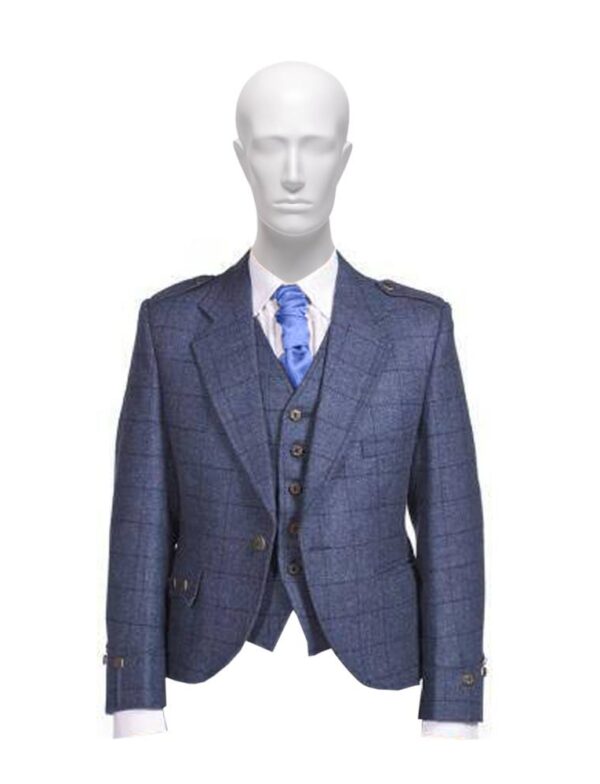
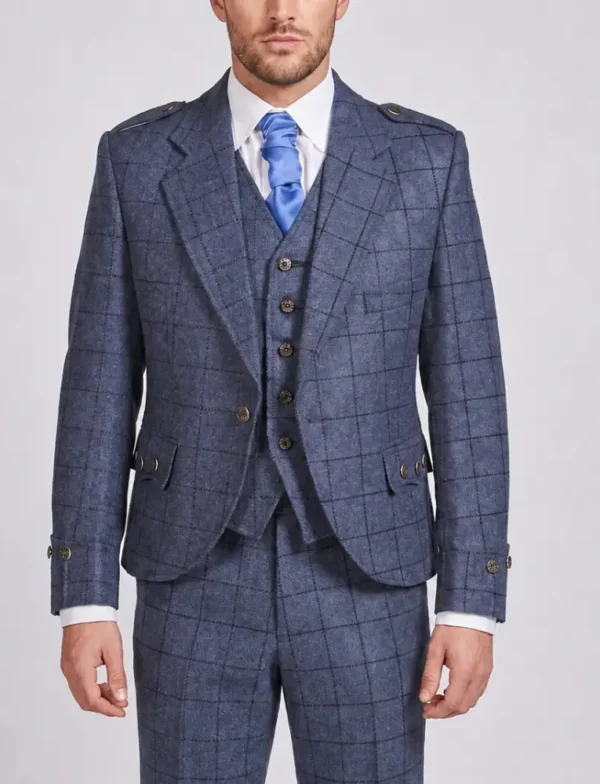
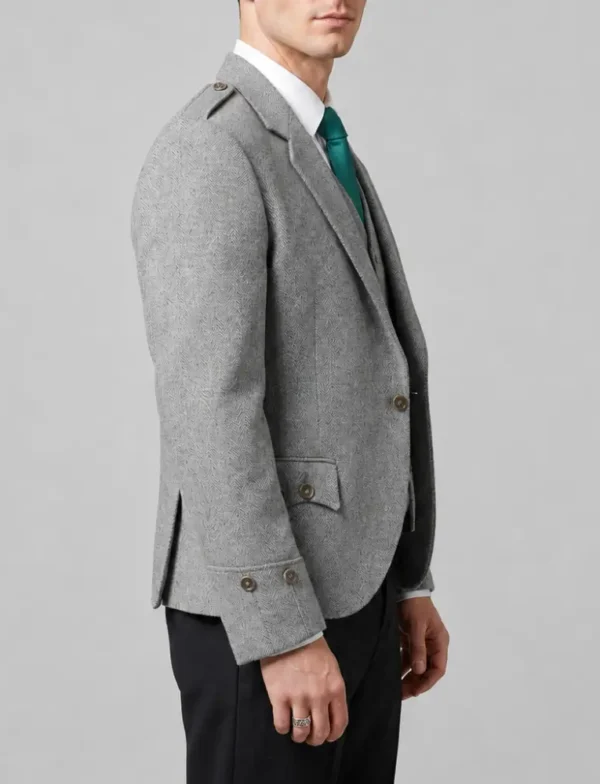
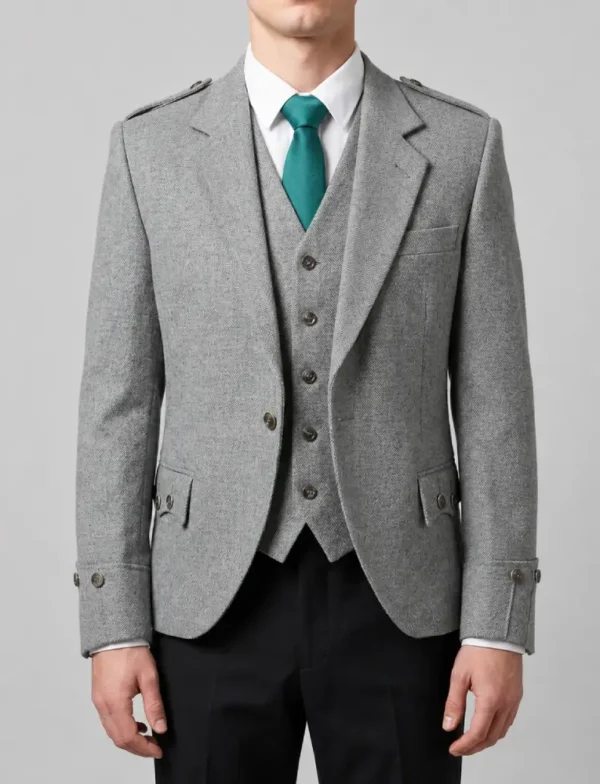
About our kilt jackets and waistcoats
Kilt jackets, hand-tailored to your measurements since 2017
Kilt and Jacks has been making kilt jackets and waistcoats by hand since 2017. Every jacket we ship — whether formal Prince Charlie, semi-formal Argyll, country tweed, or historical doublet — is drafted from six measurements you send us: chest at the fullest point, waist at the natural line, hip, sleeve length, back length, and shoulder width. There is no factory sizing. There is no closest fit. Prices from $189 for tweed, from $249 for Argyll, from $299 for Prince Charlie sets, in Scottish wool and worsted fabric with functional buttons throughout.
What separates a proper kilt jacket from a suit jacket
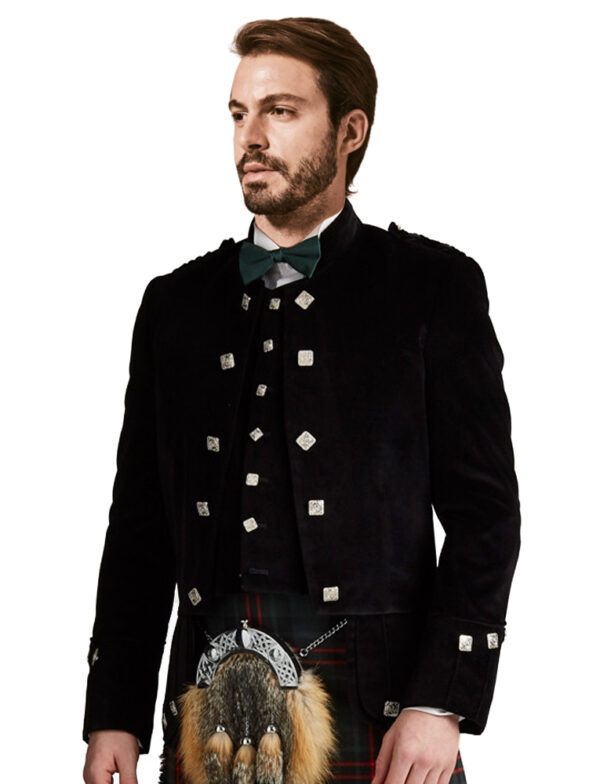
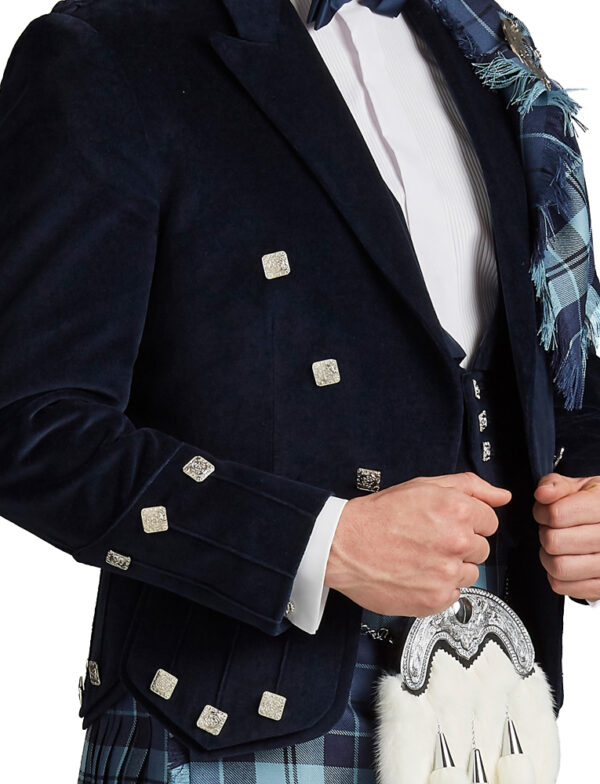
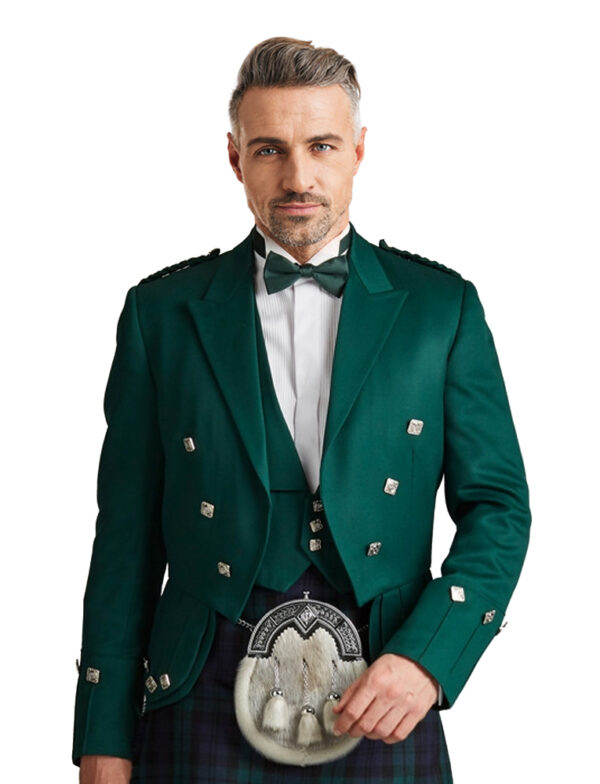
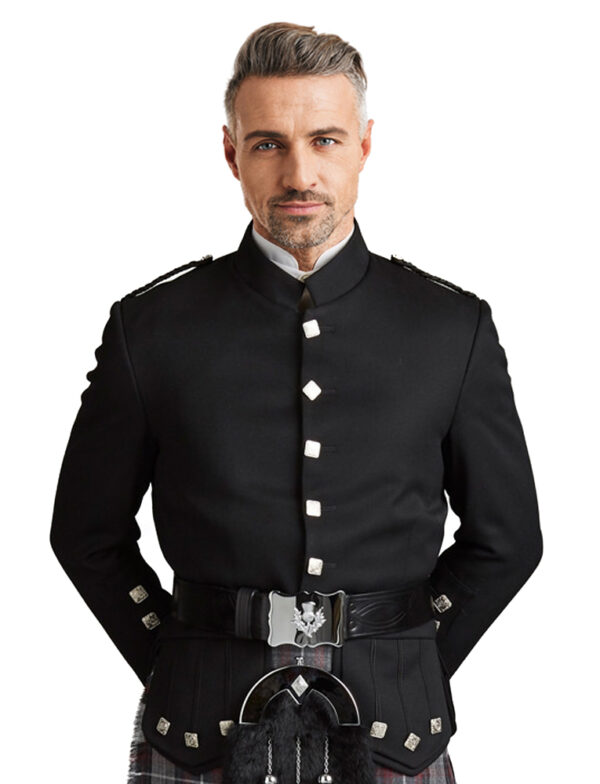
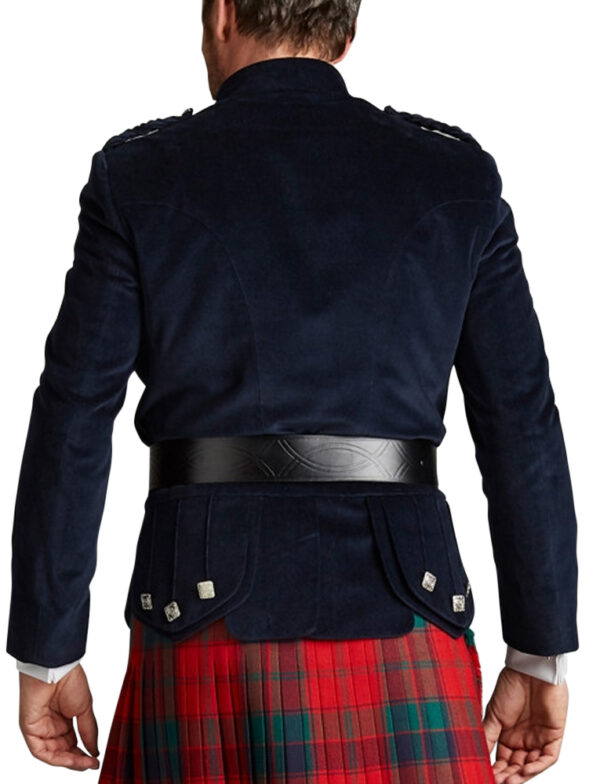
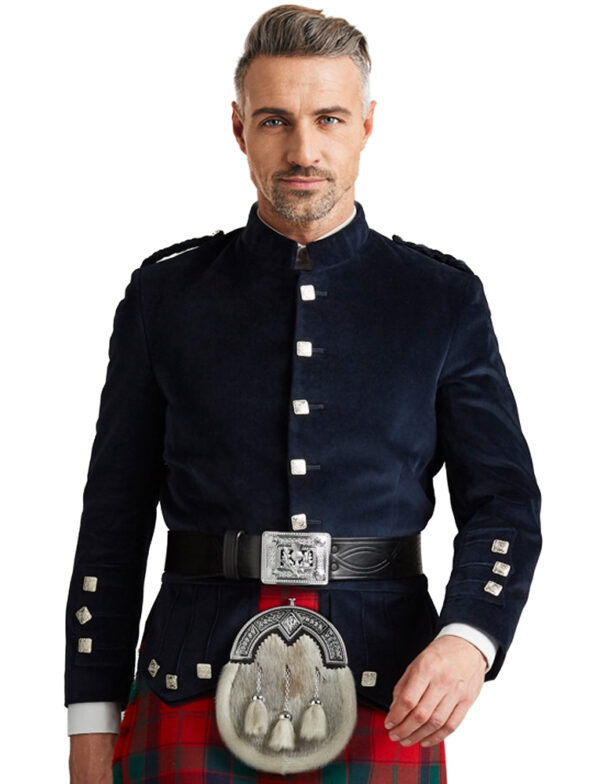
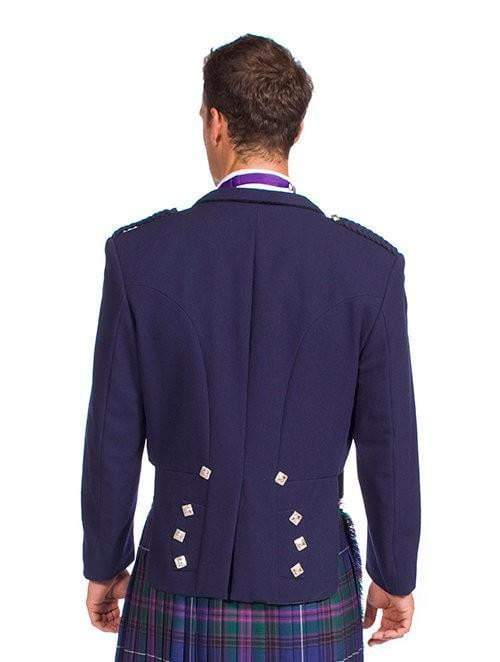
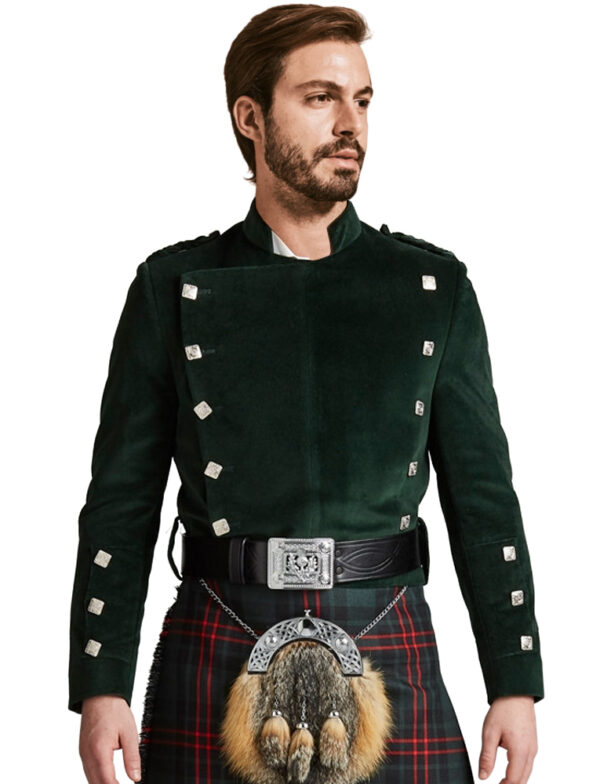
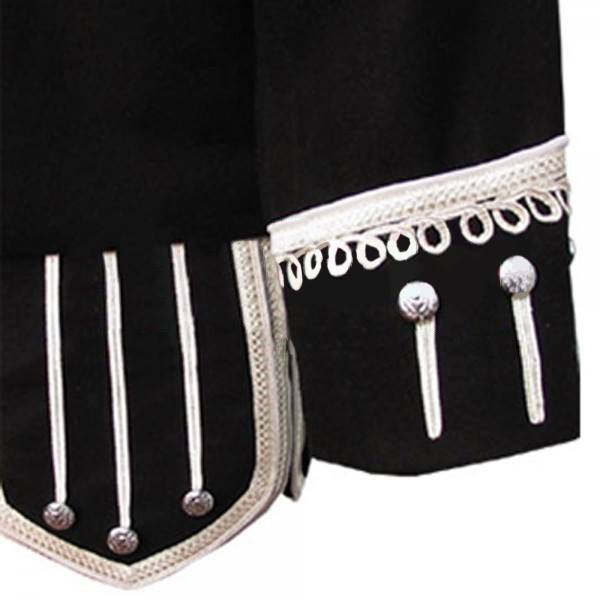
Kilt jackets are cut differently to standard suit jackets in three specific ways. The length is shorter — the hem sits at the natural waistline rather than the hip, so the jacket doesn't overlap the kilt's own waistband and disrupt its line. The cut is closer at the waist and slightly flared at the shoulder to complement the kilt's pleated fullness below rather than compete with it. The cuffs are turned back with silver or chrome buttons rather than plain sleeve buttons, echoing traditional Highland military dress. Wear a standard suit jacket with a kilt and the outfit reads visually confused — the proportions fight. Wear a proper kilt jacket and the outfit reads as intentional.
Kilt jackets are not a modern styling invention. They evolved from Highland military uniforms of the eighteenth and nineteenth centuries, formalised through Victorian-era regimental dress, and standardised into the civilian formal wear known today as Prince Charlie and Argyll. When you buy a proper kilt jacket, you're wearing two centuries of tailoring evolution — cut for a purpose, refined for a specific silhouette.
Materials and construction
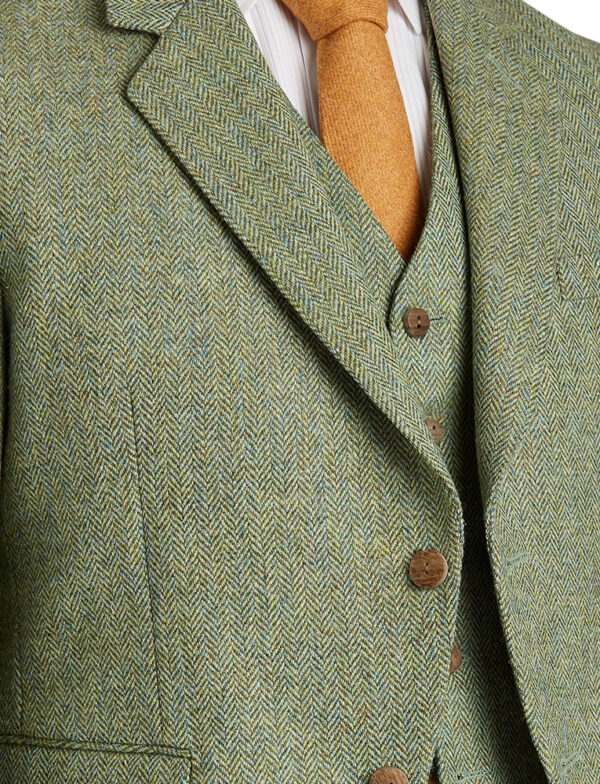
We work in three fabrics. Barathea wool is our formal standard — a fine worsted wool with a smooth close weave, traditionally used for Prince Charlie and formal Highland dress. Deep matte finish, holds a sharp lapel line, and pairs cleanly with silk facings. Herringbone tweed is our country and semi-formal fabric — heavier weight, textured surface, more forgiving than barathea, right for Argyll and tweed kilt jackets worn to daytime events. Doeskin wool is our piper doublet and ceremonial fabric — smoother than tweed, softer than barathea, with the drape historical military tailoring demands.
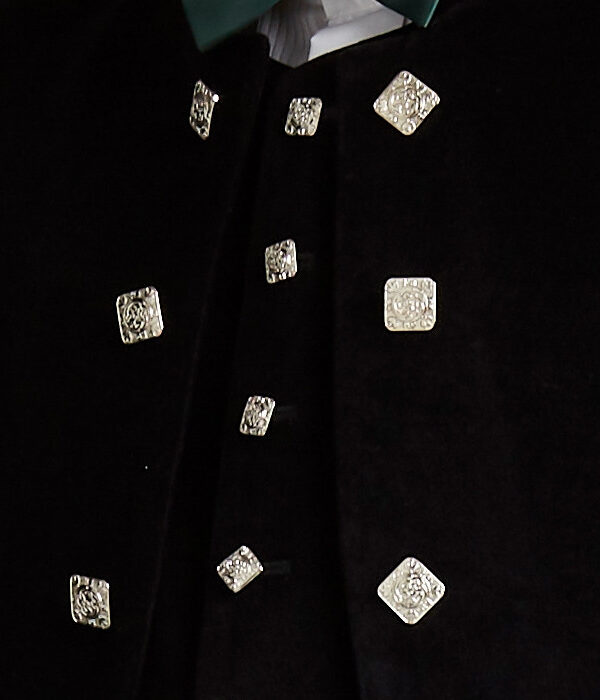
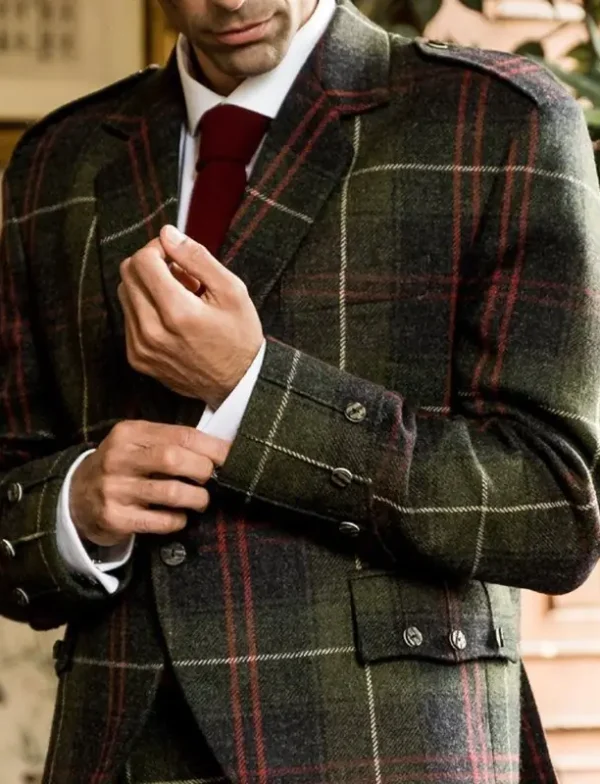
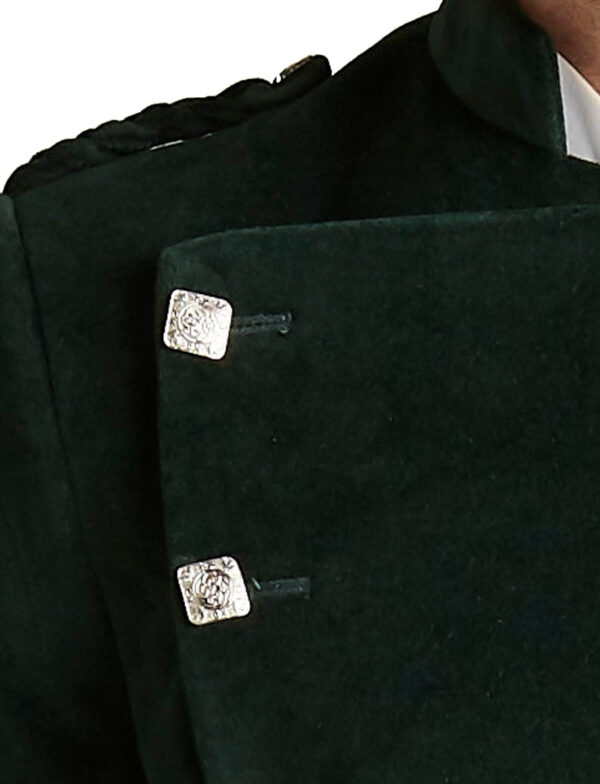
Every jacket has functional buttons at the cuffs (four buttons on each sleeve, the traditional Highland detail), silver-plated or brass buttons at the front closure, silk or satin linings in a colour that complements the outer fabric, and pockets welt-stitched with hand-finished edges. Waistcoats are cut to match the jacket at the shoulder and are worn beneath — three-button, five-button, or six-button depending on the jacket style and formality tier. Every jacket ships with a matching or coordinated waistcoat unless ordered as a jacket-only piece.
The jackets and doublets we make
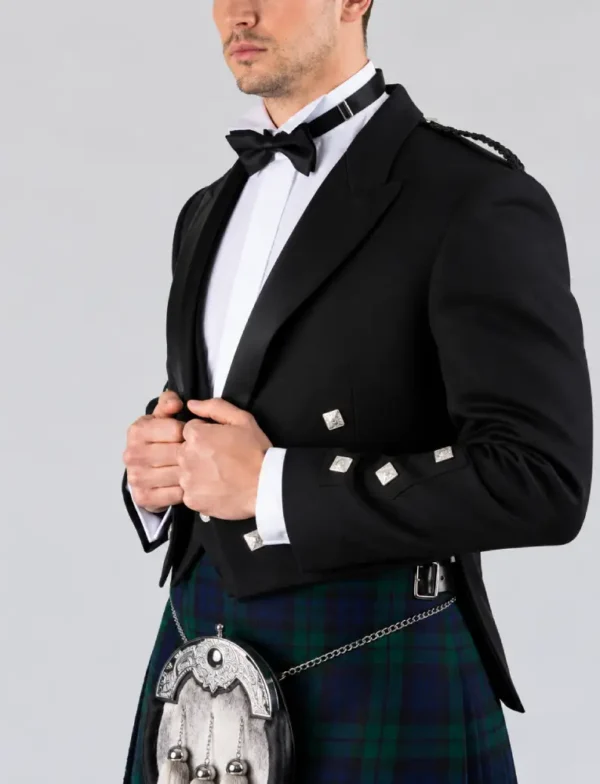
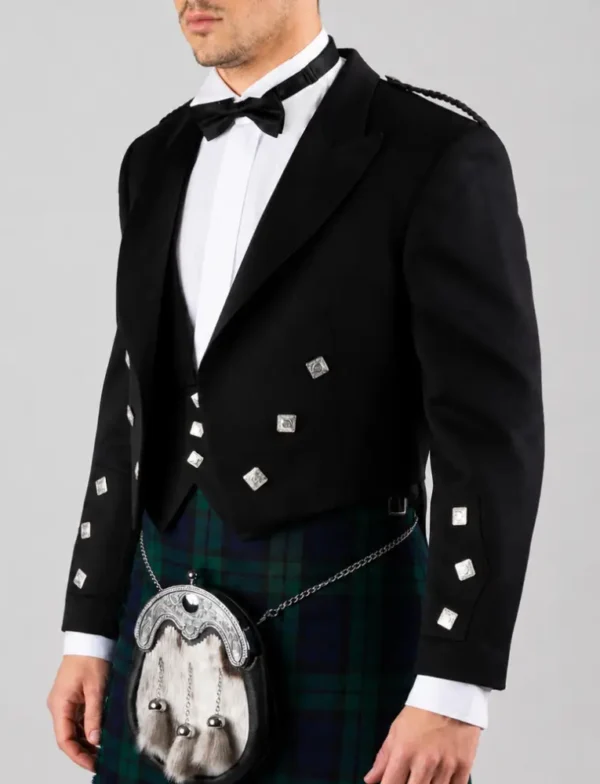
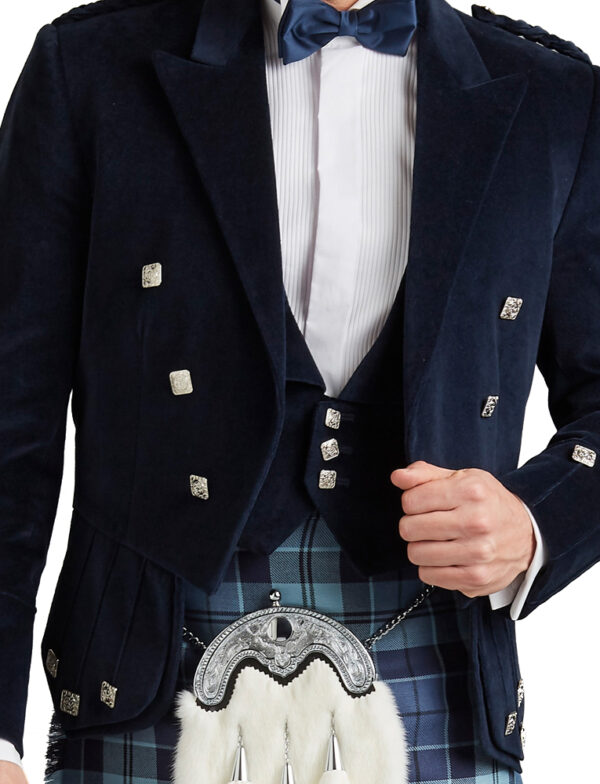
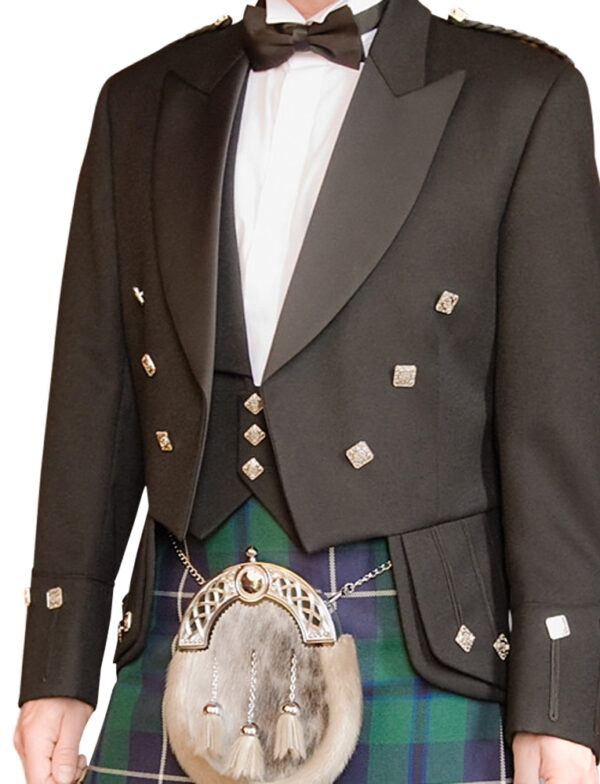
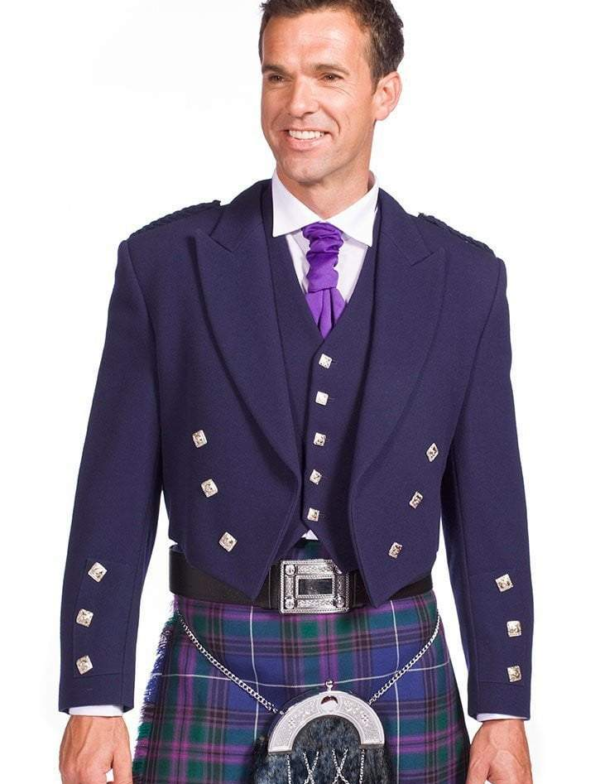
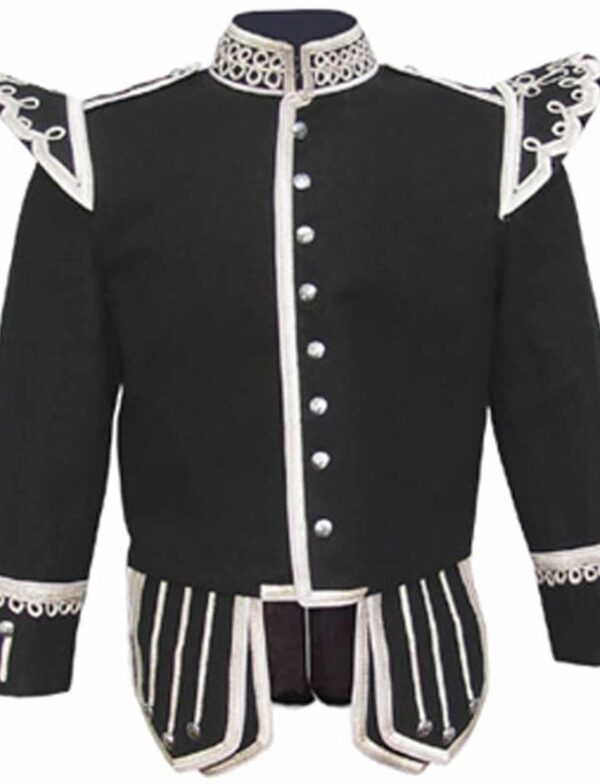
Prince Charlie jackets and waistcoats. The formal standard for Highland black-tie dress. Short-cut with peaked lapels, silver-braided cuffs, matching three-button waistcoat, and worn with a black bow tie. The correct choice for Highland weddings under formal dress code, Burns Night dinners, black-tie balls, and any occasion where the invitation reads formal. From $299 for the jacket-and-waistcoat set.
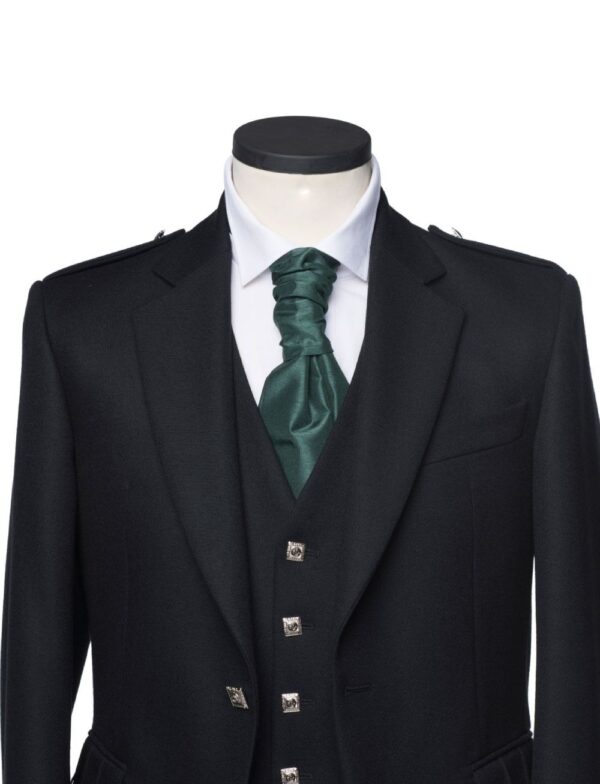
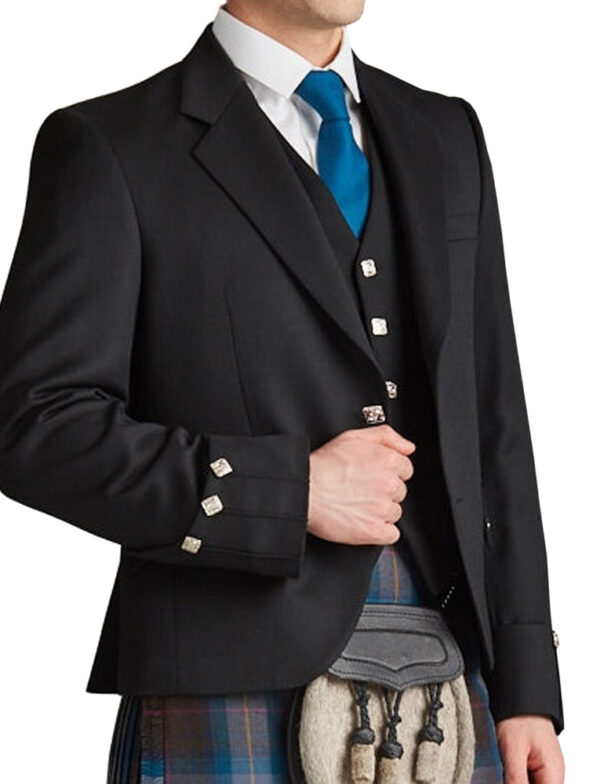
Argyll jackets. The semi-formal Highland jacket — slightly longer than a Prince Charlie, notched lapels rather than peaked, five-button waistcoat, and more relaxed formality. Right for semi-formal weddings, evening events without a strict black-tie code, ceilidhs, and the versatile "one Highland jacket" purchase for men who want a single formal jacket that covers most occasions. Also called Argyle in some references. From $249.
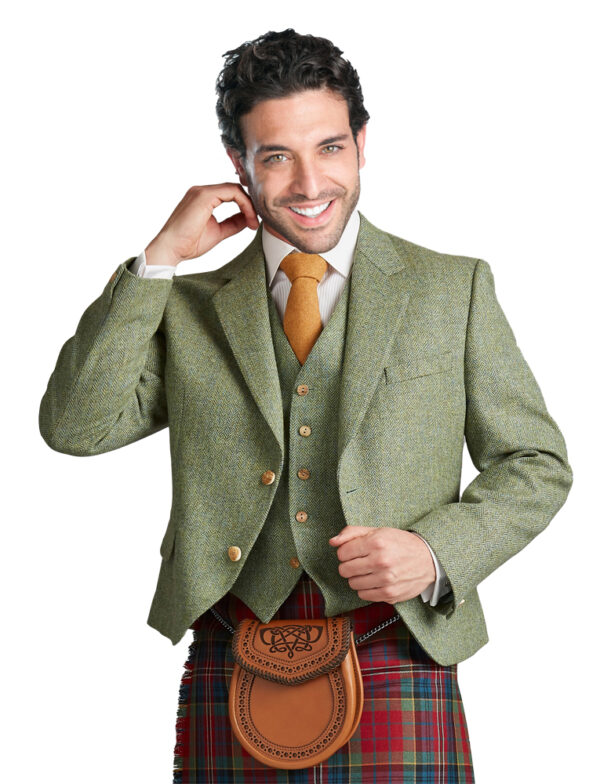
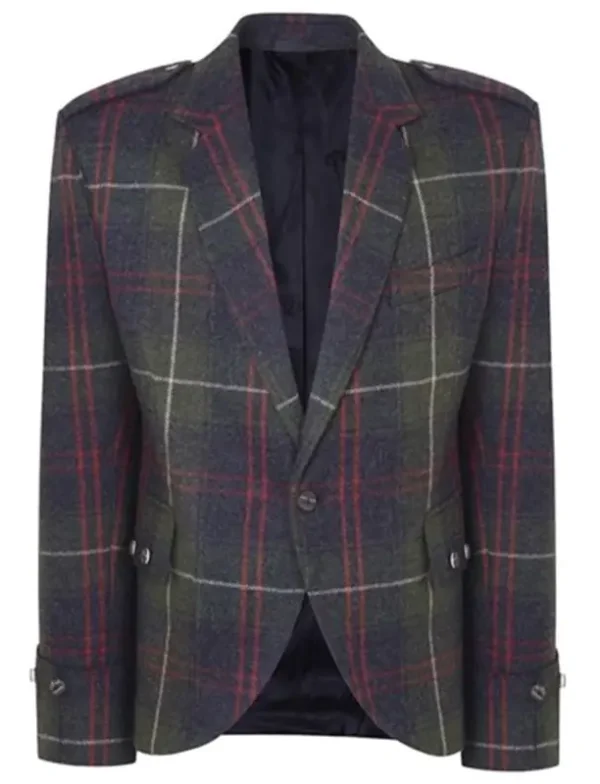
Tweed kilt jackets. Country and daytime Highland jackets in heavy herringbone or estate-check tweed. Named traditionally as Braemar, Crail, or Argyll Tweed depending on cut and detail. Right for country weddings, shooting parties, Highland games, and semi-formal daywear where a barathea jacket reads too formal. Pair with tweed waistcoats, plain shirts, and a day sporran. From $189.
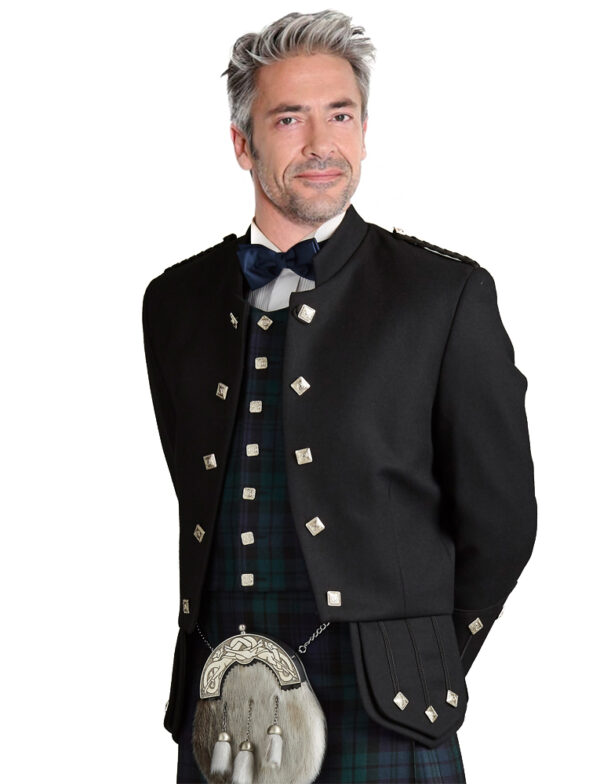
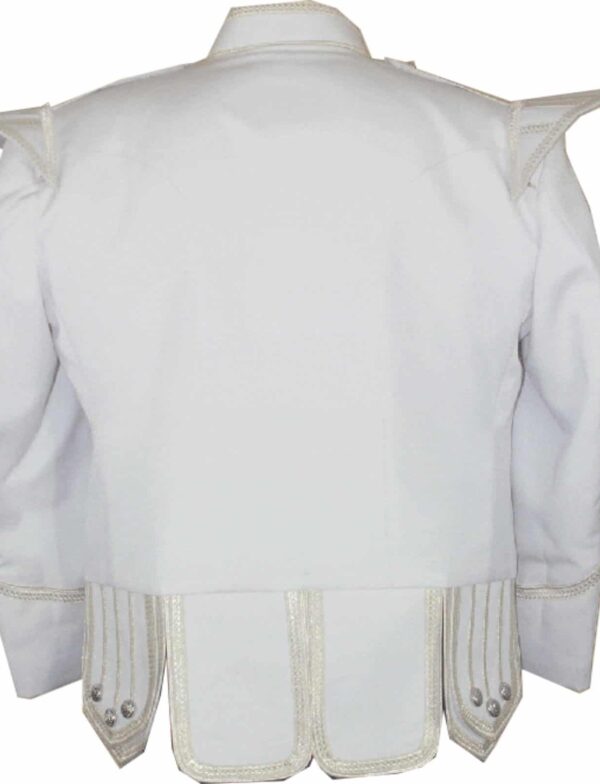
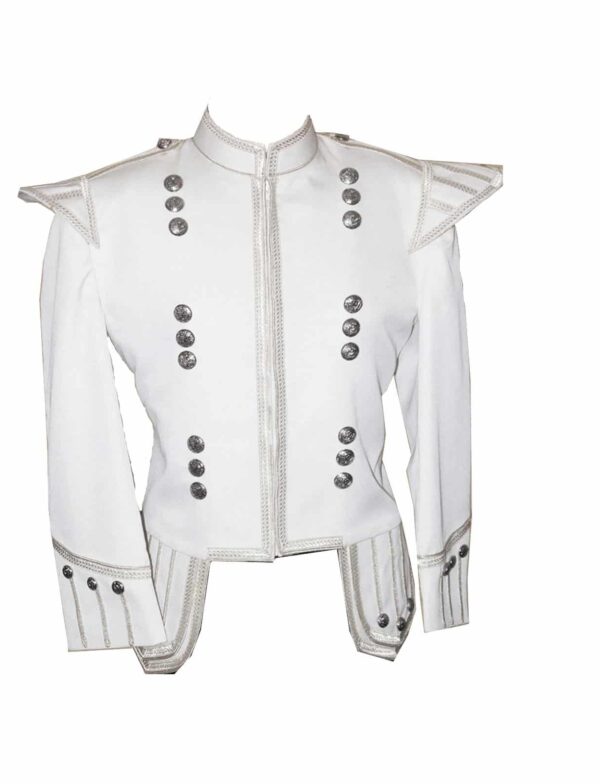
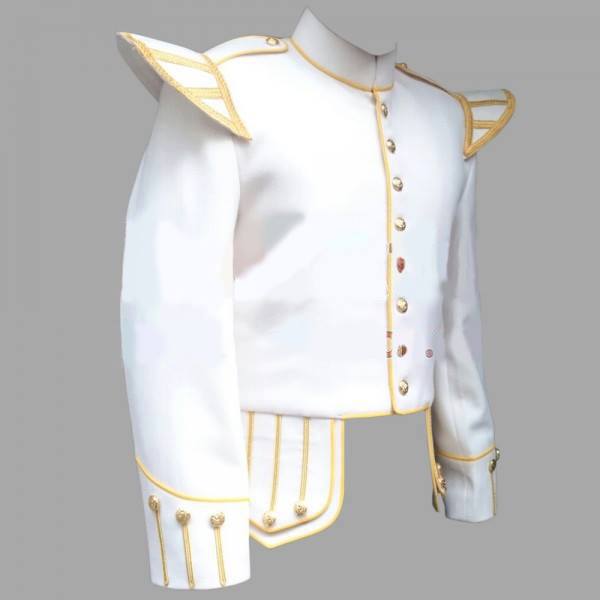
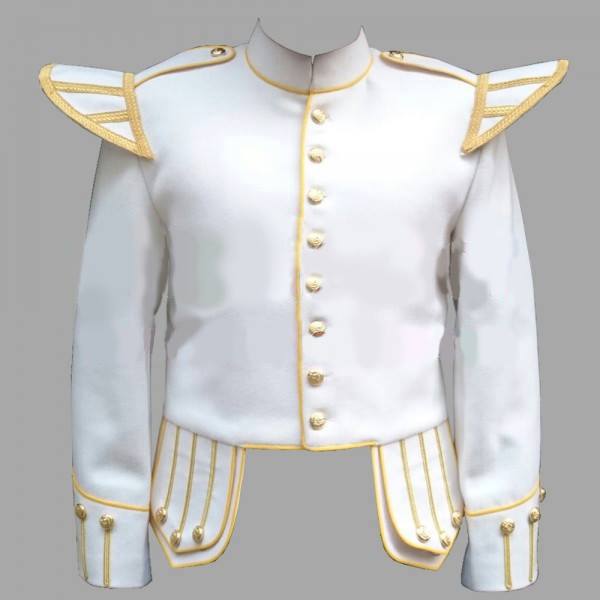
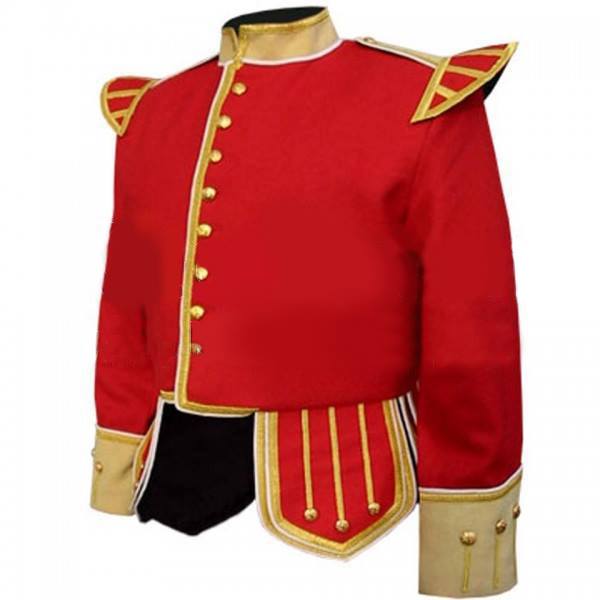
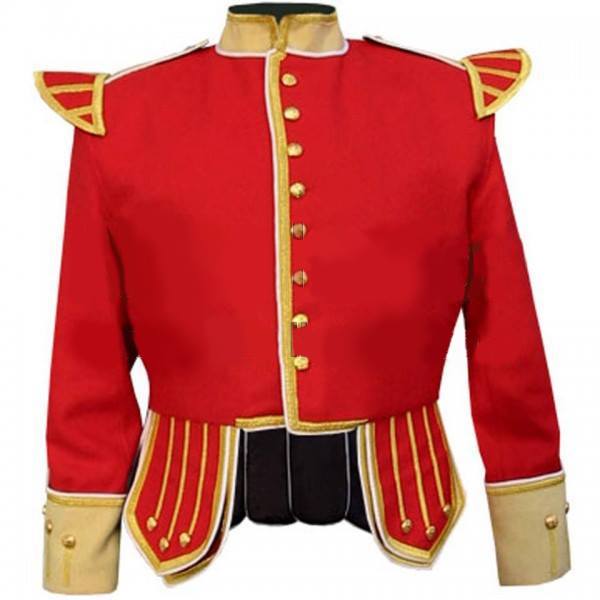
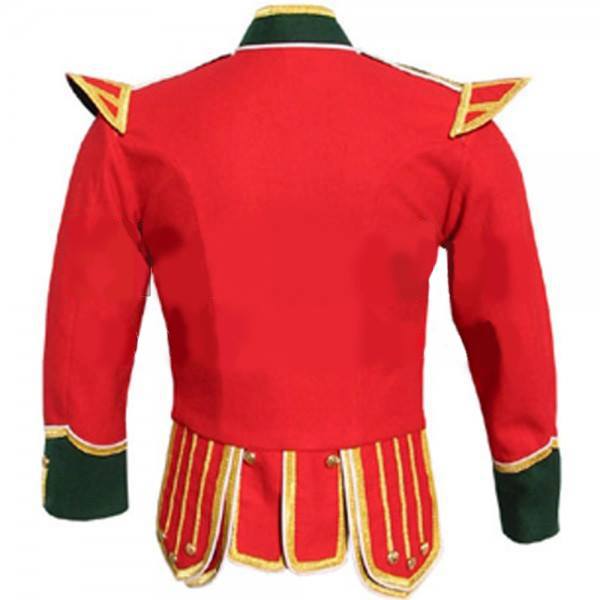
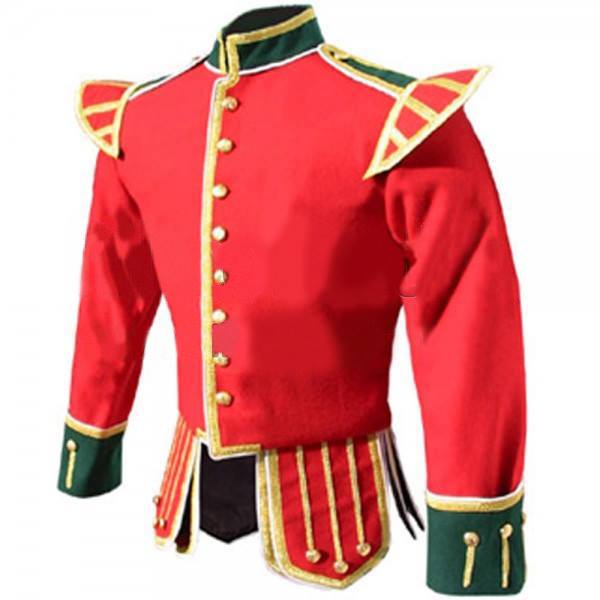
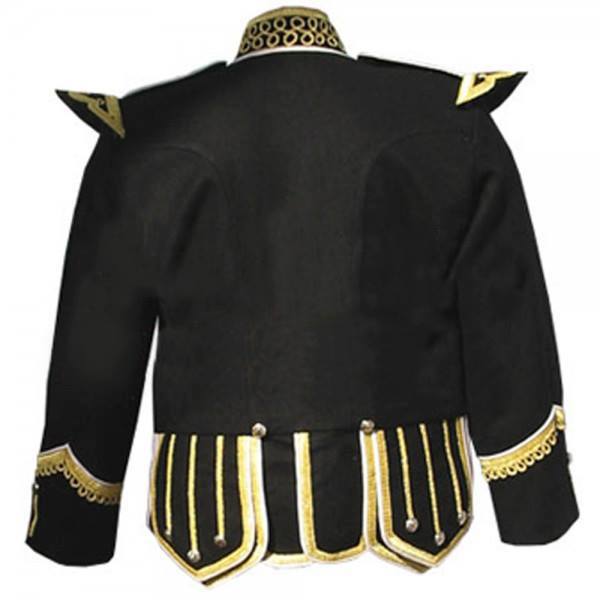
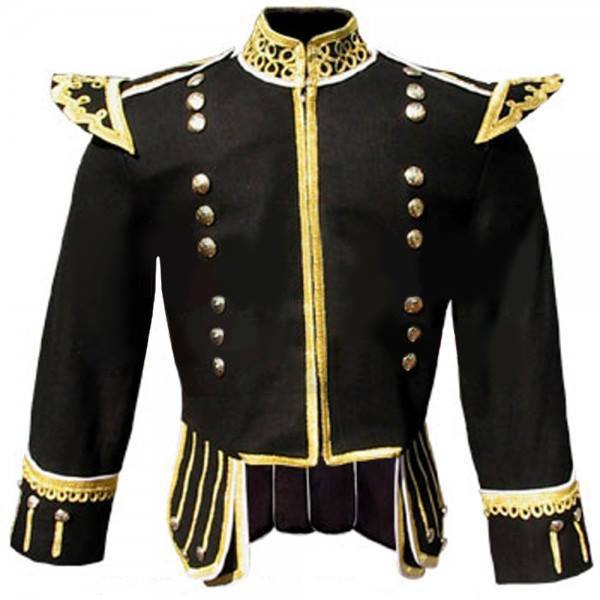
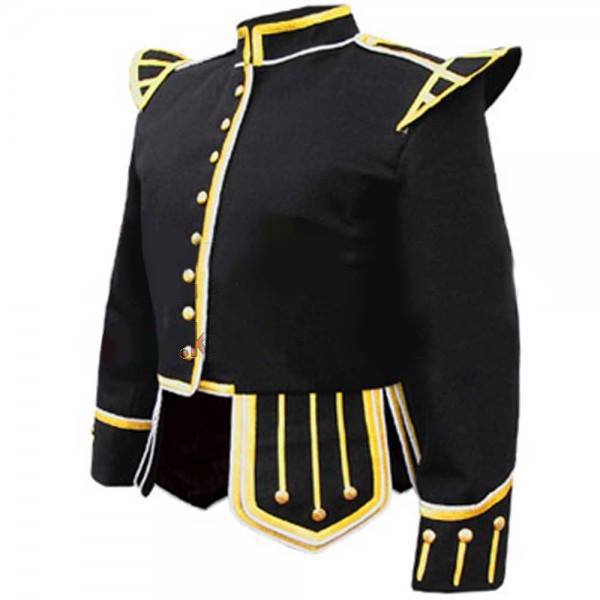
Fancy doublets. Formal ceremonial jackets in the historical Highland military tradition — Sheriffmuir, Kenmore, and Regulation styles with tall standing collars, ornate silver buttons, and Inverness-flapped cuffs. The most formal category we make, right for the most traditional Highland weddings, ceremonial occasions, and pipers seeking historical accuracy. From $349.
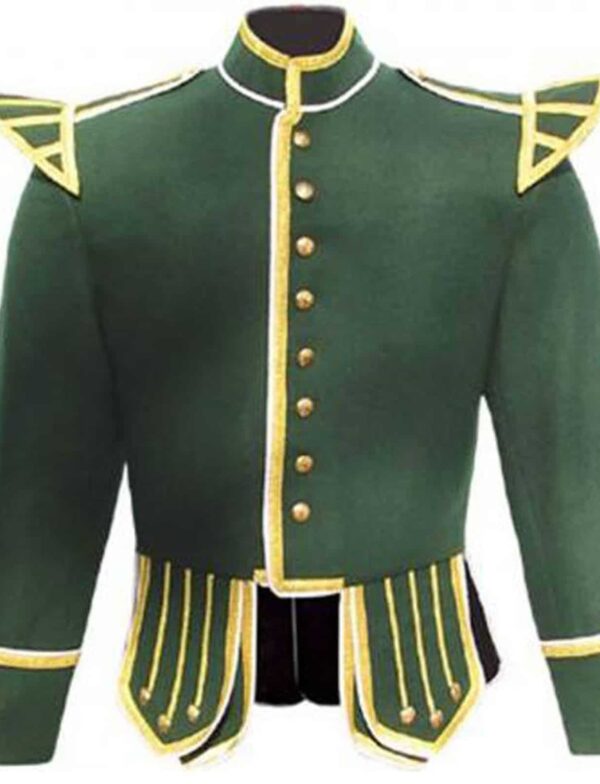
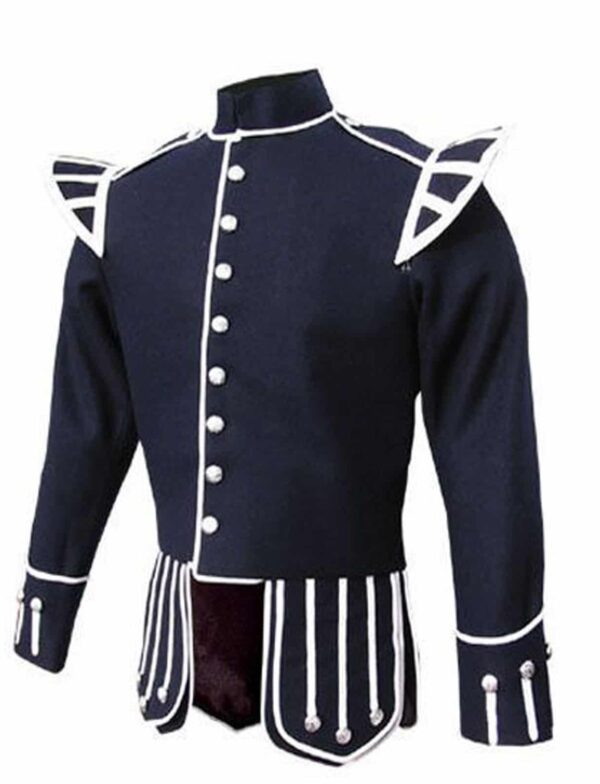
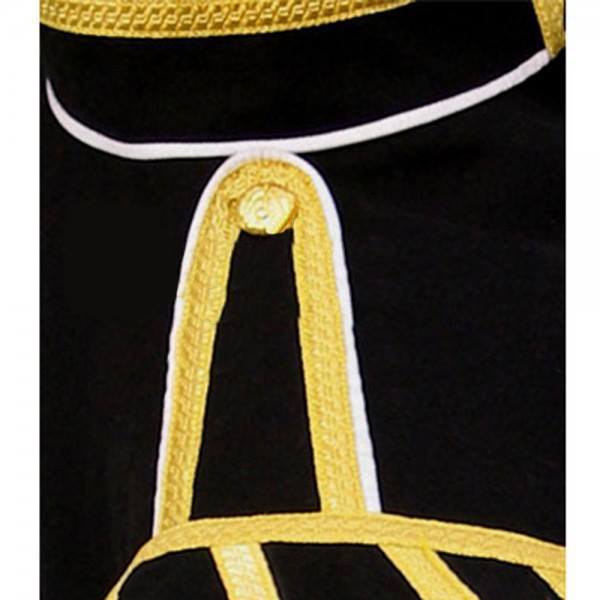
Piper doublets. The specialist formal jacket worn by pipe band members and solo pipers — deeper drape, ornate braiding, and traditional military-derived detailing. Cut for movement while playing, with reinforced shoulder seams that carry a bag strap without distortion. From $329.
Not sure which jacket suits your occasion? Message us with the event and dress code and we'll match you to the correct style before you commit.
Choosing your kilt jacket
Choose by formality first, fabric second, occasion third. For a strict black-tie Highland wedding or formal ball, Prince Charlie in barathea wool is the required choice — anything less reads under-dressed in a formal Highland context. For a semi-formal wedding, evening event, or the versatile one-jacket wardrobe purchase, Argyll in barathea covers the widest range of occasions. For daytime country events, shooting parties, and rural weddings, tweed kilt jackets pair with country tartans and read appropriately relaxed. For ceremonial occasions, piping performances, and the most traditional Highland dress, doublets are the historical choice. When budget allows only one, buy Argyll — it works for more occasions than any other kilt jacket in the wardrobe.
Every kilt jacket ships in ten working days, is hand-tailored at our workshop, and is guaranteed to fit the measurements you sent us. If it doesn't, we remake it. See our returns policy for full terms. Kilt jackets pair with every style of kilt we make — see the wider men's kilts collection to complete the outfit, and browse kilt and Highland wear accessories for sporrans, brogues, and formal accessories to match.
5 stylesPrince Charlie, Argyll,
tweed, and doublets
tweed, and doublets
10 daysCut, tailored,
shipped
shipped
Scottish woolBarathea, tweed,
and doeskin
and doeskin
Free remakeIf the fit isn't
perfect
perfect
Frequently asked
Questions before ordering
What is a kilt jacket called?
The generic term is "kilt jacket," but each style has its own name. Prince Charlie is the formal jacket worn with black-tie Highland dress. Argyll (or Argyle in American English) is the semi-formal jacket. Tweed kilt jackets are variously named Braemar, Crail, or Argyll Tweed depending on cut and detail. Historical ceremonial jackets are called doublets — Sheriffmuir, Kenmore, and Regulation doublets are the main variants. In Scottish tailoring tradition, kilt jackets and doublets are cut specifically for wearing with a kilt rather than being adapted from suit jackets or blazers, which is why they carry distinct names.
What's the difference between a Prince Charlie and an Argyll jacket?
Formality and cut. The Prince Charlie is the more formal of the two — shorter length, peaked lapels, silver-braided cuffs, worn with a black bow tie and a three-button matching waistcoat. It's the correct jacket for black-tie Highland weddings, Burns Night formal dinners, and evening ceremonial occasions. The Argyll is semi-formal — slightly longer length, notched rather than peaked lapels, five-button waistcoat, worn with a tie or open-collar depending on the occasion. Right for semi-formal weddings, evening events without strict dress codes, and daytime formal wear. Many kilt owners buy Argyll first as the versatile one-jacket purchase, then add Prince Charlie later for occasions that specifically require it.
What jackets can you wear with a kilt?
For traditional Highland dress: Prince Charlie for black-tie formal, Argyll for semi-formal, tweed kilt jackets for country and daytime wear, and doublets for ceremonial and historical occasions. For modern styling with utility, leather, gothic, or hybrid kilts, leather biker jackets, denim jackets, and shorter alternative-fashion jackets are all appropriate depending on the kilt style — modern kilt owners have significantly more freedom in jacket pairing than traditional Highland dress allows. The one pairing to avoid is a standard suit jacket or blazer worn with any kilt — the proportions are cut for trousers and read visibly wrong over a pleated skirt-length garment.
Which kilt jacket do I need for a Scottish wedding?
Check the invitation. If it reads "black tie" or "Highland formal," you need a Prince Charlie jacket and waistcoat with a black bow tie, formal shirt, dress sporran, and ghillie brogues. If it reads "smart Highland" or "semi-formal," an Argyll jacket with matching waistcoat is correct — this is the most common Scottish wedding dress code. If it reads "country wedding" or the ceremony is outdoors in the Highlands with a rural feel, a tweed kilt jacket is appropriate and often expected. When in doubt, Argyll is the safest single choice — it reads correct across the widest range of Scottish weddings without being either under-dressed or over-dressed.
What is the difference between a kilt jacket and a normal jacket?
Three specific differences. Length: a kilt jacket ends at the natural waistline where the kilt's own waistband begins, while a normal suit jacket ends at the hip and would overlap the kilt awkwardly. Cut: a kilt jacket is cut closer at the waist and slightly flared at the shoulder to complement the kilt's pleated fullness below, while a suit jacket has a straighter cut designed to complement trousers. Detailing: kilt jackets have turned-back cuffs with four silver or chrome buttons echoing Highland military dress, while suit jackets have plain sleeve buttons. Wearing a normal suit jacket with a kilt reads visibly wrong — the length is too long, the cut fights the pleats, and the detailing doesn't match the outfit's Highland register. This is why kilt jackets are made specifically for the kilt silhouette rather than being adapted from suits.
Can you wear a kilt jacket without a waistcoat?
It depends on the jacket and the occasion. Prince Charlie formal Highland dress is incomplete without the matching three-button waistcoat — the two garments are always worn together for black-tie occasions, and a Prince Charlie jacket without its waistcoat reads underdressed. Argyll jackets can be worn with or without a waistcoat depending on formality — with waistcoat for weddings and formal evenings, without for semi-formal daytime and casual events. Tweed kilt jackets are frequently worn without a waistcoat for daytime and country wear, though a matching or contrasting tweed waistcoat adds an appropriate country-formal touch. Doublets are typically worn without an external waistcoat because their construction is already more elaborate. When in doubt for a specific occasion, wear the waistcoat — a Highland outfit that includes one always reads correct; one missing a waistcoat sometimes doesn't.
What fabric should my kilt jacket be in?
Formal jackets (Prince Charlie, formal Argyll, doublets) should be in barathea wool — a fine worsted with a close smooth weave that holds a sharp lapel and reads formal. It's the traditional fabric for evening Highland dress. Semi-formal Argyll can be in barathea (for evening) or tweed (for daytime and country wear). Tweed kilt jackets are, obviously, in tweed — usually herringbone or estate check in earth-tone colours (moss green, brown, grey heather). Piper doublets are traditionally in doeskin wool, a smoother and slightly softer worsted that drapes well while playing. If you're buying one jacket to cover multiple occasions, barathea gives you more range than tweed does; tweed is more specialised to country and daytime use.
How does the sizing work for a made-to-measure kilt jacket?
We draft the jacket from six measurements you send us: chest at the fullest point (usually across the nipples), natural waist, hip at the widest point, sleeve length from shoulder point to wrist bone, back length from the base of the neck to the natural waist, and shoulder width from shoulder point to shoulder point across the back. Full guidance is provided at checkout with diagrams. Take measurements over a fitted t-shirt, not a bulky sweater. If you're unsure about any measurement, we'd rather receive photos of the tape in position than a guess — email them with your order and we'll verify before cutting. Every jacket ships in ten days and is guaranteed to fit the measurements you sent; if the fit isn't right, we remake it.
Can a kilt jacket be worn with trousers?
A Prince Charlie jacket looks awkward with trousers — it's cut short specifically for the kilt silhouette and looks visibly under-length when worn over long trousers. An Argyll jacket works marginally better with trousers because the length is slightly longer, but it still reads as a kilt jacket being worn incorrectly. Tweed kilt jackets can occasionally be worn with tweed trousers as a country outfit, but it's not the traditional pairing. If you want a jacket that works with both kilts and trousers, you actually want a country tweed sports jacket rather than a kilt jacket specifically — different cut, different length, sold in general menswear rather than kilt shops. Kilt jackets are built for kilts.